

The Handmade Solution That Helps Keep Wasps Away
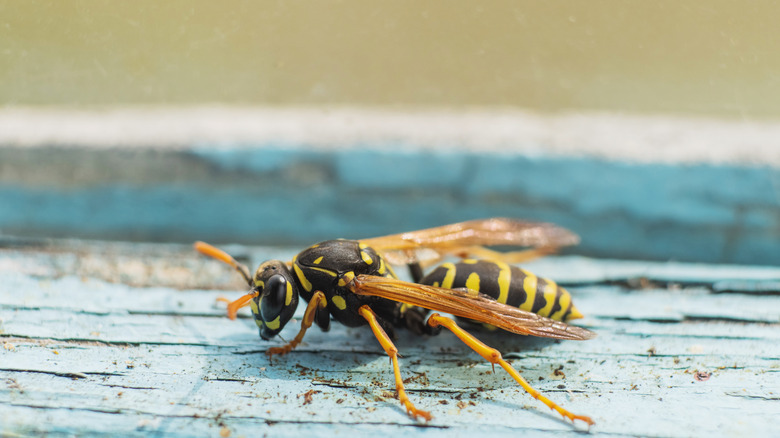
Every summer, it's the same story. You set up the table outside for nice meal, take out a few cold drinks, and sit down to enjoy a bit of sun. But soon enough, you start to hear the buzz of wasps, here to ruin the party for everyone. And if you think you've tried it all, from citronella candles to essential oils, we have one more idea for you. Have you ever considered using crochet as your weapon of choice? This DIY project is another creative nest you'll need in your garden to keep wasps out all summer long.
The idea, which comes from TikTok creator @hollyauna, is to crochet a fake nest out of plastic yarn (plarn) and hang it in your backyard. This idea is based on the method of hanging fake nests as decoys to prevent new colonies from setting up in the area. Wasps are extremely territorial, so the hope is that these decoys will deter them from setting up in your backyard because they'll think it's already claimed. Typically, you'd buy pre-made paper wasp nest decoys from Decyool or from your local garden center and hang them around your property. The issue with these paper models is that they're not the most durable, especially if they're exposed to rain and wind, and you'll likely need brand new ones every season. Instead, consider making your own using plastic yarn. Plus, making plarn is a creative way to repurpose your plastic grocery bags and reduce waste.
The science to back this up is lacking, but many people who've tried it have said that it worked. And since this is a non-toxic method, there isn't any serious downside to trying. If it works, it will be an eco-friendly way to keep nasty bugs out of your garden.
How to crochet a plarn wasp nest
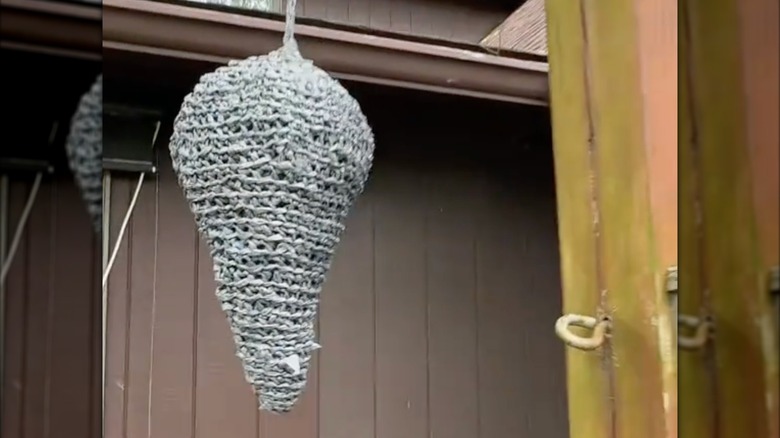
The first step of this DIY is to make plarn, or plastic yarn. To crochet a wasp nest decoy, you'll need about 100 to 200 yards of yarn. A regular plastic bag creates around 9 yards of plarn, so you'll need 15 to 20. None of this is exact, because plastic bags aren't all the same and wasp nests are different sizes, so you can always adapt. Once you've got your bags, simply cut the bottom and the straps of the plastic bags to create flat rectangles. Then, cut those rectangles into strips that are 1 inch thick. Finally, attach the strips to each other using loops or knots to create a long, continuous strip out of all of the smaller strips. If you don't have plastic bags to upcycle, you can also use regular yarn for this DIY. This gives you the option of choosing beige yarn, which resembles regular wasp nests.
@hollyauna Crocheting a fake hornets nest to keep away wasps! Let's see if it works! #waspdeterrent #hornetsnest #summer
Now that you have your plarn ready, you can crochet it into a cone shape to look like a nest. You can free-hand it or use a pattern (you can find plenty of them online) depending how confident you are about your crochet skills. The idea is to have something that looks like a regular nest, almost like an inverted droplet. Before closing it up, you can stuff the faux nest with some other plastic bags or poly-fil stuffing to give it that full look. And finally, attach a strip of plarn to the top of the decoy to hang it from a pole, branch, or nail. Typically, wasps like to build their nests near wall cavities, sheds, behind shutters, near mailboxes, in tree holes, and near the roof under gutters. Target these areas with your DIY decoys.