

The Popular Landscape Material To Ditch For A More Bird-Friendly Yard
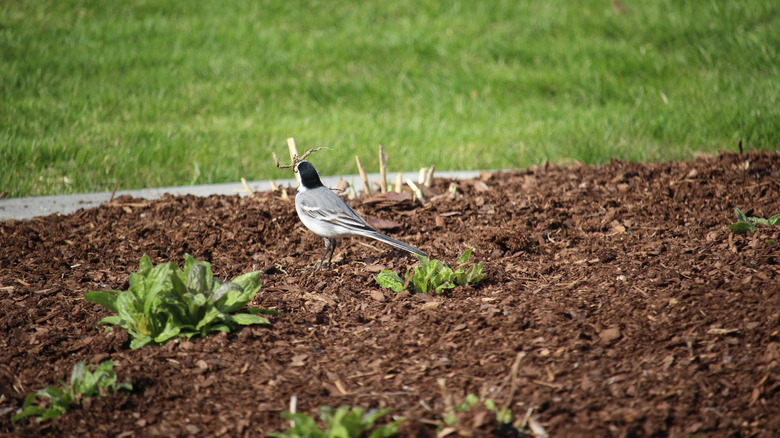
Birds are beneficial to your garden for numerous reasons. Besides bringing joy, color, and song to your property, birds can also act as helpful pest control for your plants, snacking on unwanted critters like beetles, caterpillars, moths, and aphids. Completing bird-friendly lawn care tasks, like sanitizing bird baths and planting native species, can help attract these beneficial birds to your yard. But did you know that your choice of mulch in your garden can affect the health and quality of life of the birds you attract? Birds interact heavily with the mulch in your garden, looking for nesting materials and insects to eat. There is one mulch variety in particular that may end up being more harmful to the birds in your garden, and that is dyed, or colored bark, mulch. In order to create a more bird-friendly environment in your yard, you may want to double-check the source of your dyed mulch or skip this type entirely.
Dyed mulch, which is treated with colorants, is a popular choice for gardeners thanks to its appearance and slower decomposition rate. While you may assume that the dye is the main issue with this type of mulch, often the root problem is the wood itself. Most dyed mulch is made from recycled wood materials, such as pallets, scraps, and reclaimed wood, which are easier to dye than fresh wood. However, this also increases the likelihood that the wood may be contaminated with chemicals. Master gardener, Ron Kujawski, tells University of Massachusetts Amherst, "the bottom line is that CCA (chromated copper arsenate) and other toxic chemicals have been found to be contaminating soil where colored wood chip mulch has been applied."
Why is dyed mulch harmful and what to use instead
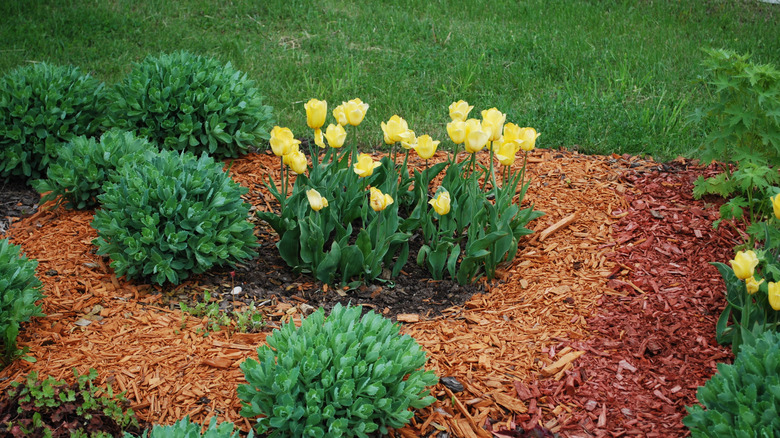
There are a myriad of mulch varieties for gardeners to choose from, including organic, synthetic, dyed, and natural options. First popularized in the 1960s, dyed mulch is a common choice for gardeners as it can be very customizable. It can come in a variety of colors like red, green, and black. However, the wood utilized in the creation of dyed mulch is often sourced from demolition and construction sites. While this makes it cheaper to produce and easier to dye, it also could potentially be contaminated with chemicals, specifically CCA or chromated copper arsenate. CCA, which was banned from being used to treat wood in 2003, can still be found in recycled wood materials. CCA can harm soil, insects, and plants, and may also pose risks to people and animals, including birds. If you're wondering how safe your dyed mulch is for your plants, make sure to check the ingredients and look for non-toxic formulas.
When looking for the best type of mulch for your garden, prioritize the well-being of the creatures that live there. Gardeners who want to ensure the health and safety of the birds and other critters in their yard may want to confirm whether or not their dyed mulch comes from C&D (construction and demolition) sources before using it. You can also opt for organic, chemical-free, non-dyed mulch to ensure the birds in your yard can search for nesting materials and food without harm.