

The Quirky, High-Value Antique Vase You Should Always Snag If You See
We may receive a commission on purchases made from links.
Once in a while, you may come across something at the thrift or antique store which you can't quite work out. What was it originally designed to do? Can it be used for modern purposes? These might be the questions running through your mind if you stumble across a Staffordshire spill vase. But while the name sounds misleading, these vases weren't actually designed to spill their contents.
Instead, these popular ceramic creations were made with the purpose of holding "spills" — thin wooden or paper tapers which were used to light candles and lamps from fireplaces, predating the common household use of matches. Perhaps because of their now-outdated use or their charming hand-painted look, these vases can now fetch as much as $500 or even more than $1,100, though this can vary depending on whether they are original pieces from the 1800s or modern recreations from the late 20th century.
Typically placed on the mantlepiece, Staffordshire spill vases were made available to the public in the 1800s and have distinctive narrow openings which were designed to hold the long, thin spills upright. The opening is also often surrounded by brightly-colored human, animal, or nature-inspired figurines. And while these sought-after antique home items have a fascinating history, they still have plenty of potential uses today due to their bright designs and unique narrow openings. As such, it may just be a good idea to pick these up if you spot them. But where should you look for these fun, quirky vases, and how can you style your antique home decor if you are lucky enough to pick a few up?
Where to find Staffordshire spill vases and how to style them
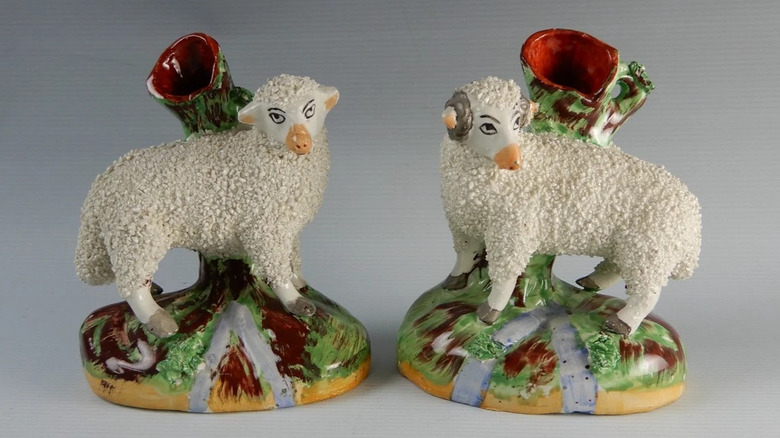
Staffordshire spill vases can be found at estate sales or online estate agent websites, antique shops, and secondhand online marketplaces such as Etsy and eBay. To tell original Staffordshire pottery pieces, which date back to the 1800s and early 1900s, from the modern reproductions that were made in the 1990s, you can look at the bottom rim. The older spill vases have rims that are not completely bare, with some glaze still unevenly covering the edge and bottom. The '90s pieces, however, tend to have clean bases, which have been wiped before being fired using modern methods. Due to the age and fragility of the original earthenware pottery, these antique pieces may have chips, cracks, or missing pieces, so it is a good idea to carefully examine them before purchasing to make sure they are in good condition.
Once you've got your hands on some spill vases you love, though, how can you make your thrifted antiques work in your home? Well, one simple way is to recreate their original use. You can fill the vase's narrow opening with long matches, great for lighting large candles or propane stoves. To keep the matches handy, place the vases in the kitchen or on a side table near your candles. Owners of these vases note that they tend to be wonderful conversation starters, too, due to their interesting shape and history. So, if you'd like guests to ask about your new spill vases, you may want to style them as the main part of a dining table centerpiece or on a hall table where they will instantly catch the eye.