

The Easy-To-Grow Bush That'll Fill Your Yard With Bluebirds & Butterflies
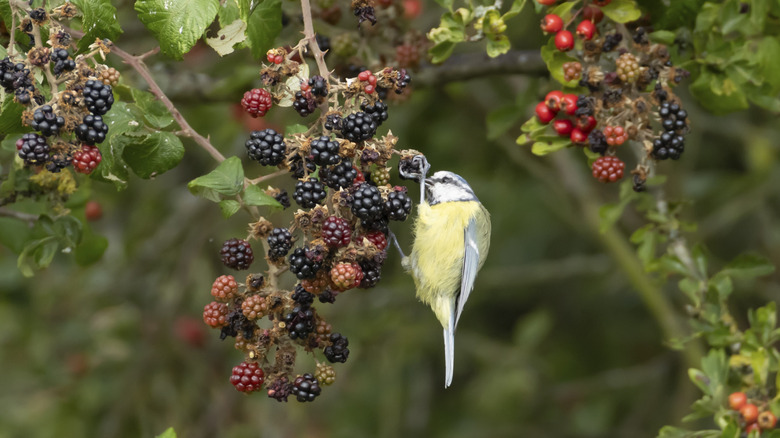
A butterfly and bird-filled yard is every gardener's dream. A yard brimming with diverse wildlife is a one-way ticket to an attractive and healthy garden, and these winged creatures aren't just there to look and sound pretty. They can help with insects, pollination, and pest control, just to name a few of their many benefits. There are many routes to take when trying to bring in more wildlife to your space. One option is planting an easy-to-grow blackberry (Rubus fruticosus) bush that provides fresh produce while supporting backyard wildlife.
Blackberry bushes are known to attract songbirds like bluebirds, along with a variety of stunning butterflies. Birds like bluebirds, indigo buntings, sparrows, and scarlet tanagers are known to feed on blackberry plants. As long as you provide various nesting spots for these incoming visitors, birds will utilize your blackberry bushes for nutrition and housing. According to the Southern Oregon Land Conservancy, Himalayan blackberry (Rubus armeniacus) bushes in particular are popular spots for birds to roost. Butterflies are known to enjoy the nectar and pollen of the Pennsylvania blackberry (Rubus pensilvanicus). Birds and butterflies have a mutually beneficial relationship with these bushes, consuming the fruit while helping disperse seeds. Birds also eat the insects that tend to damage the berries, like beetles and moths. As long as you know how to properly care for a blackberry plant, you're well on your way to bringing some new life to your garden.
Easy tips for growing blackberry bushes
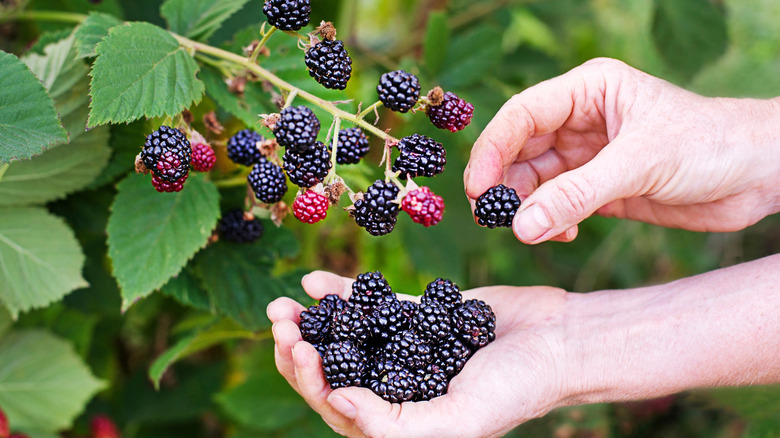
If you want to add a blackberry bush to your garden, there are a few things you should know. These perennial fruit shrubs are usually placed into three categories: erect, semi-erect, and trailing. While the trailing and semi-erect types require a trellis for support while they grow, the erect varieties can be self-supporting. Blackberry bushes typically produce flowers in their first year and fruit in their second. Ideally, blackberry bushes grow best in full sun and soil with a pH between 6.0 and 6.5. Avoid common errors and save your blackberries by staying on top of pest control and proper pruning.
When it comes to planting specifically with wildlife in mind, it's important to remember that these bushes aren't just sources of nutrition, but also essential for housing. Andrew Baril, a regional extension agent for the Alabama Cooperative Extension System, suggests that when adding blackberries to your garden, plant them along fencing. "That blackberry-lined fence will become a haven for wildlife," Baril said to Great Days Outdoors. With the right setup and care, you'll be able to sit back and watch as various birds and butterflies flock to your garden to feed and shelter among the bushes.