

12 Types Of Worms You Can Find In Your Garden (And What They Say About Yard Health)
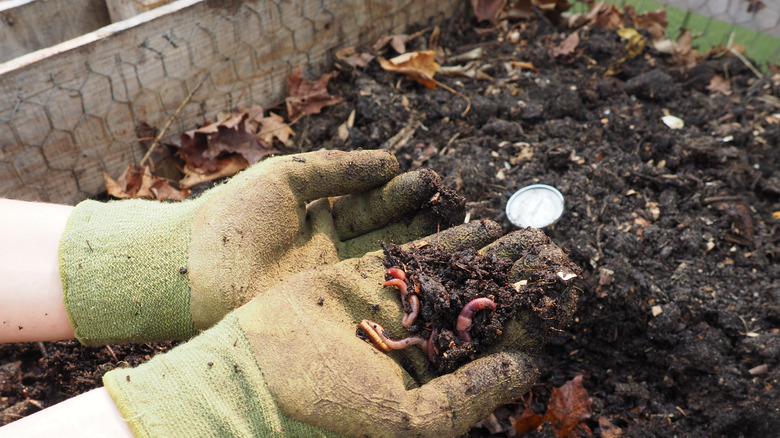
I'm a master gardener and permaculture specialist, so I pay more attention to what's in my soil than most people. You probably don't give much thought to what's really in your topsoil, aside from giving the odd shudder at something slimy and wriggly. But what you dig up tells you so much about the health of your garden. If your soil is healthy, when you dig up a spade full of earth, you should see it full of life, especially worms, including nightcrawlers, endogeic earthworms, and many others.
There are both good and bad worms, however. You don't want invasive pests like Asian jumping worms or hammerhead worms. The trick is learning to tell the different worms apart and to read what their presence, or lack thereof, is trying to tell you. Sometimes, you have to read broader signals, because nematodes, for example, are microscopic and invisible to the naked eye. Many are beneficial, but others attack your plant roots, so while you won't see those tiny worms, you'll see the symptoms they can cause. Sadly, most people just see "worms" and are disinterested or a little grossed out. However, getting to know the weird little alien beasties living in your soil can help you build a healthier, more productive yard.
Nightcrawlers are the gold standard for deep, healthy soil
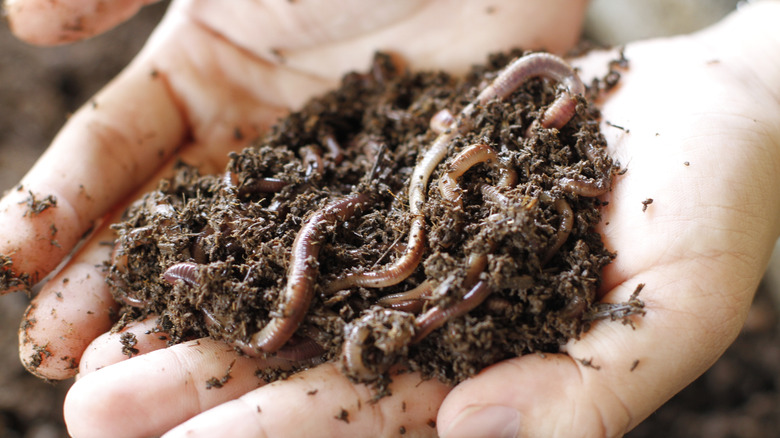
The European nightcrawler, also known as the common earthworm (Lumbricus terrestris), is the species that most people think of when they picture an earthworm. They are large with reddish-brown coloring at the head and a paler hue toward the tail. Earthworms of this species can grow as long as 10 inches when they fully extend. These are the worms that you probably thought would regenerate and become two worms when you were a kid. (They don't, but it's not as far-fetched as you might think. Another worm on this list does exactly that.)
Nightcrawlers are deep burrowers, also known as anecic earthworms, and finding lots of these is a strong sign you've got healthy, rich soil. They drag organic matter from the surface down into their deep, permanent vertical burrows, which can extend several feet into the soil. As they do this, they mix the soil layers, improve structure and drainage, and create channels for roots, air, and water. Maintaining a healthy habitat for them is one of the key reasons I use a no-dig approach to gardening. These useful creatures need well-balanced, undisturbed soil, and repeatedly tilling or digging destroys that. Those long burrows also provide deep channels for plant roots to follow, to access moisture and nutrients, and they allow rain to penetrate better and more quickly instead of saturating the upper soil layers or sitting on the surface for long periods. Support these beneficial earthworms by leaving soil undisturbed, adopting a no-dig approach, and making sure you layer the top of bare soil with plenty of organic matter for them to feed on.
Endogeic earthworms keep your topsoil loose and aerated
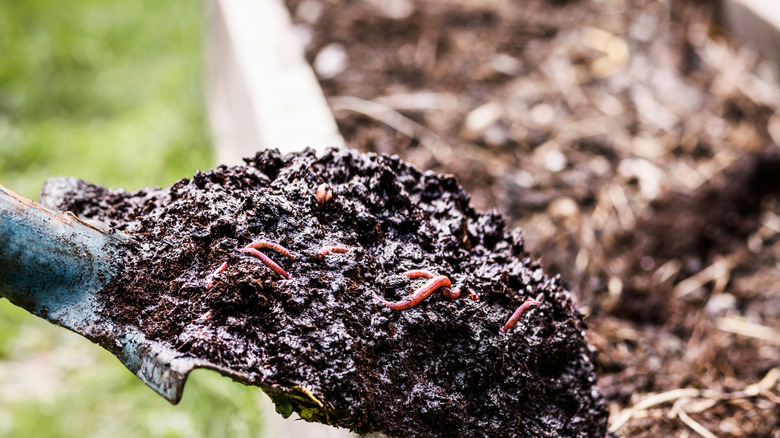
People tend to mistake endogeic earthworms for small or "baby" nightcrawlers, but they are a distinct type of earthworm. Endogeic types are smaller and paler than the larger nightcrawlers, and some are white or grayish-pink. But they otherwise look reasonably similar, hence their mistaken identity. Endogeic earthworms live in the upper mineral layer of soil and build an impressive three-dimensional horizontal burrow system. Their feeding, excreting, and burrowing habits are fantastic for soil structure and health. Their "castings" (worm poop) are particularly good for fertility and soil structure.
When you lift some soil, you want to see lots of these little guys in the top layer, as this indicates reasonably fertile soil, good aeration, and a nice, light, open structure. If you only find a couple or, even worse, none at all, then your soil is likely compacted or heavy. It may also be barren and damaged from the overuse of chemicals. Or, the soil may have been overworked. This is where the soil has been dug, tilled, and turned regularly, often for many years, with no real time for the soil biosphere to recover. Endogeic earthworms are among the creatures that can be permanently displaced by over-managed soils, as when you rotovate or dig over the ground, you destroy their carefully built habitat. Plus, you expose many of them, leaving them vulnerable to drying out and getting eaten. So again, think about adopting a no-dig style of gardening to preserve all of the precious life in your soil.
Eisenia andrei signal a thriving surface layer of organic matter
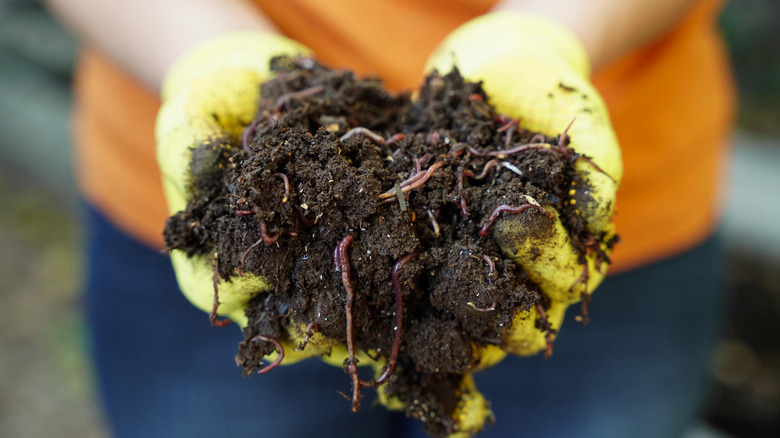
Red worms, or Eisenia andrei, are another type of worm known as epigeic. They live in the rich top layer of organic matter, above the mineral soil layer inhabited by endogeic earthworms. These little decomposers are just 1 to 5 inches long with a distinctive red color, and they move surprisingly fast. You'll find them under piles of leaf litter, in your compost, and in the top layer of heavily mulched beds. Basically, anywhere where there's a lot of mostly undisturbed decomposing organic matter for them to eat and live in. They are able to decompose large volumes of organic matter in a relatively short timeframe.
If you see red worms in your garden beds or compost heap, excellent. Their presence tells you that you have a functional, healthy, decomposing organic matter layer right at the surface, and that those red wiggly worms are turning that layer into useful, bioavailable nutrients, ready for the other worms to draw deep down into the soil to feed your plants. Again, permaculture principles are your friends here. Don't disturb the soil more than you have to, or the red wigglers will vanish along with many other useful soil-dwellers. You need these decomposers if you don't want to constantly rely on chemical fertilizers and back-breaking manual work to build good soil structure. All you need to do to keep red worms happy is to add plenty of fresh organic matter from time to time. Mulching a bed with compost or well-rotted (never fresh) manure or leaf litter is the simplest option.
Eisenia fetida are another good sign for organic matter
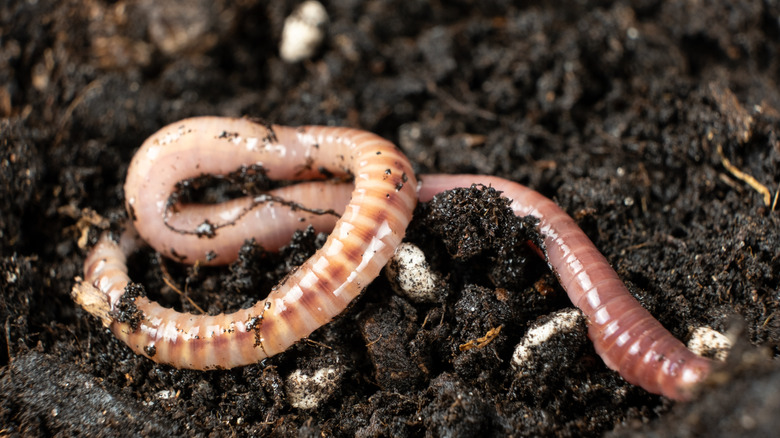
Eisenia fetida is a close relative of Eisenia andrei, but the former have more distinct banding on their bodies. They used to be considered the same, but they are, in fact, a distinct "sibling" species, even though most folks still refer to them interchangeably. Those "compost worms" you can purchase are generally Eisenia fetida, or a mix of the two species. These stripey wiggly worms, also called tiger worms, are just as adept at decomposing lots of matter in a short period as their non-striped siblings. Tiger worms are also very happy in more confined conditions, like vermicomposters or small and medium-sized compost bins, especially compared to nightcrawlers. E. fetida is slower than E. andrei to mature and reproduce, and they also produce fewer hatchlings per cocoon.
One of the main differences is that in nature, you'll find E. fetida in leaf litter in moist forests, while E. andrei is found in compost and manure. However, neither can survive in very hot conditions, and will seek out rich but cool conditions instead. So if you've got them in your compost, be mindful of how hot you let the pile get. Between 55 and 75 degrees Fahrenheit is ideal. As with their sibling species, if you find lots of these in the top layer of soil or all through your compost heap, that's fantastic news. It means that the conditions are healthy enough to support these worms, including a good balance of nitrogen and carbon and a top layer that is moist but not waterlogged.
Asian jumping worms are seriously invasive
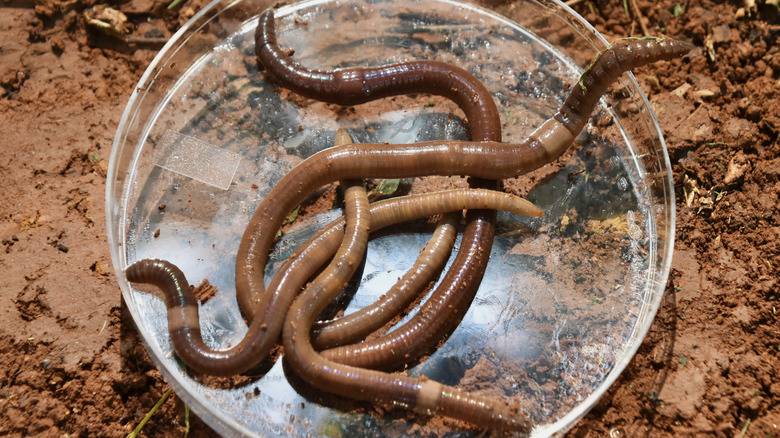
Asian jumping worms are an invasive nightmare consisting of a few species, including Amynthas spp. and Metophire hilgendorfi. To the untrained eye, they look pretty much like common earthworms. But you can tell you're dealing with a jumping worm by looking at the band that encircles its body, the clitellum. It is milky white, smooth, and wraps the whole way around. Whereas if you're looking at a nightcrawler, the clitellum is more saddle-shaped, raised, and doesn't fully encircle the body. And, if you disturb jumping worms, they thrash around like a snake, sometimes flinging themselves right out of the soil.
If you've got an Asian jumping worm infestation, you'll see soil that's dry and granular, like coffee grounds. These significant pests have spread to at least 38 U.S. states, and if you have them in your yard, it tells you your soil is in trouble. As bizarre as it sounds, these worms are a serious ecological threat. They eat vast amounts of organic matter, and reproduce at a rate other worms can't compete with. They deplete the soil, leaving it weak, structurally unsound, and prone to erosion. There are also no effective chemical controls for this species. The most effective method I've seen is using a mustard drench, which is ⅓ cup of ground mustard mixed with 1 gallon of water. Soaking a bed with this solution brings the Asian jumping worms to the surface so you can handpick and bag them. You'll also need to report the sighting to your state's invasive species registry. Soil solarization is another option that can help kill off cocoons, but this is extreme and will also kill off many other soil-dwelling creatures.
Hammerhead worms prey on your earthworms
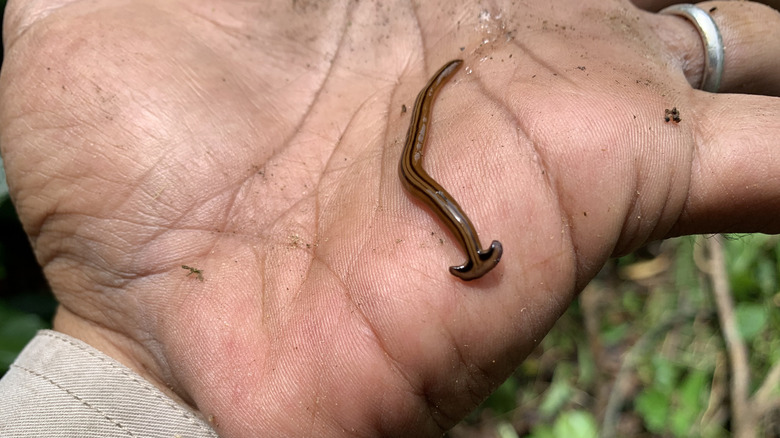
Hammerhead worms are another garden pest you can't afford to ignore. They are long, flat, and ribbon-like with a distinctive shovel-shaped head. Some can reach 15 inches in length. They hunt earthworms and other invertebrates, and they are simultaneously fascinating and gross. After tracking their prey, they wrap around it and subdue it with a toxic chemical in their mucus called tetrodotoxin, before digesting the helpless invertebrate. Hammerhead worms are invasive, introduced from Asia into the U.S. in the late 1800s via the horticultural trade.
If you see these worms in your garden, you've got problems. They'll deplete the beneficial invertebrate life in your soil, and these are the worms that I mentioned earlier that really do regenerate if you chop them up. But more than just halves: These incredible pests can regenerate from mere fragments. So whatever you do, do not cut them to kill them. The aforementioned mucus can also irritate your skin, so wear gloves when you're picking them up. Kill them by throwing them in a ziplock bag and freezing them, or by dunking them in citrus oil, salt, rubbing alcohol, or vinegar.
Root-knot nematodes cause unmistakable damage to plants
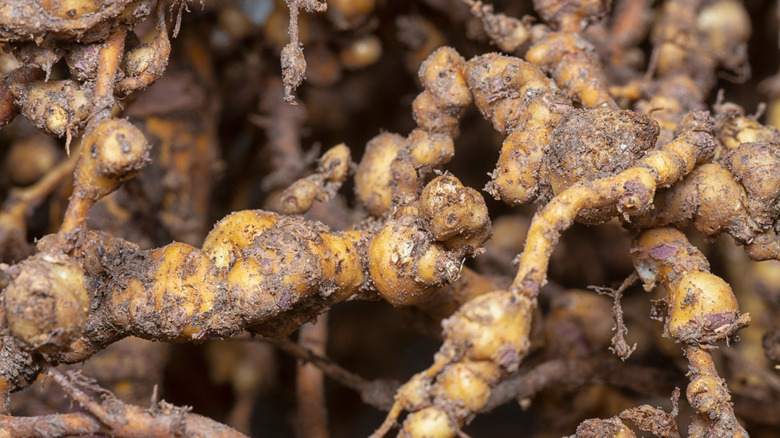
Nematodes are not visible to the naked eye, but you'll soon see signs if you have the problematic root-knot nematodes in your soil. They'll make themselves known by the state of your plants and their roots. It's usually pumpkins and squashes that get hit. But they can also attack tomatoes, carrots, peppers, and many other warm-season plants. If you have these tiny organisms living in the soil, you'll likely see stunted growth or wilting, and when you lift the affected plants, you'll see their roots are bumpy or knobbly. These are the galls, where the nematodes feed. The nematodes invade the root tissue, stopping the plant from taking up water and nutrients.
If you notice root-knot nematodes, it's a sign you need to rotate what you're growing in that bed to a clean bed. Once you've got them in a bed, only grow things that are less susceptible there for at least the next three years. If you're a vegetable grower, for example, brassicas, like cabbage and broccoli, make poor hosts for root-knot nematodes, so they are a good choice for these beds. Some plants also have resistant cultivars. My go-to is planting French marigolds. I plant these a lot as companion plants for all kinds of issues, but they're particularly good for fighting root-knot nematodes as they release a compound called alpha-terthienyl, which is conveniently toxic to root-knot nematodes and stops their eggs from hatching.
Beneficial nematodes target soil-dwelling pests
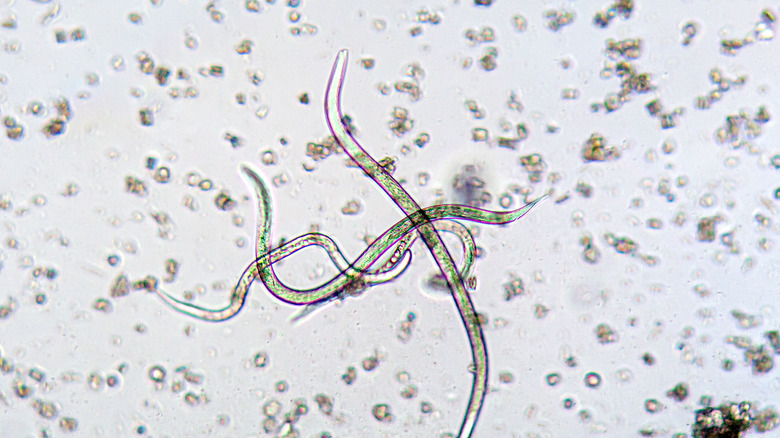
Although root-knot nematodes are a real pain, not all nematodes are bad. In fact, many are brilliant microscopic predators. They eat bacteria, fungi, and even some soil-dwelling insects and invertebrates like fungus gnat larvae, thrips, and weevils. I've even bought ant-killing nematodes and released them in a heavily infested yard when I moved to a new home. They did their job fantastically well. While most people never think about nematodes, they are an important part of a healthy, balanced soil ecosystem.
If you have a decent population of beneficial nematodes in your soil, you won't see them, although you can get a lab test to confirm their presence. But you shouldn't have heavy infestations of soil-dwelling pests. And, if you do have issues with specific pests and you're aiming for natural control, then you can be like me and buy and release specific nematodes. Heterorhabditis bacteriophora, for example, will rid your lawn of Japanese beetles by eating the larvae, and Steinernema carpocapsae targets caterpillar pests like tomato loopers. If you go this route, just make sure you buy from a reputable seller and that you store and apply them according to the packaging, as they need specific conditions and temperatures to be most effective.
Wireworms cause hidden underground damage
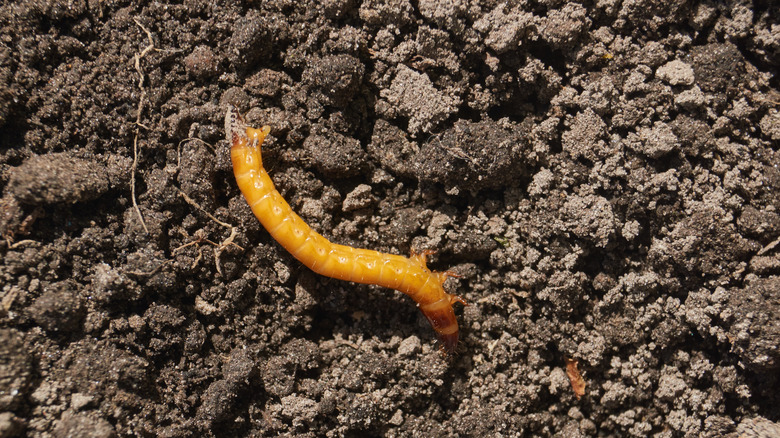
I hate wireworms. They are ridiculously destructive. They're the larval stage of click beetles and have a hard shell with a yellow to reddish-brown coloring. Wireworms feed on seeds and roots under the soil surface, which is fine in most gardens, but if you grow root crops, particularly potatoes or carrots, an infestation of wireworms is devastating, as they tunnel right inside the roots and tubers. You won't know about it until you dig them up, and the damage is already done. They are frustratingly common in soil that's been converted from grass in the last couple of years. And wireworms stay in this larval form for up to six years, so the damage is ongoing.
Wireworms will show up as tunnels drilled into your root crops, and the pests may still be inside and actively feeding. You can test for them by burying half a potato for a few days, then lifting it. If you've got problems, you'll see the holes drilled by the wireworms and may even see a few of the pests right inside the potato. This is another one you can't do much about, as there are no chemical controls available to the public. However, Heterorhabditis bacteriophora nematodes have proved fairly useful. Good soil structure, reducing compaction, and improving drainage also help make soil less hospitable to these pests. And I strongly recommend rotating crops and keeping anything vulnerable away from known problem areas for a few years.
Horsehair worms are harmless to plants and soil
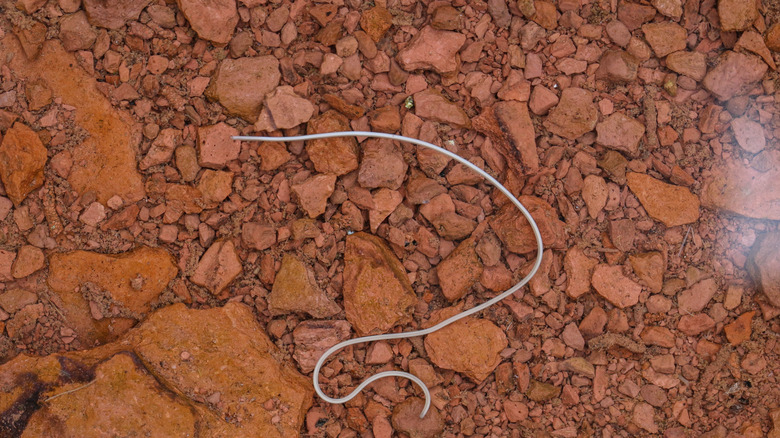
Horsehair worms are really weird creatures. You may see them after rain or in very wet soil. They are thin as a thread, tan to dark brown, and can grow to over a foot long. They start life as parasites, using crickets, grasshoppers, and other large insects as hosts. When they want out, they force their host to find water like a pond, puddle, or bird bath. They then exit the body of the host before continuing their life cycle as mature, free-living horsehair worms.
Although it sounds like something out of a horror movie, the worms are completely harmless to humans, pets, and plants. And, in theory, they do provide some incidental benefits, in that they kill pests like crickets as part of their life cycle. Their presence doesn't tell you much about your soil and plants, other than that your yard is biologically active and healthy enough to support larger insects. You don't need to take any action if you have horsehair worms.
Pot worms signal overly acidic, waterlogged conditions
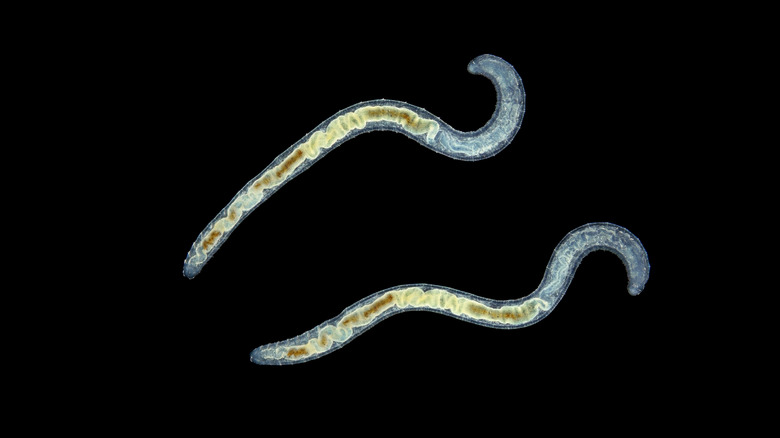
Pot worms are small, white, thread-like worms. They turn up in compost heaps and wet, organically rich soil. They are fairly fast-moving, and it's common to encounter a whole wiggling bundle of them in a small space. They break down fungi, bacteria, and other organic matter, and are important nutrient cyclers. They also improve soil structure through burrowing and producing castings, much like earthworms.
Their presence in moderate quantities is beneficial and shows that you've got a healthy, active ecosystem in your soil layers. But if you get a sudden population explosion of pot worms, it's a clear indicator that your soil is both too wet and too acidic, as these are the conditions under which these tiny worms really thrive, unlike other beneficial worms. This will be most evident in a compost heap or a bed full of rich organic matter or mulch. You need to improve drainage and balance the pH to bring the contents back to more favorable, neutral conditions.
What it means when you find no worms at all
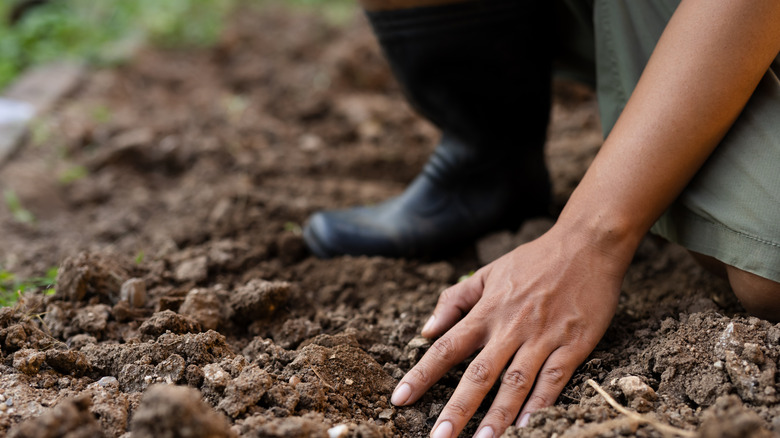
Having no worms, or very few worms, in your soil is even more telling than what types of worms you have. As a bare minimum, you should have at least five earthworms per square foot in a 6-inch-deep area — ideally, many more, plus all the other beneficial worms. A robust worm population indicates healthy, active soil that's full of life and nutrients.
A complete lack of worms indicates significant problems and requires action. Two common causes are heavy and compacted soil and the overuse of synthetic pesticides and herbicides. Low organic matter and low pH can also contribute to a lack of worms. To fix the issue and attract worms to your garden, stop using synthetic chemicals. Stop unnecessary tilling and digging so you don't disturb worms' habitat. Apply a thick layer of compost or mulch rich in organic matter to the surface of the barren area. Slowly, earthworms and other beneficial beasties will move back, colonizing from the outside in. The less you disturb the area, the faster they'll return. Be patient, however. Rebuilding a healthy soil ecosystem takes time.