

Homeowner Gets Creative To DIY Hardwood Floors On A Budget: 'I Faked Them'
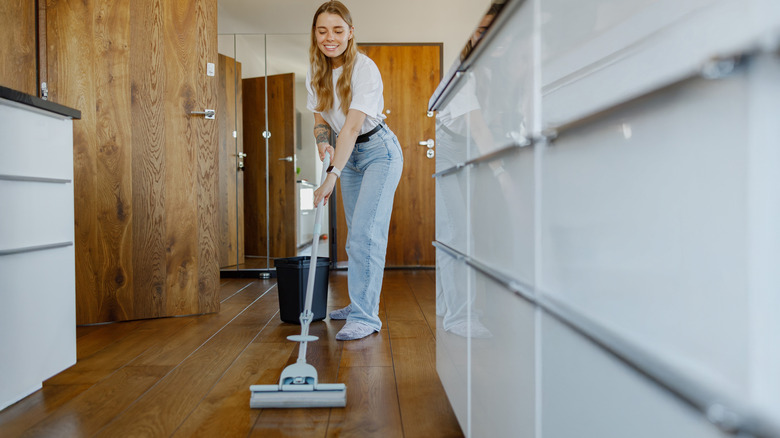
From tile to carpet, there are tons of options for home flooring. For many people, however, hardwood floors are a favorite. Real hardwood floors are durable and easy to maintain. Plus, the classic beauty of a hardwood floor looks great in nearly any room. With the popularity and beauty comes a high price tag, however. You may be able to get one of the affordable types of hardwood floors that look more expensive than they are, but installation can drive the price up, especially when old flooring needs to be removed.
Whether you want to save up for a hardwood floor installation and need a way to update the look of your flooring in the meantime or you want a solution that will save you lots, one option is to get crafty and DIY a faux hardwood floor. It may seem like an implausible idea, but using a brown or black Sharpie to draw your own patterns on plywood can create a surprisingly good "fake" hardwood floor, just as one homeowner on Reddit shared.
Instead of installing real hardwood planks, homeowners can fake the look by drawing lines where wooden boards would be. Combining this with some wood stain and Sharpie outlines where the space between hardwood planks would be, and it leaves you with a relatively realistic-looking floor. A project like this takes some serious patience, a Sharpie or other permanent marker, plywood boards to cover the floor, a wood stain in your choice of color, a tape measure, and a sealer that can protect your hard work once it's done.
How people create faux hardwood floors using a Sharpie
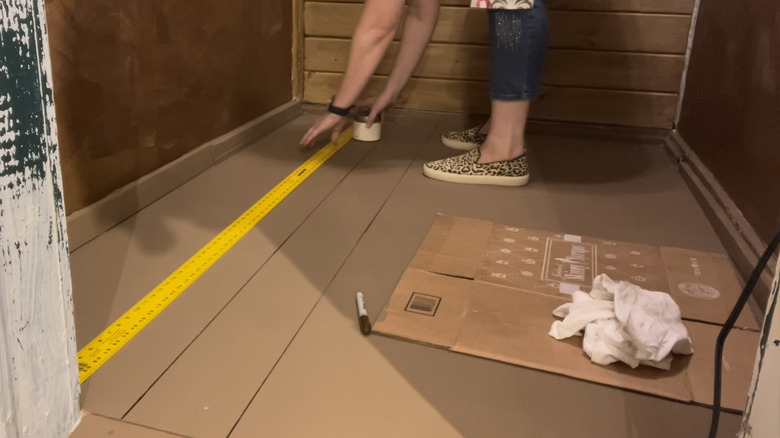
If you decide to try to get the hardwood-floor look with a DIY, the easiest way to start is by laying down ½-inch thick plywood sheets to cover the floor entirely. Use adhesives or wood screws to secure the sheets to the floor. Then, sand the surface of the plywood to prepare it before adding a wood stain. Be sure to check out some helpful tips savvy DIYers will want to know before using wood stain, and keep in mind that staining plywood is a bit different from staining hardwood. Keep in mind that even with proper sanding, brushing on the stain, and wiping away any excess, your plywood may unavoidably end up with a slightly uneven or blotchy finish.
Once the stain is completely dry, it's time to bring out the Sharpie (or other permanent marker or paint pen of choice). This is where the sheet transforms into what looks like multiple planks of wood. You can go for wider planks, which are about 5 to 8 inches wide, or narrower planks, which are between 2 and 5 inches. Also consider the length of your faux planks and their pattern. The "planks" should be staggered somewhat randomly for a natural look.
Start by lightly drawing the outlines of "planks" in pencil to get the measurements right before going in with your brown or black marker. Be sure that the lines are straight, and carefully consider what kind of planks you want to mimic. You can also accentuate the wood grain and knots with your marker. Finally, apply a top sealer coat to protect your work.
What to consider before trying this trick
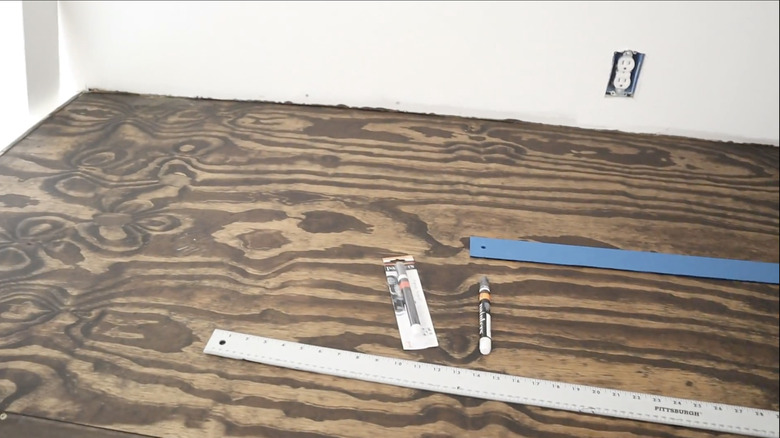
Plywood flooring has some surprising benefits, such as relatively little expansion from heat, and it can last quite well when sealed because a top coat will protect the material from damage. Still, it is best to avoid plywood flooring in kitchens, bathrooms, and basements, as moisture can cause plywood to swell. A higher grade of plywood results in a better finish, but even a basic sheet of plywood that might be used as subflooring can work. The latter option may only cost you about $15 for a 4x8-foot sheet.
Of course, you'll make up for the low price in hours of time and effort. Maintaining the quality of your straight lines and knot emphasis can be tedious. It is doable in a small room, but in a large space, it is much less feasible. From a distance or in an infrequently used room, this DIY should be fine, but you might not want to try this if you are a stickler for perfection.
This project is a truly budget-friendly way to fake the look of hardwood floors, but you need to be committed to a long process and be okay with a flawed result. If it doesn't sound right for you, consider learning about the beautiful hardwood flooring alternatives HGTV stars can't get enough of.