

How Long Sliding Glass Doors Typically Last (And How To Boost Life Expectancy)
We may receive a commission on purchases made from links.
Sliding glass doors effortlessly combine visual appeal with functionality — until, suddenly, their performance starts to decline. Those smooth glides? They may begin to stick. Or perhaps, you might've noticed a persistent draft originating from your patio doors, maybe sooner than you'd expected. Unfortunately, even the best sliding glass doors have a lifespan. However, what's important is knowing how long they last and how to obtain the longest lifespan possible to postpone any major replacements.
With that being said, there is no one-size-fits-all life expectancy for a sliding glass door. Instead, exactly how long your glass door may last depends on factors such as usage, maintenance, and even factors outside of your control, such as how well the door was made. On average, a high-quality sliding glass door that's properly cared for can last up to 30 years. However, to see your door reach its life expectancy, or perhaps last even longer, it'll require some regular TLC. For some people, this heftier level of upkeep may be viewed as a downside of sliding glass doors.
Maximizing your sliding glass door's lifespan can be broken down into two types of care: preventative and curative. Preventative care focuses on regular maintenance, those easy-to-forget chores like keeping the track system clean or inspecting any hardware. This prevents problems before they happen. Curative care for a glass door, however, means familiarizing yourself with common sliding patio door problems so you can identify them — and thus repair them — before the damage becomes substantial.
Maximizing your sliding glass door's lifespan
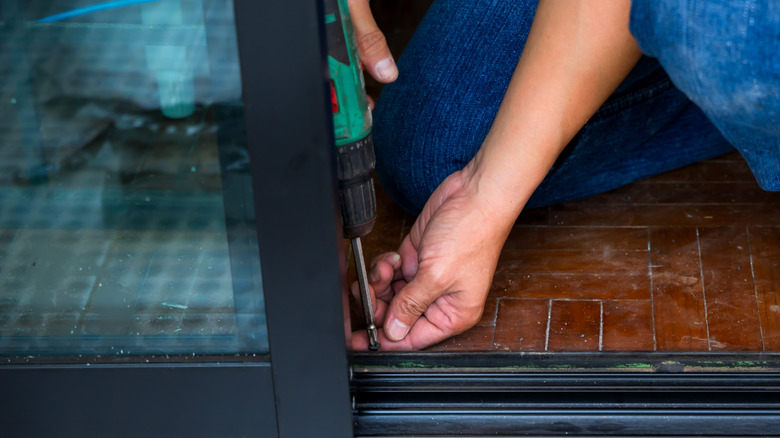
Maintaining your sliding glass door to boost life expectancy is as simple as adding just a few tasks to your weekly chore routine. This ensures that all parts of your door, from its glass to its hardware, are in good condition, preventing many common malfunctions from happening.
Start by cleaning your door's track system often to remove dirt, dust, and other debris. After cleaning, which you can do with a vacuum nozzle, apply a lubricant designed for this area, like KEZE Silicone Grease. It's also important to stay up-to-date with replacing any sealing or weather stripping as needed. When left unchecked, poor seals allow weather to take a toll on the hardware of your sliding glass door. This process is often known as winterizing your sliding door, since it's commonly done before the cold season. You should also inspect your door's hardware regularly. This includes lubricating and tightening any parts (think screws or brackets) as needed. Having a sliding glass door maintenance checklist helps ensure you cover all your bases.
Even a well-maintained door may run into problems occasionally, however. As a result, you'll want to know what common issues to look out for, as fixing minor problems sooner helps keep them from developing into larger (and more expensive) complications. One example is a damaged roller leading to a damaged track. When in doubt, you may wish to contact a professional, both for diagnostics and repairs if needed.