

Steps To Get Rid Of Mold In Your Kitchen Coffee Maker (& How To Stop It From Coming Back)
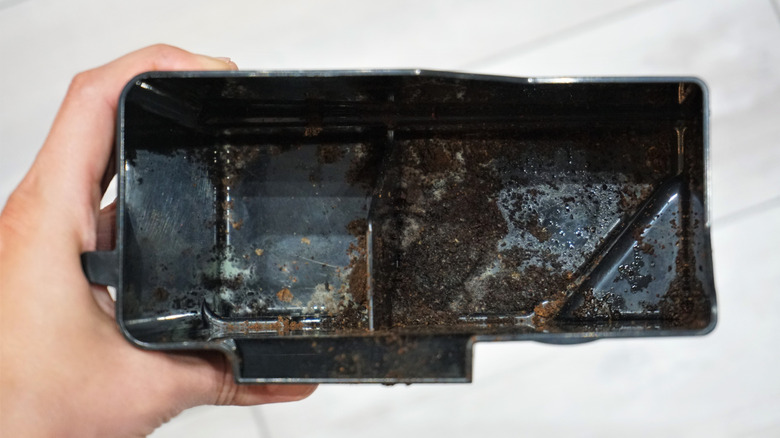
No one likes mold in their coffee, and it is never nice when what should be the peak of your morning turns into a sour taste — and a full mug, dumped. Coffee makers, like your standard brew machine, Nespresso, or Keurig, are notorious nesting grounds for mold and bacteria, thanks to their constant high levels of moisture and warmth. Every cup of coffee leaves a wet, warm pile of grounds and an environment that mold adores.
While accidentally ingesting bacteria, mildew, or mold from your coffee machine may not be fatal, it isn't good for you either. According to the Purdue Exponent, it can cause uncomfortable symptoms like diarrhea, bloating, and gas. Some individuals with asthma or allergies could have worse reactions. In order to prevent these unwanted consequences, it's imperative to make sure you regularly clean your coffee machine, even when you don't feel like it. The best way to do that is to eliminate the conditions in which mold grows and perform a deep clean on your coffee machine.
How to deep clean your coffee machine
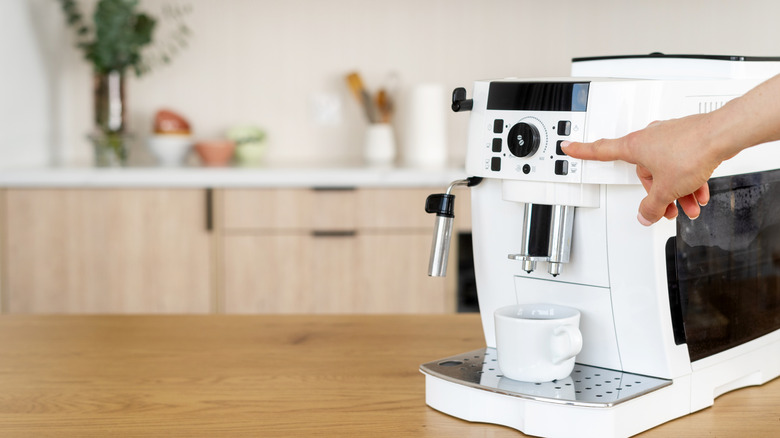
If it's been a while since you checked your coffee machine, you may want to give it a thorough deep clean. This is a chore you should complete every three to six months. Before getting started, you'll want to unplug the machine to let it cool and remove all of the parts. Then, wash the brew basket with soap and water, or place it in the dishwasher if the manufacturer allows. Be sure to wipe spilled coffee off of the hotplate or drip tray as well.
Last but not least, run a half-brew cycle using a one-part water and one-part vinegar solution. This is a sure way to kill mold in your coffee filter. At the half-way point, turn the machine off and allow the mixture to sit for about 30 minutes. Then, go ahead and complete the cycle. To get rid of any vinegar aftertaste, make sure to run two more regular brew cycles using just water.
When deep cleaning your coffee maker, never use dish soap to clean the inside. It may seem like a good idea to get rid of built-up oil and grease, but realistically the soap will be hard to get out of the machine and will most likely just make its way into your next cup of coffee.
Daily habits to prevent mold from growing in your coffee machine
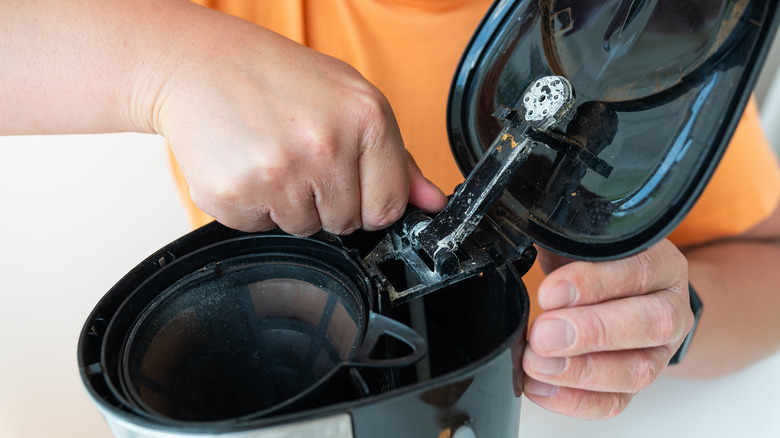
There are a few things you can incorporate into your chore list to ensure you keep a clean machine and don't end up ingesting anything harmful. Every single time you brew a cup, immediately toss the filter and wet grounds afterwards. Definitely do not let those sit there overnight. In fact, it is recommended to leave the lid of your coffee machine open to allow any excess moisture to escape. Rinse the brew basket with warm water and dish soap and allow it to dry completely as well.
Hold on, you're not quite finished yet. After you've thrown away the grounds and set the brew basket out to dry, make sure to empty, rinse, and wipe the drip tray that sits underneath your mug using a damp cloth. If you're dealing with burnt coffee stains, you can clean your coffee maker's pot plate using baking soda. Finally, you should dump any residual water left in the machine and, if the tank is removable, set it out to dry or wipe it down with a cloth. Make sure you allow every piece of your coffee machine to fully dry before putting them back into place. These steps will only take a few more minutes out of your day, but will save you long-term.