

The Early Spring-Blooming Flower Joanna Gaines Loves To See Pop Up

In a recent Instagram post, interior design icon Joanna Gaines walked through her garden after being away for a week and gushed over all the beautiful new blooms that sprouted to life in her absence. The co-host of Fixer Upper is known for her farmhouse-chic design style, but she also has an impressive garden.
"It's been 15 years since I roughed out my first plot of dirt with tape and rope and asked Chip to build me my first garden bed. Something small. Something simple," Gaines explained in Magnolia Journal, "Over time our garden has grown, changed size and shape, its purpose evolving with it. What began as a shy interest in growing some vegetables for dinner has turned into a love of place."
Over the years, Gaines has grown a host of gorgeous flowers in her garden from dahlias to snapdragons. Her sprawling farm garden is a masterclass in cultivating a diverse, colorful sanctuary filled with flowers throughout the growing season. One spring-blooming flower she highlighted in her post is bridal wreath (Spiraea prunifolia). This fast-growing shrub features long columns of double or single white blooms. They are often used to craft wreaths or flower crowns, hence their name. To cultivate a beautiful spring garden like Joanna Gaines', you'll want to incorporate bridal wreath in your garden.
Growing and caring for your bridal wreath
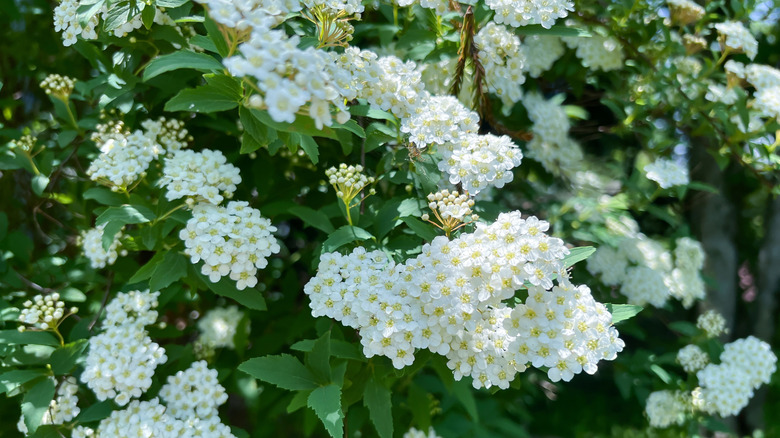
Bridal wreath is a gorgeous flowering shrub that grows perennially in zones 5 to 8. It drapes down in a fountain-like fashion and grows anywhere from 4 to 8 feet tall and wide, making it an excellent option for hedges. This heat-tolerant flower thrives in full sun but can also tolerate shade. Your bridal wreath shrub should bloom between March and April. Most of the year, the shrub will feature shiny, dark green leaves. In the fall, bridal wreath offers a stunning display of golden, burgundy, and orange foliage.
Bridal wreath is easy to plant and care for. They tend to do well in most conditions, but it's best to opt for well-drained, slightly acidic soil. To plant your bridal wreath, dig a hole 2 to 3 times bigger than your nursery plant's root ball. If your soil is already well-drained and fertile, there's no need to add any amendments. However, you may need to mix in organic material into poor-quality soil or peat moss to help with proper drainage. Once you transplant your bridal wreath, give it a good watering.
During the plant's first year in your yard, deeply soak the root ball and allow it to dry out before each watering. Once your bridal wreath is established, you can reduce watering. Fertilize the shrub in the late winter or early spring. You can lightly clean up your bridal wreath directly after blooming to maintain its shape, but it's not necessary if you're hoping to enjoy its natural, drooping form.