

The Gorgeous Spine-Free Cactus That Makes For A Perfect Flowering Houseplant

With the right care, cacti and succulents are some of the easiest houseplants to grow, making them a perfect plant for beginner gardeners wanting to decorate their home. However, there is one downside to growing many popular cacti varieties: their spines. The spines of a cactus come in many forms, with some being painful when accidentally pressed. As a result, if you're trying to grow a thriving indoor garden in a home with curious children or pets, you may shy away from cacti altogether. However, with this spine-free cactus species, you can enjoy the overall look of a cactus without the risk.
The fishbone cactus (Disocactus anguliger, previously Epiphyllum anguliger) is a species of cactus native to Mexico that has no spikes. That's right — instead of those spikes many gardeners are wary of, fishbone cacti sport smooth, flat green stems that closely resemble leaves. These typically grow in a wavy pattern, which is why this cactus is also called the zig-zag cactus. This means that you don't have to worry about a lack of prickly spines taking away from the classic dramatic appearance of a cactus, making this one of the best succulents to grow indoors (all cacti are succulents, though not all succulents are cacti). Fishbone cacti even bloom under the right conditions, showcasing stunning and fragrant white flowers that bloom briefly at night from late summer to fall.
There are a few care requirements to familiarize yourself with before adding this plant to your houseplant lineup. This is especially true if you want the best chance at enjoying its fragrant blooms.
How to care for fishbone cactus
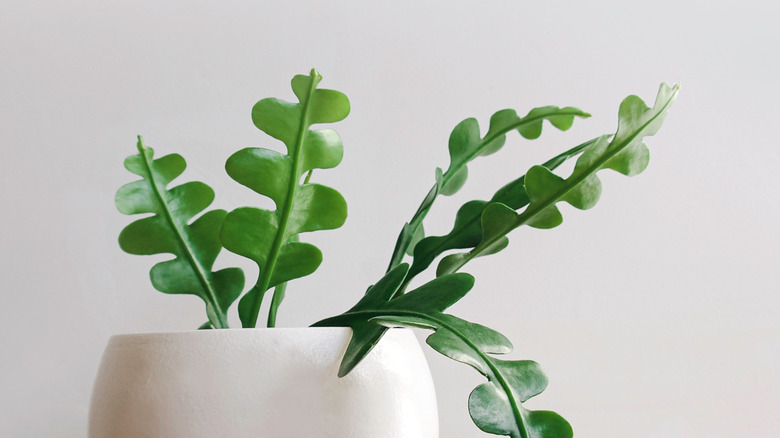
If you've grown cacti or succulents before, you'll find that caring for a fishbone cactus is a similar process. First, choosing the right soil medium and providing the right amount of hydration are essential for a healthy plant. Fishbone cacti do best in well-draining, nutrient-dense soil. Like with other succulents, overwatering can be detrimental, but you don't want to accidentally underwater your plant either. Allowing the soil to dry completely between waterings helps prevent either extreme from taking a toll on your fishbone cactus.
As far as sunlight goes, the fishbone cactus is a true sun-lover — with a caveat. While it does thrive with several hours of bright light each day, it's important to choose an indirect light source instead of direct. This could involve placing your fishbone cactus near but not directly on a south- or west-facing windowsill, or using diffused light from a grow light. You may also opt to place your fishbone cactus in an east-facing window where it receives ample light in the morning and shade as needed.
But what about those eye-catching flowers? If you want to encourage your fishbone cactus to bloom, you'll need to establish a routine early. This is because they require cool temperatures during the winter and early spring to prepare them for later flowering, typically around 52 to 57 degrees Fahrenheit. It also helps to apply fertilizer in the late spring and summer. Keep in mind that fishbone cacti can be finicky when it comes to blooming indoors, and it may take a few years of caring for the plant to enjoy its show-stopping flowers.