

The Clever Thermostat Hack That Lets You Outsmart Peak Energy Rate Hikes
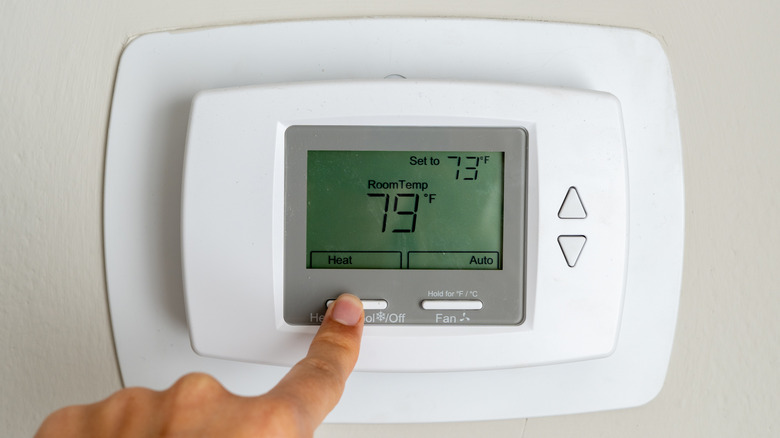
Electricity use is generally highest in the morning, when people are getting ready for work or school, and again when people come home in the late afternoon and early evening. Following the laws of supply and demand, many utilities charge customers more for electricity during those peak periods and less during periods of low demand. These are called "time-of-use" rates. Electricity prices may be out of control in the United States, but you can lower your electric bills by programming your thermostat to shift the time when you use more electricity to periods when it's less expensive.
Time-of-use rates exist in all 50 states, though not among every utility provider in each state. You can search the website of your electricity utility for its rates — or you may be able to check your monthly bill to see if those rates have been applied. With some utilities, you need to sign up for time-of-use billing.
If you pay time-of-use rates and have window air conditioners, electric baseboard heat, or a central HVAC system that runs on electricity, you can use your thermostat to heat or cool your home when rates are low. For example, in the summer, set your thermostat to super-cool your home before rates go up in the late afternoon, then raise the temperature for the evening hours even beyond what would be comfortable. Your home is likely to stay cool throughout the evening without the A/C needing to kick in until bedtime — at which point, electric rates may be lower again, and you can program your thermostat to cool your home to a comfortable sleeping temperature. The same applies to heating your home in the winter, just in reverse.
When and when not to use your thermostat to save energy
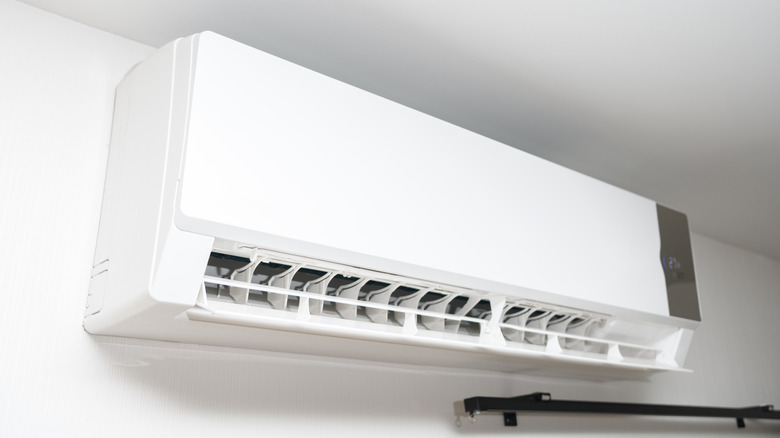
But what if you don't use window air conditioners, electric baseboard heating, or an electric HVAC? The best time to turn on the heat or air conditioning in your home may depend on how you heat and cool it. Even if, naturally, you can't take advantage of time-of-use electricity rates if you use oil or natural gas to heat or cool your home, you can still save up to 10% on your heating bill by adjusting your thermostat to lower your fuel use, according to the U.S. Department of Energy.
With that said, there's one form of electric heating and cooling where it's best not to tinker with your thermostat. If you heat and cool your home with an air-source heat pump, which runs on electricity, then the best advice from the U.S. Department of Energy is to leave it alone. A heat pump is most efficient when it doesn't need to work hard, so turning it on and off, or raising and lowering your thermostat, uses more energy than just setting it and forgetting it.
If you're looking to reduce your energy costs at home, there are other ways to take advantage of time-of-use rates. If you have an electric vehicle, charge it overnight when electricity rates are often the lowest. If you have solar panels, store the electricity in a home battery when the sun is shining, then use that electricity in the evening when rates are highest, rather than overnight, when rates are lower. Ultimately, you'll save the most if you adjust the ways you use space heating and cooling, which consumes more than half of the average household's energy use.