

The Essential Lawn Care Step To Do Before Spring Fertilizing

Most people rush to spread fertilizer on their lawn the moment the weather starts getting warmer. But they skip the one step that actually gets the lawn ready for it. Dragging the mower out of the garage after winter might feel like a chore you can put off for a few more weeks. In fact, that first cut is the secret to making your spring fertilizer work. If you throw fertilizer on grass that hasn't been mowed yet, those expensive granules often get caught in the thick, dead grass left over from last year. This old growth acts like a shield, blocking the soil and roots from getting the boost they need to wake up.
For a yard with Kentucky bluegrass (Poa pratensis), for example, the move from winter sleep to spring growth depends on getting rid of that brown debris. Mowing the lawn before fertilizing trims away the dead tips and opens things up so sunlight and air can reach the base of the grass. This first mowing session also helps you establish a baseline for how often you should mow your lawn heading into summer. It basically signals to the grass that it's time to start growing again.
Once you've finished that first mow, it's best to wait 24 to 48 hours before spreading lawn fertilizer. Mowing creates wounds on the grass blades, and putting fertilizer down right away can cause the edges of the leaves to burn. Giving your yard a day or two to recover allows the grass time to seal up those cut ends. Taking these steps prevents you from fertilizing a mat of brown, dead grass, which is a waste of money, and can even lead to mold or other fungus issues in the damp thatch.
Mowing helps your grass better absorb spring fertilizer and prevents disease
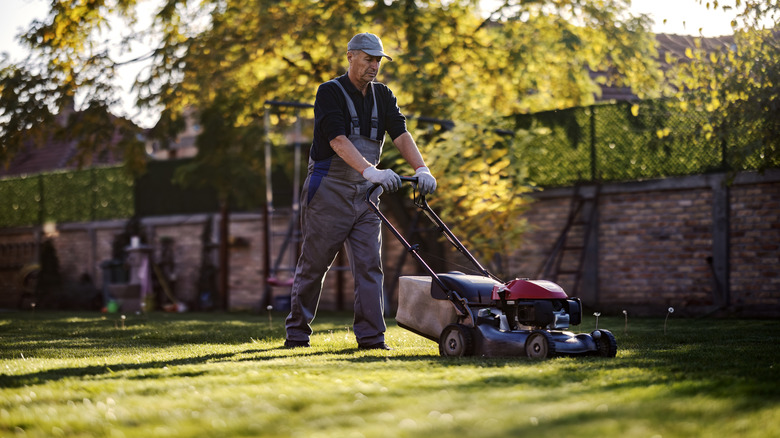
Setting your mower blade to the highest setting for that first spring pass changes how quickly the ground warms up after the weather turns. Finding the right length to mow your lawn during this time couldn't be more important. When you clip off the top third of the grass (never go below one-third), you're removing the ragged ends that survived winter frost and letting the sun in to warm up the dirt. That rise in soil temperature is what really gets the roots of your turfgrass growing and ready to process nitrogen. This extra warmth also speeds up fertilizer breakdown.
A fresh mow helps the yard dry out from the winter dampness that can lead to snow mold, root rot, or red thread, depending on the lawn grass species. These fungal issues thrive in wet conditions, often appearing as slimy patches or red coloring that can kill off grass blades before they even wake up. By clearing the surface of your lawn, you make sure any treatment spreads out evenly instead of clumping up when applied. This prep work makes it much easier for the grass to actually use the fertilizer so it can turn into thick, green growth later. Removing excess moisture also makes the soil less attractive to pests like grubs or crane fly larvae that love soggy conditions and eat vulnerable grass roots.
Removing winter debris through mowing prevents fertilizer waste and runoff
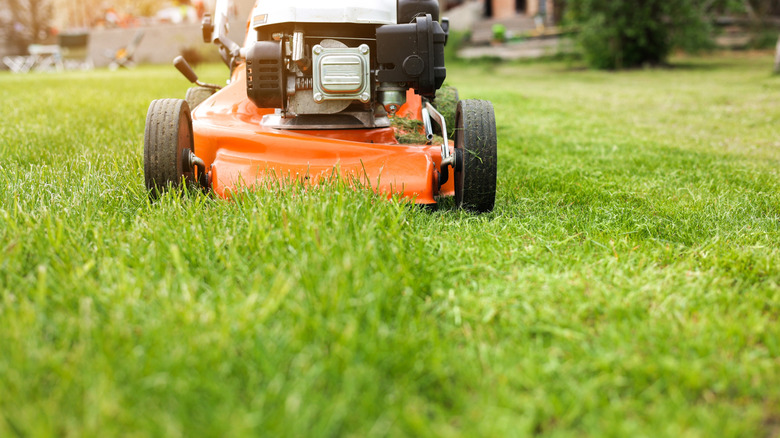
Leaving a layer of matted, flattened grass from last year can cause fertilizer to wash away during the first big spring rain. When nutrients sit on top of the unmown grass, they can't reach the soil and instead slide off into the street or driveway. This is a total loss since it starves your lawn and sends fertilizer chemicals into the local storm drains. Mowing acts like a deep clean that makes the ground much better at soaking up the fertilizer. For some types of grass, such as tall fescue (Lolium arundinaceum), a clean surface helps stop brown patch issues that happen when the grass stays wet.
Once you clear away the dead weight, the grass can finally breathe, and the roots can focus on spreading out and taking up as many nutrients as possible to feed the blades. Starting the year with a clean cut makes the rest of your yard maintenance much easier and helps the lawn absorb fertilizer and stay healthy when the summer heat finally kicks in. What's more, by making sure the roots are actually absorbing the nutrients from day one of the season, you'll have a much better idea for how often you really need to fertilize your lawn, making sure it's green all season long and in years to come.