

Keep Algae Out Of Your Birdbath With These Simple Cleaning Tactics
We may receive a commission on purchases made from links.
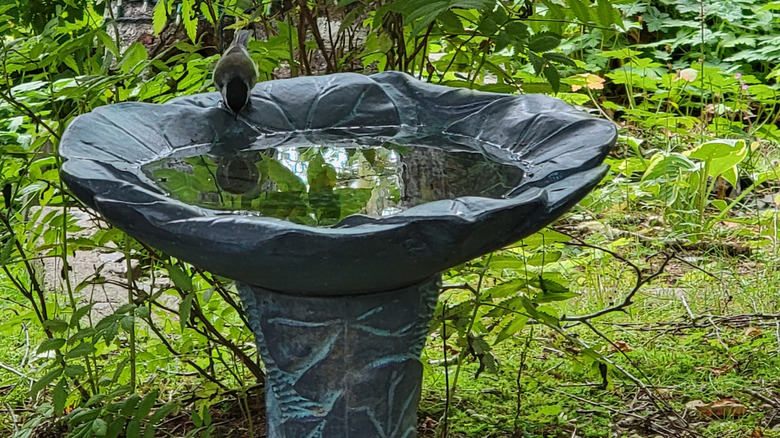
Birdbaths are an attractive addition to nearly every garden or backyard. It's relaxing to watch the feathered visitors it attracts splashing around in the water. If you want to provide water for your local flock, it's important to keep the birdbath — and the water in it — sparklingly clean. That includes dealing with algal growth right when it appears. You can keep algae out of your birdbath with some simple cleaning tactics and prevention tips: choosing baths made from algae-reducing materials, scrubbing the bowl with bird-safe cleaners, and placing the feature in the right place in your garden.
If algae is growing in your birdbath, the water will turn green. While the algae itself isn't inherently harmful to birds, it can reduce the benefits of your birdbath for wildlife. Algae growth reduces oxygen in the water and increases carbon dioxide and nitrogen. Water containing algae is more alkaline, which makes the minerals in the water harder for birds to absorb. Stagnant water is also a magnet for mosquitoes. If they breed in the water, you risk exposing the birds (and yourself) to West Nile Virus. Getting rid of algae in a birdbath starts with a thorough cleaning. Choose products that eliminate algae without harming your feathered friends. Cleaning ingredients you should avoid using on your birdbath include commercial algaecides and pool-cleaning chemicals, most of which are toxic to birds.
Cleaning your birdbath is the first step in removing algae
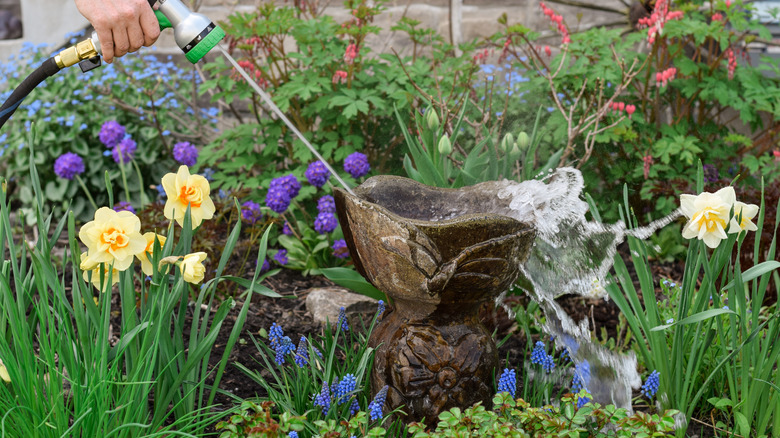
Vinegar is a pantry staple that will hinder algae growth in your birdbath without harming the birds that visit it, as is hydrogen peroxide. Mix one part vinegar to nine parts water and fill the birdbath with the solution. Scrub the inside of the basin with a hard-bristled brush. If you prefer to use hydrogen peroxide, mix equal parts water and hydrogen peroxide. Pour the mixture into the birdbath and get scrubbing. Whichever method you use, make sure to rinse the birdbath out thoroughly with hot water before filling it with clean water.
Sometimes, algae stains a birdbath, especially if it's been sitting in there for a long time. Sprinkle baking soda into the birdbath to cover the stains and add enough water to create a paste. Scrub the surface with a brush using circular motions until the stains are gone. Rinse the bowl with fresh water until the baking soda and any residual grime is completely gone. Let the birdbath dry in the sun before adding more water.
Cleaning doesn't keep algae away. It will grow back unless you take steps to prevent it. Full sun on hot days heats up the top layer of the water, increasing algal growth. Place your birdbath in a shady spot to keep the water cool. Copper is biostatic, and it may prevent algae growth in your birdbath. Copper birdbaths don't come cheap. Save your money and put a few pennies in your birdbath, as long as they were minted before 1982. Or drop a Mellbree 99.99% Pure Copper Birdbath Cleaning Disk into the water.