

8 Different Types Of Valuable Pottery From China You Can Thrift (& How To Identify Them)
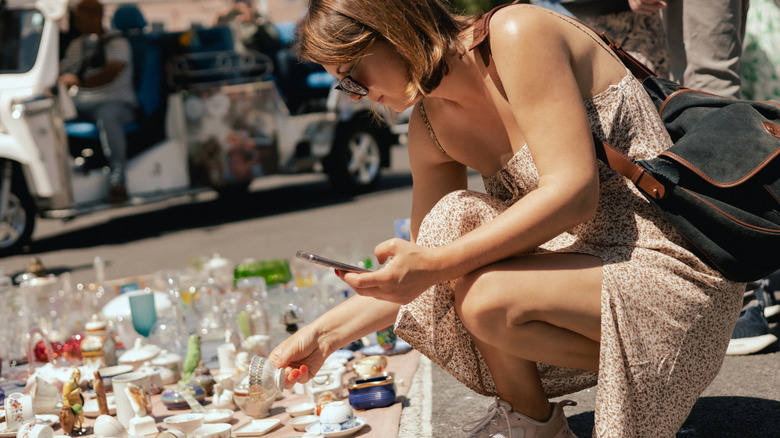
The long, winding history of Chinese pottery goes back to Neolithic times, with earthenware dated to 5000 B.C. While such an old piece would be an incredible find to uncover at your local thrift store, it's unlikely. However, it's not out of the realm of possibility to discover other types of valuable Chinese pottery in a relative's basement or at a secondhand shop. Whether someone donates it without knowing what it is or it's been passed over before, incredible pottery finds have been made at thrift stores, from intricately designed jars to an 18th-century, exported platter. First, you need to learn how to tell the difference between porcelain and pottery from the thrift store. You can then begin to investigate the nuances between different types of Chinese treasures.
Much of the valuable Chinese pottery you might stumble upon at a thrift store will be some form of porcelain. Not all pottery is porcelain, which is fired using special techniques to create its unique, smooth appearance. The result of China's long history of ceramic arts is a varied collection of pottery types. Everything from black-glazed items to bright white and deep blue pieces have been created in different periods in China. Unfortunately, classifying this multitude of ceramics is a little difficult. Different pottery can be identified and classified by its age (including what dynasty it was created in), art style, and whether it was created by a famous kiln. Consider delving more into the history and origins of different Chinese pottery if you believe you've identified a valuable piece at your local thrift store. Some of the most notable types include celadon, or greenware, classic blue and white porcelain, and types related to famous Chinese historical periods.
Celadon dishes
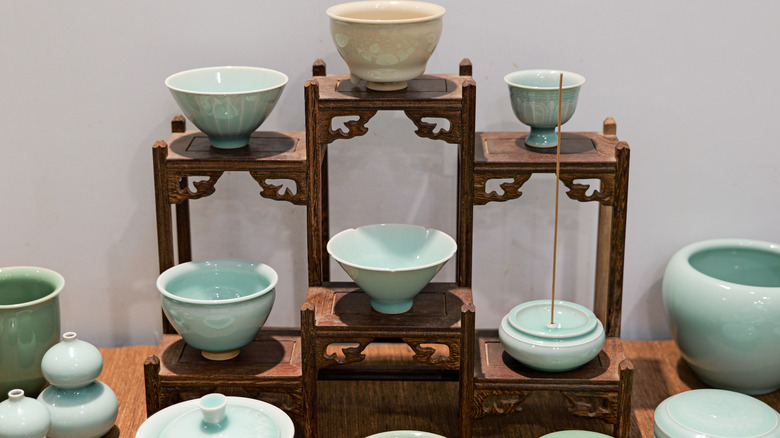
Resembling the beauty of decorative pieces carved from jade, greenware pottery was prized in ancient China. Greenware, or "Celadon," maintained popularity for hundreds of years inside and outside of China. This style of porcelain features a robust body with many different shades of green. Celadon porcelain has been crafted in China since the Han dynasty, around 206 B.C., but the tradition continues. Identifying true celadon can be tricky, because not all greenware has the iconic green look. The value also might shift depending on age, condition, and other factors.
Song Dynasty styles
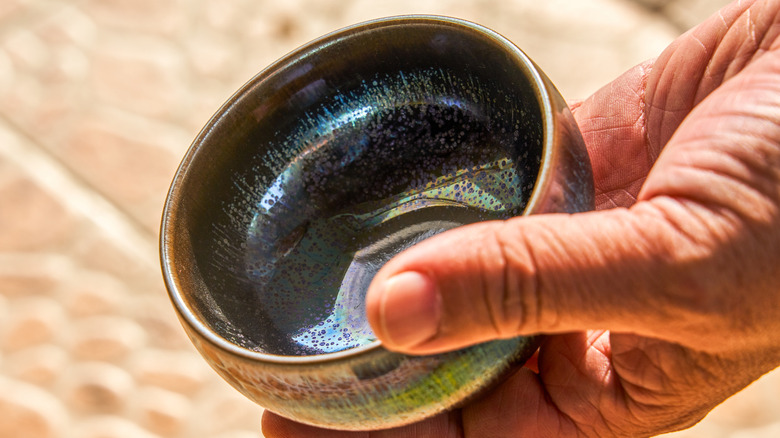
Several important styles of Chinese porcelain are considered inseparable from the Song dynasty, with examples created between 960 and 1279 A.D. Five main styles are considered representative: Ding ware, Ru ware, Jun ware, Guan ware, and Ge ware. Ding ware is characterized by its ivory color and molded decorations. Rare Ru ware typically features a bluish-green glaze and a smooth texture, sometimes with reddish-brown crackles called "crazing." Jun ware had a bolder and thicker design with opalescent glazes. And Guan and Ge ware were distinctive styles featuring unique crackle patterns.
Blue and white porcelain
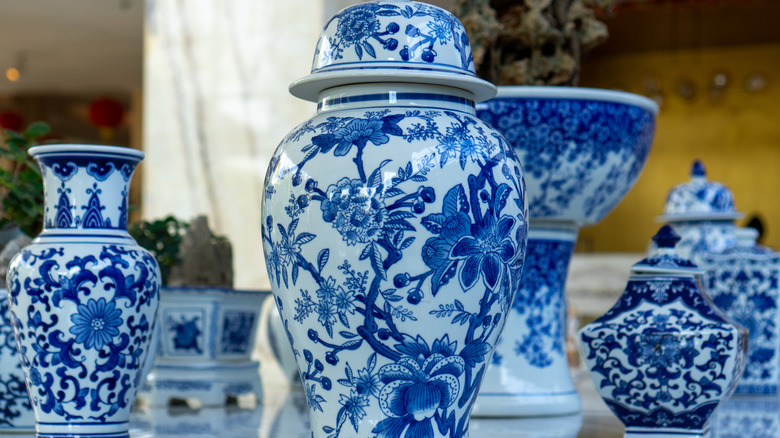
Classic blue and white porcelain, or qing hua, first came about during the Yuan dynasty. But the blue and white look remained popular into the Ming dynasty, which lasted into the 17th century. If there is any kind of ceramic that you would recognize from China, it would be this iconic and often copied style. To identify this style, check for designs showing dragons, flowers, and Buddhist symbols. Much of this style came from and still comes from Jingdezhen, China, considered the "Porcelain Capital."
Ming Dynasty styles
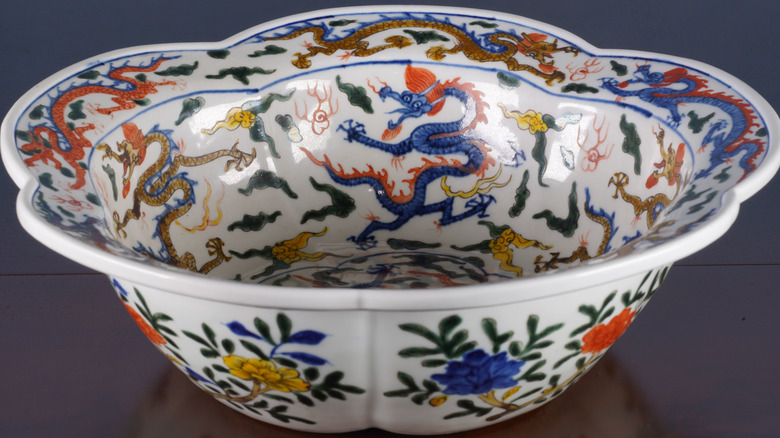
Beyond the iconic blue and white porcelain, the Ming dynasty was also famous for wucai ware and doucai ware. Wucai ware can be identified by the bright and bold colors used for the designs. Wucai means "five colors," and you can often pick out red, yellow, blue, purple, and green in the design of wucai porcelain. Doucai items, by comparison, have decorations outlined in a blue underglaze and then finished with enamel after the glaze is fired. A short-lived style, a doucai piece would be a once-in-a-lifetime antique find.
Qing Dynasty styles
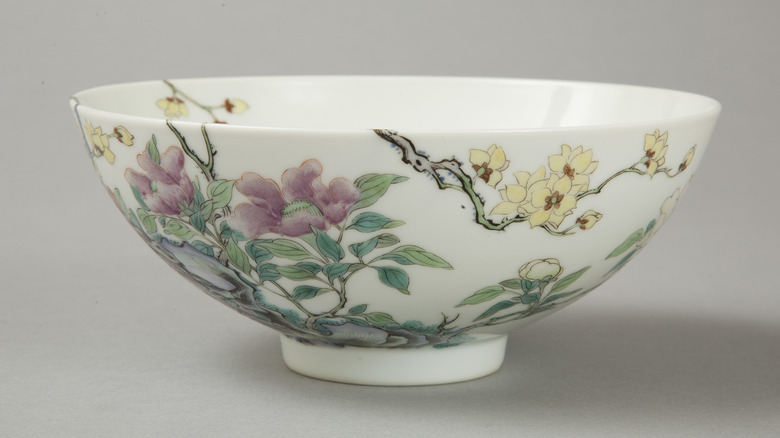
During the early 1700s, a style of rose-colored enamel became popular on exported porcelain wares from China. Famille rose porcelain is definitely one of the valuable brands of vintage porcelain that are worth looking out for at your local secondhand stores. To identify famille rose porcelain ware, look out for an opaque enamel at the base of items. The colors in the porcelain pieces were very soft and more varied. Famille verte was also a popular Qing dynasty style, which featured plenty of green in its designs. Dehua porcelain, or Blanc de Chine (French for "White from China"), was also exported between the 17th and 20th centuries. Together, Qing dynasty styles present proper antique China, worth anywhere from $650 to $2,650 for quality pieces.
Cantonese or Macao style
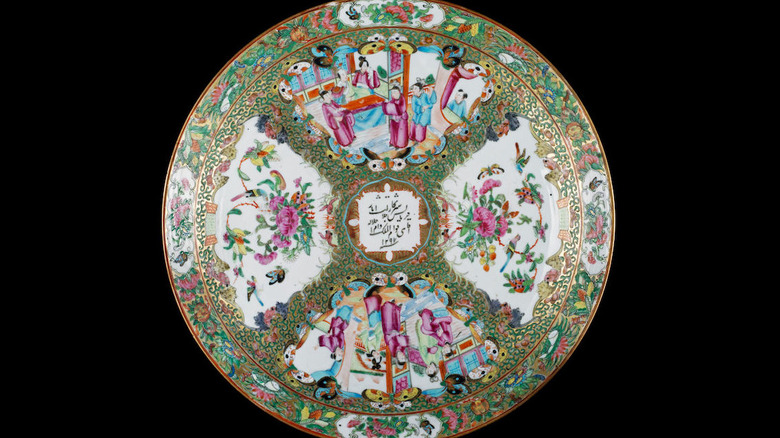
In the area of Canton, China, a specific style developed as a result of the introduction of French enamel techniques. Cantonese enamel porcelain, or Guangcai, was referred to in China as "foreign porcelain" because of this outside influence. Look for items that have an elegant quality with gilt designs and vibrant colors. The presence of gold and jade within the porcelain is characteristic of this style, too.
Republic Period porcelain
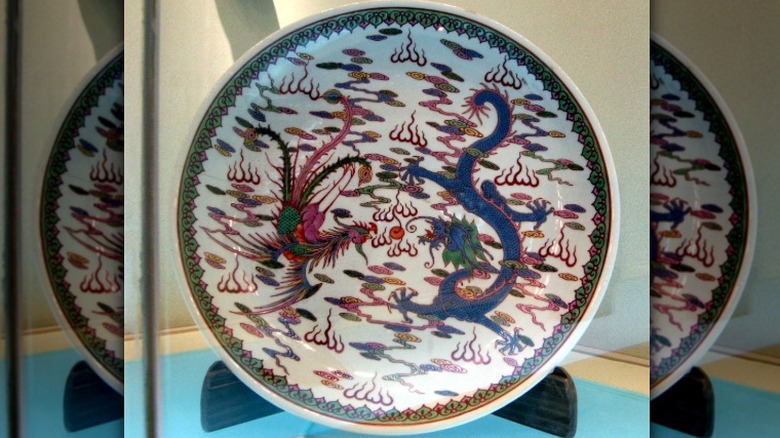
From around 1900 to 1950, the Republic period in China gave rise to many interesting pottery styles out of many new porcelain factories. Many of these styles copied or mimicked styles of the past, but can be positively identified by specific factory and artist marks on the bottom of pieces. Be aware that many fakes exist, which means your valuable thrift store find may not be as exciting as you think it is. Consider brushing up on tips on how to spot valuable, high-end items at thrift stores, so that you do not become disappointed. If you do find a Republic era item, it could be worth as much as $650.
Modern styles
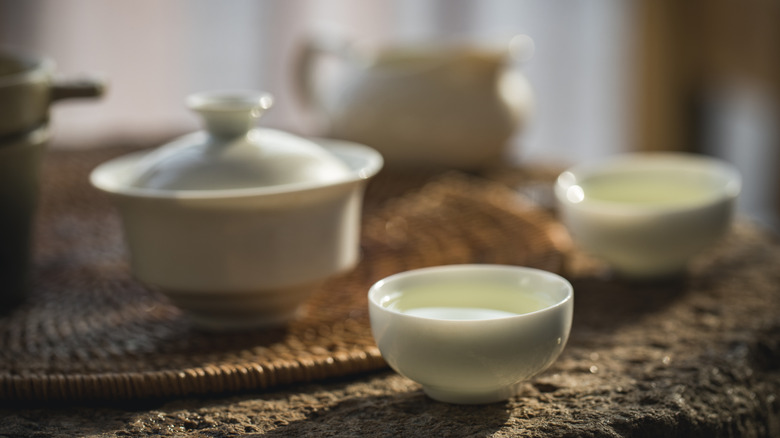
Modern porcelain creations made after the 1950s can also be highly valuable pieces to thrift. Because the creators of this style of pottery take their cues from the long history of Chinese porcelain, these types of dishes and bowls do not share many characteristics. Instead, pay careful attention to the marks on the bottom of items. New creations mimic older styles and also take influence from other Asian pottery, including Japanese traditions. Most of your thrifted Chinese pottery will be in this category, worth a little over $100.