

The Award-Winning Zinnia Variety That Makes An Excellent Ground Cover
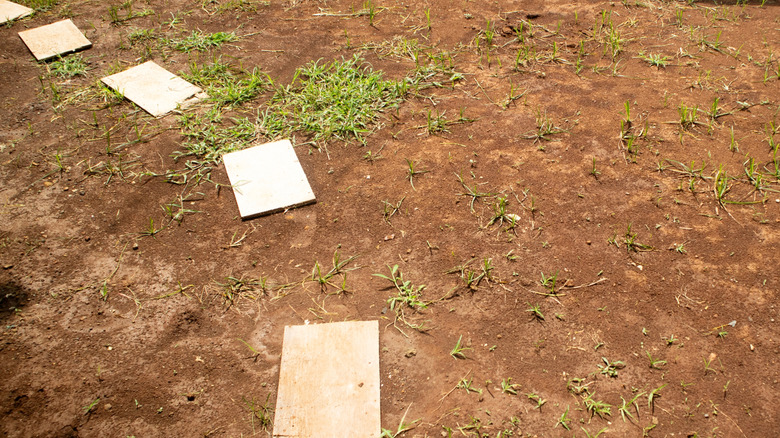
Low-maintenance ground covers do more than just pretty up a spot where grass refuses to grow. They also attract pollinators, control erosion, and suppress weeds. If you have good soil and a spot that gets at least 2 hours of full sun a day that would benefit from a profusion of flowers all summer long, 'Old Mexico' zinnia (Zinnia haageana), hardy in zones 2 to 12, fits the bill with its long-blooming flowers. This pest-resistant annual has small, bright flowers rising above its green foliage until the first frost in the fall. Winner of the Royal Horticultural Society's Award of Garden Merit in 2017 and an All-America Selection Flower Winner in 1962, 'Old Mexico's' thick, compact form makes it a natural as an attention-getting ground cover.
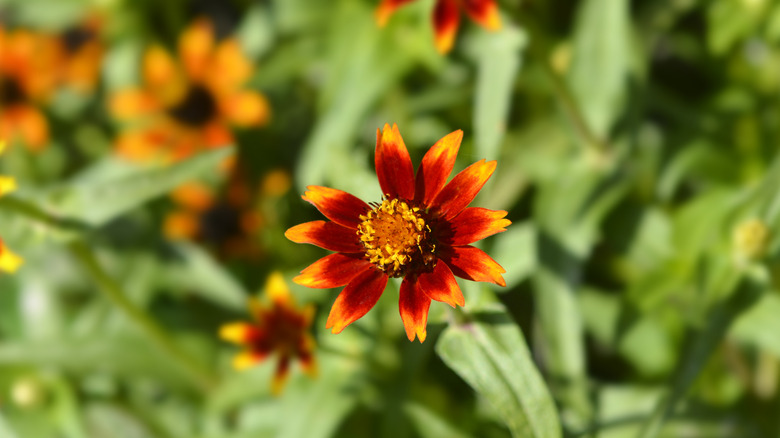
The small flowers of 'Old Mexico' are typically reddish-orange or variations on that color, though they do sometimes bloom gold, purple, or brown, with petals tipped in a contrasting color. They grow rapidly and begin blooming in the summer, eventually forming dense mats of bright flowers. 'Old Mexico' is deer resistant and non-toxic to horses and household pets, and its multi-zone hardiness makes it a natural in almost any garden spot with good drainage, though it will tolerate occasional dry conditions. In addition to its use as a ground cover, 'Old Mexico' is an easy-to-grow choice that attracts butterflies, bees, and hummingbirds to flowerbeds, borders, and containers.
Growing and caring for 'Old Mexico' zinnias
Unless you have a friend or neighbor willing to share some 'Old Mexico' transplants, you'll have to start them from seed — they're very rarely available from nurseries. Once your ground cover is established and blooming, you can have an endless supply of seeds by harvesting them for the next year's crop. You can start the seeds indoors, or sow them directly in the soil once the risk of frost has passed. While these zinnias can tolerate partial sun, they do best in locations that get at least 6 hours of full sun a day. Plant the seeds between 1 and 3 feet apart in well-drained soil amended with compost, sand, or perlite, if the soil is dense. You should see sprouts between 3 and 7 days after planting seeds. Thin out seedlings that are closer than 1 foot apart.
Zinnias don't need a lot of fertilizer once they're established, so you'll only need to apply a balanced fertilizer twice during the growing season. If you're having a dry summer, give the plants a deep watering when the top few inches of the soil are dry, but don't let them stay soggy. While zinnias are generally disease resistant, if you see rust-like spots on the leaves, they may be suffering from leaf spot, a condition that is treated with a fungicide. To keep 'Old Mexico' blooming profusely all summer long, harvest them often for use as cut flowers and cut the blooms off plants when they're spent. You can turn your 'Old Mexico' groundcover into a hummingbird magnet by adding a zinnia companion plant like salvia (Salvia officinalis).