

The Flowering Abelia Variety Pollinators Love That Makes A Great Foundation Plant
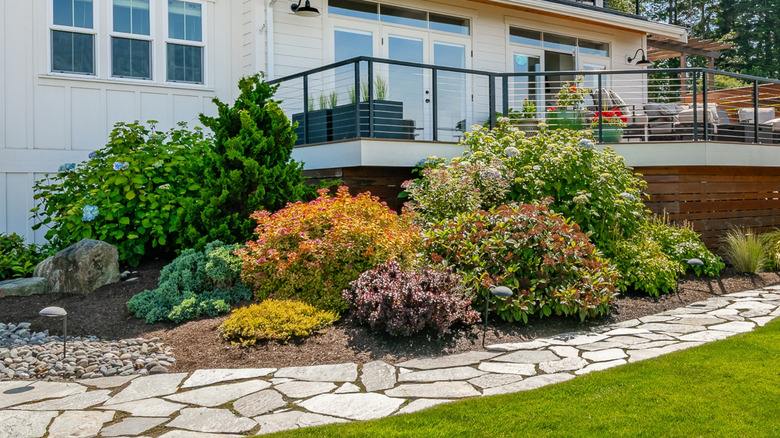
Curb appeal doesn't just focus on those flowerbeds carefully curated beside walkways or the living fence in your backyard. It also extends to the area directly around your home, where evergreens and perennials add a splash of year-round color and visual interest that aid in the transition from your home to the little slice of nature that is your yard. And with this flowering abelia variety, you can enjoy the benefits of a foundation plant while also starting your own pollinator garden.
Trademarked under the names Twist of Lime and Miss Lemon, Abelia × grandiflora 'Hopley's' is a perennial shrub that thrives as a foundation plant. In warmer areas, you may be able to experience this plant as a semi-evergreen, enjoying its vibrancy year-round. Otherwise, it is a deciduous shrub. Abelia × grandiflora 'Hopley's' blooms during the summer and fall, sporting eye-catching pink and purple flowers that pollinators adore. As a result, if you're looking to maximize outdoor space, this can be the perfect bush to pull double duty, providing both greenery and texture to your home's perimeter while attracting bees, butterflies, and hummingbirds.
Although this hybrid is an overall hardy plant with resistance to the challenges that come with urban conditions (which is why it does so well as a foundation plant), it still needs the right care to thrive. Fortunately, most Abelia × grandiflora plants are easy to grow, making them a great plant for beginner gardeners.
How to grow Abelia × grandiflora 'Hopley's'
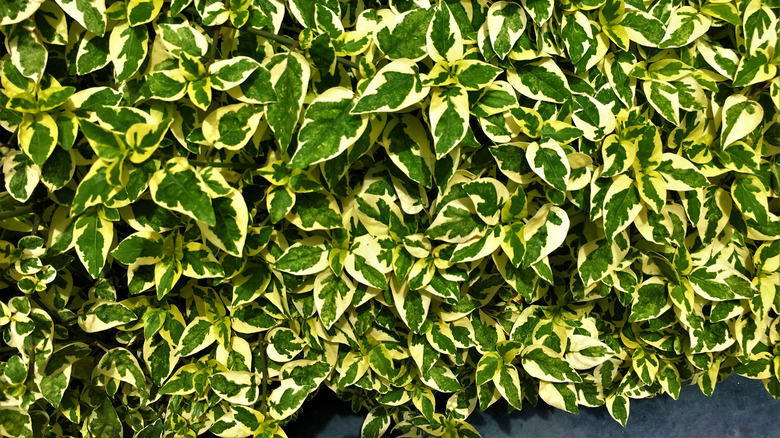
When growing any plant along the side of your home, it's important to keep sunlight in mind. Because the house itself will block sunlight at certain angles, not every plant can be used along every face of your home. Abelia × grandiflora 'Hopley's' grows in both full sun and partial shade. This means it does well on both the south-facing and east-facing sides of your home. South-facing areas will receive the most sunlight in the northern hemisphere, while east-facing areas receive sun in the morning and shade during the afternoon's heat. However, full sun typically leads to the most optimal blooming, and thus pollinator appeal.
This hybrid requires soil that is well-draining, although it does prefer soil that is kept consistently moist. This is an important factor to keep an eye on, especially if your gutter is showing signs of damage, leading to excess water around the foundation of your home. Conversely, it can also tolerate the occasional dry spell since it's resistant to droughts, but for the best blooms, you won't want to leave it dry for too long.
Other than water and sunlight, this plant is fairly low-maintenance, making it perfect for establishing your foundation garden without a large amount of regular work. However, keep in mind that it's winter hardy only in USDA zones 6 through 9.