

Hide A Septic Tank Lid With A Stunning Landscape Idea
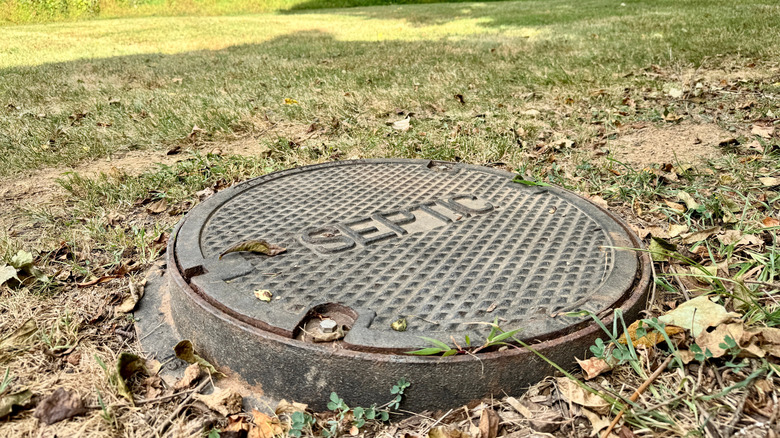
Septic tank lids aren't exactly pretty. They tend to stick out and often spoil the look of an otherwise well-maintained lawn. Even worse? Hiding them isn't as simple as placing something on top of them. In fact, the United States EPA explicitly warns against it as it can restrict access or even cause damage to the system beneath. But what if you could hide the septic tank lid while also adding something stunning to your landscape? Well, that is exactly what Gary Pilarchik, owner of The Rusted Garden Shop, did in one of his YouTube videos. He covered a septic tank lid in his backyard with a simple wooden deck. Now, obviously, that does not sound too pretty on its own. But put some planters and flowers on top and maybe a hummingbird feeder on the side, and the results look absolutely stunning.
The best part? You don't need to be an expert carpenter to build the deck. All it takes is a few basic tools and supplies, plus a bit of patience. Plus, if you build the wood deck yourself, you can make it lightweight and set it freely over the septic tank lid without any anchors or concrete footings. Then, when needed, you can remove it in just a matter of minutes. All you need is some lumber, a measuring tape, a handsaw, a drill, screws and nails, and a wood sealant, and you can build the deck right at home. If you enjoy a good DIY project, you can turn many common household items into beautiful planters to set on your deck. Just don't forget to consider symmetry and colors when planning, as Gary Pilarchik highlights in the video.
Building the deck to cover your septic tank lid
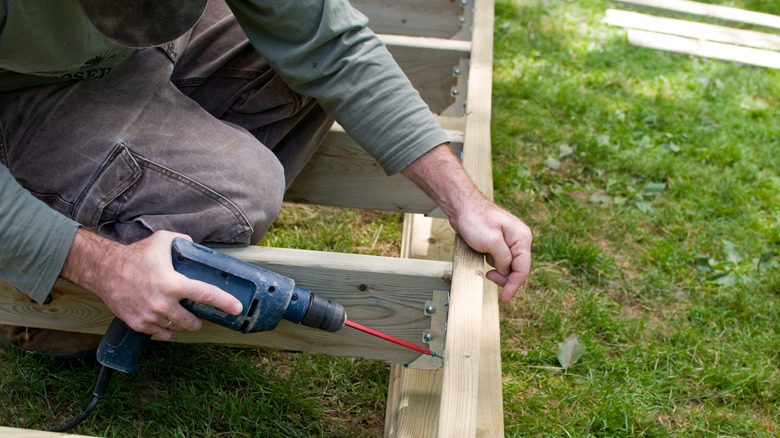
Start by carefully taking the measurements. When taking measurements, keep in mind that your deck should extend at least 6 to 12 inches beyond the lid on all sides. This will help both hide the edges and create a stable base. Once you have the measurements, cut two long sideboards (the rails) and two shorter boards (the end caps) from 2-by-6-inch boards to create your outer frame. Also, make sure to cut additional cross-supports (joists) to span between the rails for support. Oh, and don't forget to sand any rough-cut ends.
Next, lay out the outer frame and secure the corners using two deck screws at each joint. Add interior joists next by toenailing them into the rails, and make sure that the frame sits flat with no wobble. Also, if needed, use exterior sealant on all cut ends. Once you are done with that, cut your decking boards to size and set them on top of the frame using screws. Just don't forget to leave small gaps between them for drainage. And that is it.
If all of this sounds like too much, you can also get a ready-made barrel planter online. Take, for instance, this Juliann Barrel Planter by Breakwater Bay. It has a vertical clearance of about 18 inches and can easily be used to hide unsightly septic tank lids in homes. And if this also seems too expensive and you really want to DIY a deck yourself, you can try transforming free wooden pallets into a stunning backyard deck, then use them as a base for your planters.
Setting plants over the septic tank lid deck
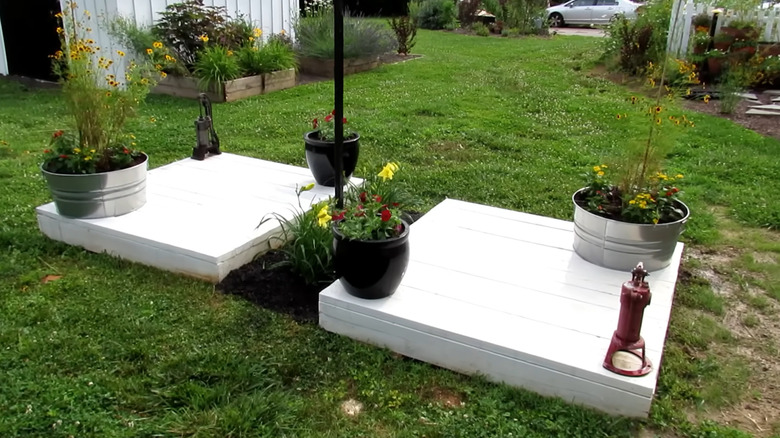
Once you have the deck in place over your septic tank lid, it is time to place the plants. Now obviously, you want to place lightweight planters or pots in a symmetrical order and a cohesive color scheme, as Gary Pilarchik suggests in the video. But you also cannot ignore which plants or flowers to use in those pots and planters. And when it comes to choosing plants, sunlight availability is probably the most important factor. For instance, if your septic tank lid is near a wall or other structure and sits in shade all day, you will need to choose plants that can grow in shade and containers.
Some good options include coleus and hosta if you are looking for plants with interesting foliage. Though if you want something that blooms, go with coral bells and impatiens. A mix of both works equally well, too. However, if your septic tank lid is in full sun all day, you will obviously need to switch to a different plant altogether. Fortunately, there are a ton of stunning plants that can thrive in containers in full sun. Some interesting options include mandevillas, zinnias, geraniums, lantanas, and salvias.
Just keep in mind that there aren't many plant restrictions for this project. You can choose any plants, except for a few plants you should avoid growing around your septic tank covers. Other than that, mix, match, and experiment as much as you like. And if you can, make sure to add other features like a bird bath or feeder to the area, too, as Gary Pilarchik did in the video.