

This Fast-Growing, Majestic Tree Can Be A Nightmare For Homeowners
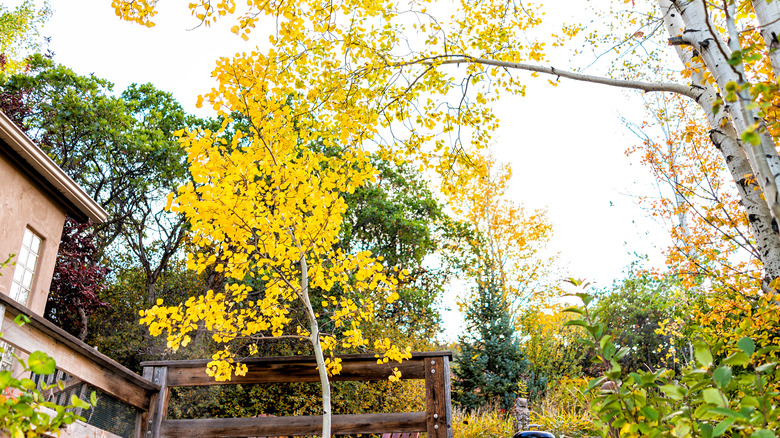
For a new property owner, the thought of tall, majestic trees providing privacy and curb appeal is almost impossible to resist. The quaking aspen (Populus tremuloides) is a tree that comes to mind for homeowners looking to turn a bland yard into a woodland sanctuary quickly. With its white bark and namesake leaves that "quake" even in light wind, this tree offers eye-catching beauty few others can match. It also grows fast; in ideal conditions, an aspen can shoot upward by 24 inches or more in a single year. However, we can't recommend planting this fast-growing tree in your yard, as it hides a secret that makes it a risk for most residential areas.
The biggest issue is that the quaking aspen isn't meant to be a solitary specimen, or even limited to a handful of shoots. In the wild, these trees exist as part of massive clonal colonies with a single, interconnected root system that can span acres. If you plant one in a suburban yard, a network of aggressive roots will likely begin a subterranean invasion, possibly stretching over 98 feet away from the trunk or even damaging the pipes in your yard. Furthermore, aspens are also not heat-tolerant. If they're forced into suburban soils rather than their native, cool mountain elevations, they experience stress. Living in suburban environments, as opposed to their native one, can shorten the lifespan down from the expected 50 to 150 years to just 5 to 15 years. This premature death typically happens because heat-weakened trees struggle to fend off common pathogens and pests; they become more susceptible to common issues like cankers and borer pests. And yet, these aren't the aspen's worst issues.
Why these high-reaching trees make for high stakes drama
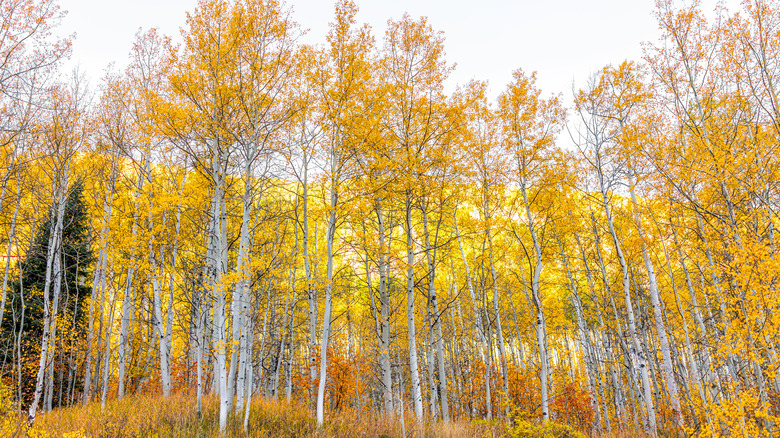
Quaking aspens' speedy growth creates a bigger danger: weak structure. Because these trees prioritize speed over strength, they fail to develop much dense, strong heartwood; this is what helps give trees structural support. Aspens are among the softest hardwood trees, and prone to snapping during high winds. Since these trees reach heights of up to 60 feet, a mature aspen becomes a falling hazard for everything in its radius. A big enough storm could easily break a massive upper section, damaging property. That could lead to messy liability claims and trying to figure out which neighbor pays for damaged tree removal.
So, for those craving that white-bark look without these issues, we recommend sturdier alternatives like the equally vibrant red maple tree (Acer rubrum). It's understandable to want a fast-growing tree for shade or privacy, but equally important to choose wisely to ensure your landscape stays a place of peace rather than a source of pricey property damage. After all, the best trees are the ones that stay upright and keep their roots to themselves.