

What To Do If You Find An Opossum Nest In Your Yard
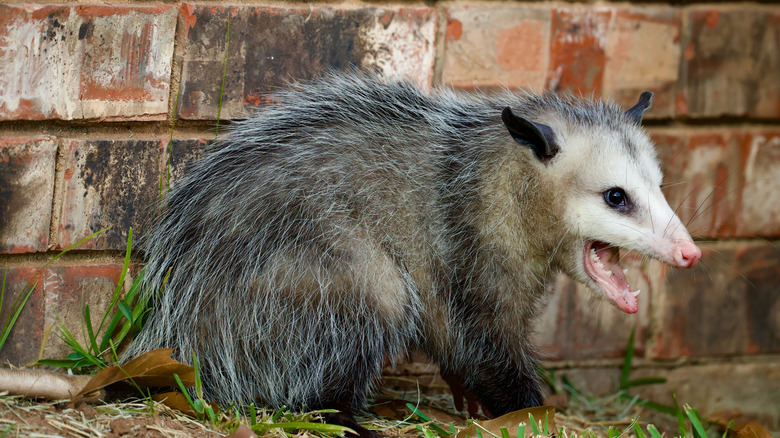
Opossums are the only marsupial native to the United States. A marsupial is an animal that carries its young in pouches on their bodies (like kangaroos). They are officially known as the Virginia opossum (Didelphis virginiana), and have become common in urban areas, as their habitat is encroached upon by construction and development. Here are some things to know about what it means to find an opossum nest in your yard, and what to do about it.
Opossum "nests" are actually just spots where they shelter and rest, as opposed to nests constructed like birds do. They want to be near sources of food and water, so you may see them near your compost bin (looking for fruit scraps or bugs), or your birdbath. These critters are at risk of being hit by cars due to their poor vision during the day, and tend to move slowly (especially when encumbered by growing babies), so a spot near food and water is safer for them. Opossums are docile and harmless to humans, and are not generally known to be pests in the garden.
These strange-looking animals, which resemble large silver rats, can grow quite large, so seeing one up close can sometimes be startling. They're also nocturnal, so you won't commonly see them in the daytime. Furthermore, opossums tend to be solitary, except for mothers with babies. They've had some positive PR in recent years, as one oft-cited scientific study in 2009 suggested they eat large amounts of ticks, possibly helping to reduce the danger of Lyme disease. However, more recent studies have shown they don't eat ticks in notable amounts, though they do eat other insects.
What to do if an opossum is nesting nearby
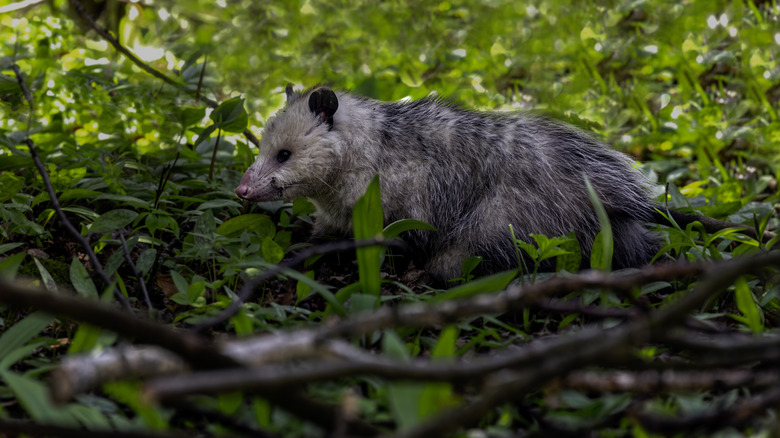
Opossums don't build actual nests, but instead find secluded, dark locations where they will feel safe sleeping during the day. They might take over another animal's burrow (such as a woodchuck), or find a cozy spot behind a woodpile, compost heap, or brush pile. They might also take up residence beneath porches or decks, or in sheds or garages. Opossums are usually quiet, so you may not know you have one living nearby unless you catch sight of it at night, or during a rare daytime excursion.
When an opossum sees a human, it will usually try to waddle away as fast as it can (which isn't very fast), so give it some space. After a human encounter, opossums usually move on to another shelter. Opossums are transient, meaning they don't stay in one place for more than a few days. The exception is a pregnant or nursing female, who may stay in one spot to keep her babies safe and be near a food source. The best thing to do when you see an opossum is to leave it alone, knowing it will move on within a few days.
If you see an opossum that looks injured or sick, or if you find a baby opossum without its mother, contact your local wildlife rescue or rehabilitation organization for assistance. It is not recommended to trap opossums, or to try and relocate them. During an extreme heat wave or drought, you can leave a dish of clean water out for them. This helps them stay hydrated as they continue to move on to new shelter.
How to deter opossums from taking up residence
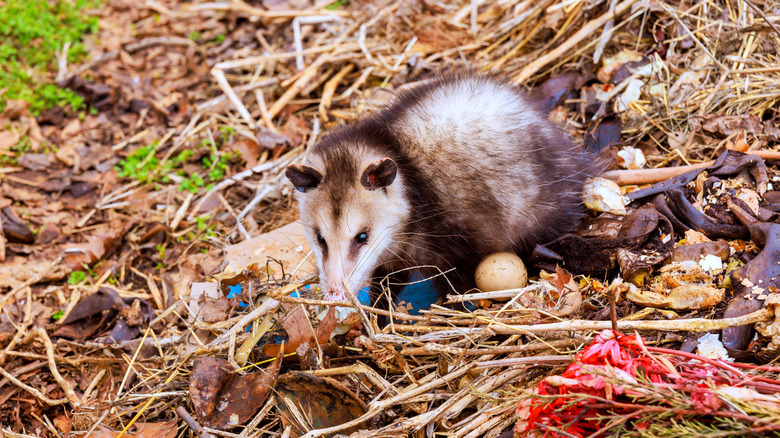
Opossums do not usually eat trash, unless it contains their tasty favorites like fruit or eggs. Their diet is also known to change seasonally. In warmer weather they mostly eat insects (including cockroaches, beetles and crickets), slugs and snails, and small rodents, such as mice and rats. To keep opossums away, ensure your trash containers and your compost bin is covered to deter pests, so they can't get inside. If you have fruit trees, pick up the fallen fruit. Opossums won't decimate your vegetable garden like woodchucks do, but you may need temporary fencing or other barriers around your berries. Moreover, opossums will sometimes eat pet food that is left out, or birdseed on the ground.
Opossums won't harm your cats, but your dog may chase them, so keep them on a lead if you suspect opossums are nearby. Since opossums are omnivores and scavengers, they also eat carrion (dead animals), so be sure to dispose of any dead animals in your yard. A reminder: don't use rodent poison, as opossums (and other wildlife) who eat poisoned rodents will also get sick and die.
Opossums don't stay in one place for long, but you may see a few individuals passing through. Although they're not generally destructive, some homeowners may see them as a nuisance. To prevent them from taking shelter indoors, keep doors and windows of your garage, shed, and house closed at night; screens alone may not deter them. Opossums are surprisingly agile, and can climb trees and walls, and may access a second floor window if determined.