

What Is A Tree Tomato And Can It Be Grown In Your Yard?
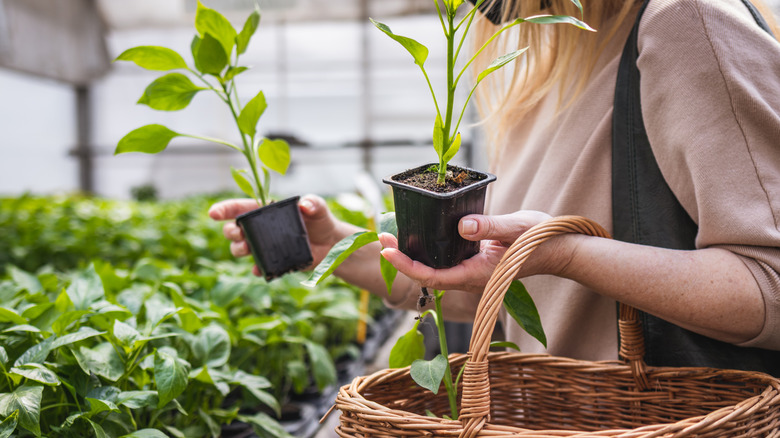
While some gardeners content themselves with growing standard vegetable fare in their backyards, there are other growers among us who have a more adventurous side. Not that there's anything wrong with squash, peppers, and green beans — but when you can find the perfect niche in your yard for a new crop whose fruits you can't buy at the local supermarket, it can feel like an exciting personal achievement. If you fall into the latter group, add tree tomatoes (Solanum betaceum), also known as tamarillos, to your list of plants to try. Related to eggplants, peppers, and tomatoes, the tamarillo is one of the nightshade vegetables that might be perfect for your garden.
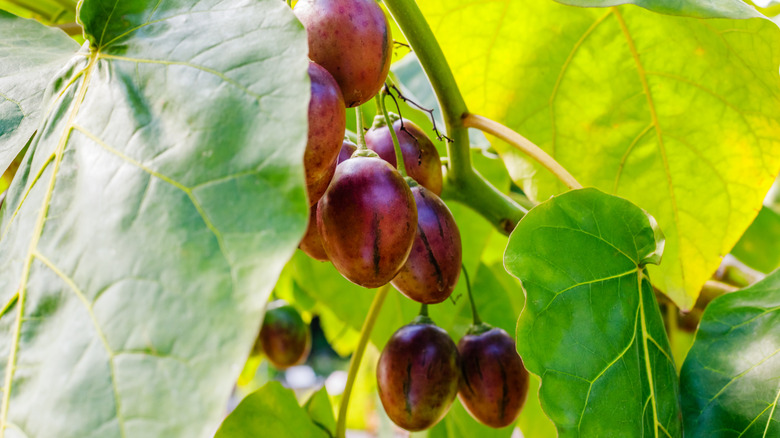
Not to be confused with its relative, the tomatillo, tree tomatoes are subtropical fruits from South America whose fruits taste like a mix of tomato and guava, passion fruit, or kiwi fruit. The fruits grow on small evergreen trees that have shallow roots and reach 10 to 18 feet tall at maturity. The woody trees are fairly short lived, just eight years or so, but are highly productive — each plant can produce more than 40 pounds of tamarillos a year. Fruits are red, orange, yellow, or purple. They reach 2 to 4 inches long, and are shaped like eggs. Tamarillos can be used to make jams, pickles, or other sweet or savory culinary creations. If your interest is piqued, you'll want a few tips before trying to grow them in your yard.
Tips for growing tamarillo fruits in your backyard garden
Tamarillos are one of the uncommon fruit trees you can grow in your garden if you live in USDA Hardiness Zones 10 to 12. You can plant it in your yard from seed, and it will thrive in full sun — at least 8 hours of direct sunshine each day – and well-drained, moist soil that is rich in organic matter. The best temperature range for growing tree tomatoes is around 60 to 71 degrees Fahrenheit, so try them in mild climates like that of northern California. In hotter locations you can cultivate tamarillos in part shade. This plant will also thrive in a backyard greenhouse with a controlled temperature, and it can be grown in a container.
How to know if tamarillos aren't good for your yard? If you live in a drought-prone area, have waterlogged soil, or experience very hot temperatures in summer, tree tomatoes will struggle to survive. If you frequently have strong winds in your area, and can't provide a windbreak, you might want to skip these easily damaged trees. Also, it takes at least 600 days to get a harvest, so you won't be able to grow this fruit in zones colder than zone 10, unless you can protect it from cold winter weather. Once your summer or autumn harvest is in, you might wonder what to do with the clusters of tree tomato fruits. You can decide whether you want to juice them, or create pies, jams, salsas, sauces, or chutneys. The tastiest part is the seeds and pulp, and be sure to remove the skin before eating or cooking the fruit.