

The Dreamy Pink Hydrangea Variety That's Perfect For Your Small Garden
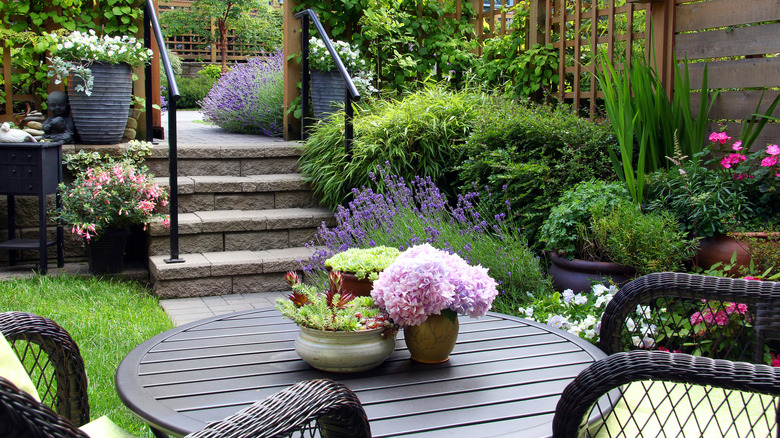
You might think that owning a tiny yard, or even being limited to a small patio, means giving up on the dream of having a lush, gorgeous garden with blooms. But really, you can have that with any size garden; it just comes down to choosing the right plants for your footprint. And for small gardens, all you need is a compact shrub with big time visuals. Of all the hydrangea varieties our professional gardener recommends, one showy option to consider for small spaces is 'Glowing Embers' (Hydrangea macrophylla 'Glowing Embers'). This variety gives you all the beauty of hydrangeas, but with a smaller footprint, reaching just 3 to 5 feet tall and wide.
That might sound plenty big, but larger varieties can grow to over 13 feet tall and 8 feet wide. With this one, you won't have to worry about it taking over your entire garden. Despite the modest size of 'Glowing Ember', though, its blooms are still absolutely massive! The flower heads can grow as large as 8 inches across once they bloom around mid- to late-summer. And best of all, these giant globes have a dreamy rose-pink hue (though they can also be red, purple, white, or green). They really pop against the backdrop of their glossy green leaves. You can opt to grow 'Glowing Ember' either in the ground or in a container, and it would work beautifully as a shrub up against your home or along a short walkway. Its bold burst of romantic color has a magical feel and is a great way to make the most out of a small backyard.
How to cultivate 'Glowing Embers' hydrangeas
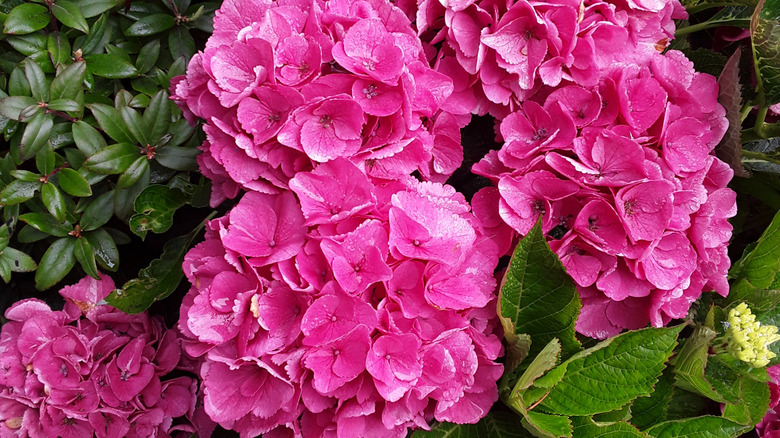
Caring for this plant is easy in the right growing conditions, and you should start by paying attention to sunlight exposure. 'Glowing Embers' is hardy in USDA Hardiness Zones 6 to 9 and grows in partial shade to full sun. Next up is hydration. These plants are pretty thirsty by nature, so keep their soil consistently moist (but make sure there's good drainage); it's especially crucial if they're planted in full sun. A layer of garden mulch can also help lock in much-needed moisture, so spread out about 2 to 3 inches around the base of the shrub after planting.
What's really neat is that it's the soil chemistry that helps determine the bloom color. You'll need to maintain a slightly acidic to alkaline pH of 6.5 or higher to get that perfect pink. Soil that's too acidic can potentially turn your blooms bluish-purple. This particular variety blooms on the wood grown in the previous year, so you should only prune right after the summer flowering finishes, and do so gently. Any later and you might accidentally remove next year's flower buds. Careful planting and pruning ensure you'll get a spectacular display of successful hydrangea blooms every year.