

The Perennial That Grows Well With Hydrangeas For A Flourishing Landscape

While hydrangeas are often the stars of the garden with their massive blooms, finding a companion plant that highlights their beauty while sharing their specific growing needs can be challenging. Although some types of hydrangeas, such as panicle hydrangeas, need a full sun site, what happens if you're growing varieties that need shade and consistent moisture? In this case, astilbe (Astilbe spp.) is a natural match. If you know how to grow and care for an astilbe plant, you'll know that it thrives in the partial shade and dewy soil of woodland borders.
Climbing hydrangeas and select cultivars, like the cold-hardy Tuff Stuff mountain hydrangeas or the white-flowering smooth hydrangea, 'Annabelle,' prefer shady conditions. In fact, while most hydrangeas need several hours of morning sun to flower abundantly, they can struggle if they're exposed to direct sunlight during the hottest part of the day. Most astilbe species and cultivars grow in USDA Hardiness Zones 3 through 9 — a broad range that matches that of many hydrangea species.
The pairing works well aesthetically, too. The upright, feathery spires of astilbe contrast dramatically with the rounded profile of hydrangea shrubs. Astilbe boasts a growth cycle that transitions smoothly from spring to late summer. In the early months of the year, the red, bronze, or green fern-like leaves of astilbe emerge. By mid-summer, its flower plumes fill the gaps around the bases of woody hydrangea shrubs. This partnership adds texture to any shady garden corner.
Why astilbes are an aesthetic match for shade-loving hydrangea varieties
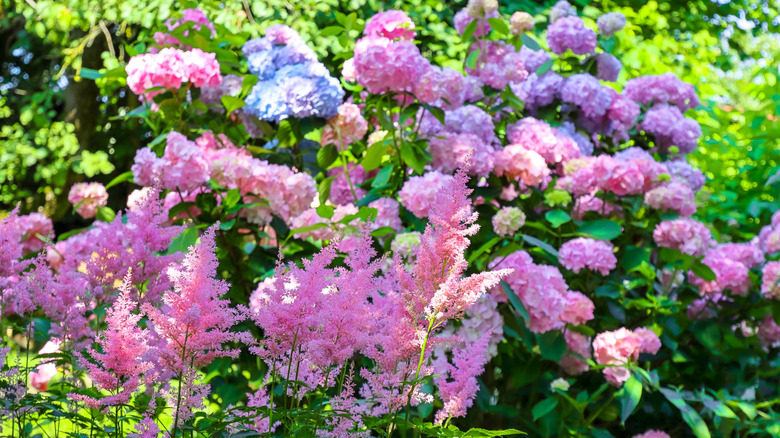
By mixing heights, bloom times, flower colors, and leaf shapes, there's always something interesting to look at in your shade garden throughout the seasons. Choosing the right astilbe species or cultivar helps balance your bulky hydrangeas. Taller plants, like the hybrid Astilbe x arendsii, reach over 4 feet. Plant a few behind a dwarf hydrangea, where their flower stalks will peek out above the shrub. On the other hand, you could plant shorter astilbe varieties, such as Astilbe chinensis 'Little Vision in Pink,' in a dense row along the front of a garden bed to hide the ugly woody stems of taller shrubs.
Hydrangea blooms change color in response to soil acidity levels, making color matching challenging in garden design. With their versatile flower palette, from deep purple and bright magenta to soft cream and pure white, you're sure to find a gorgeous astilbe to plant in your shade garden this spring alongside your hydrangeas. The leaves of a plant are just as important as the flowers for keeping your garden looking good all season long. Most astilbes have doubly serrated leaves that continue to look good into fall as the flower heads dry up. The wispy foliage contrasts strikingly with the hydrangea's more voluminous greenery. Note, however, that astilbe needs a spot out of the harsh afternoon sun; direct sunlight can cause the edges of the leaves to turn brown and curl. If the leaves of your astilbe look crispy, it's usually a sign that the plants are getting too much sun or the soil is drying out too quickly.
Careful water and soil care keeps both astilbes and hydrangeas happy
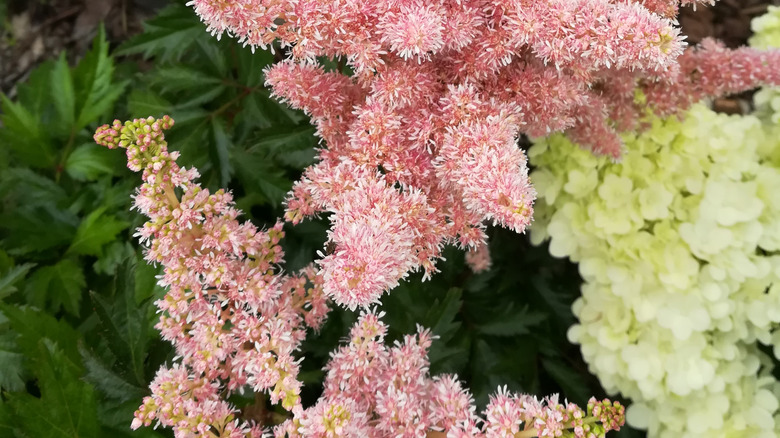
One big reason hydrangeas are a beautiful companion plant to grow with astilbes for a stunning landscape is the species' shared obsession with water. Neither plant will tolerate a dry spell; the soil they grow in needs to stay consistently damp, like a wrung-out sponge. Before putting either plant in the ground, it helps to mix a generous amount of compost or aged manure into the garden bed, which helps the soil hold onto every drop of moisture. The goal is to create an environment where the roots will stay cool even when temperatures start to climb. Apply a layer of mulch around the base of the plants. It acts like a blanket, preventing the sun from sucking the hydration right out of the top layer of soil.
Soil acidity also plays a role in how well these plants grow. While hydrangeas are famous for changing their bloom color in response to soil pH levels, astilbes are a bit more flexible. They can handle acidic, alkaline, and neutral soils. When watering either plant, it's best to aim for the base rather than spraying the leaves or watering from above. This helps prevent issues like powdery mildew, which is often the result of foliage remaining wet for too long in a shady garden bed. Giving each plant enough room allows air to move freely through the leaves. If your companion plantings get too crowded after a few years, you can divide your patch of astilbes in early spring or fall and move some plants to other parts of your garden.