

14 Unexpected Ways You Can Use WD-40 Around The House
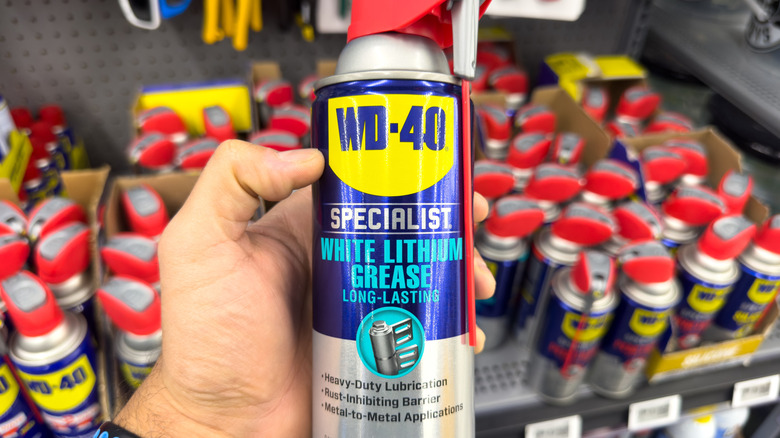
There are very few homes around the United States that don't have a can of WD-40 stashed safely in the cupboard. It's a boon to DIYers who need to remove stubborn, rusted bolts, and it's safe to say that home workers have found it invaluable in removing the creak from their office chair. But the uses for that iconic blue and yellow can go way beyond busting rust and silencing squeaky furniture.
For example, if you have an artistic toddler who's gotten a little too trigger-happy with their crayons, did you know you can use WD-40 to clean up their creations? Or that you can use it to make those annoying, stubborn stickers on your gorgeous new garden planters completely disappear? As you'll see below, if you have a can of WD-40, there are a surprising number of nifty ways you can put it to use around your home.
Remove your toddler's artwork from your wallpaper and windows
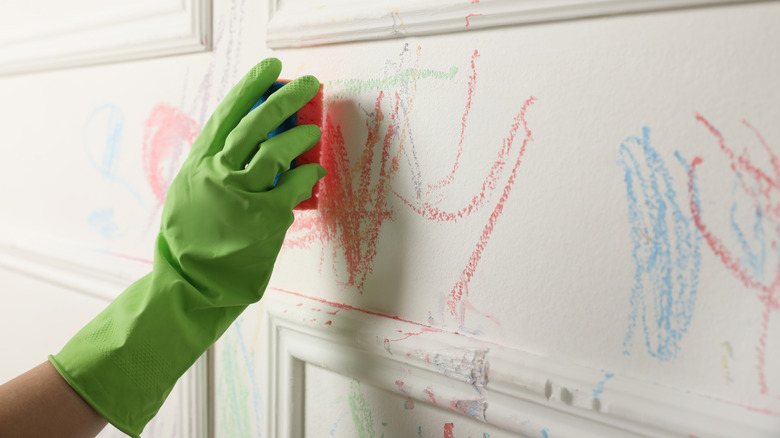
WD-40 is one of the various household products you can use to get crayon off your walls. It could be that you're preparing your house for sale. Or perhaps you're simply tired of your child's artistic attempts to enliven your decor. Either way, if their chosen medium of application is a wax crayon, you need only search online for solutions, and you'll be met with countless thankful tales involving everybody's favorite blue and yellow can.
Most crayons are made from wax. When treated with WD-40, the solvent contained in WD-40 returns the markings to a liquid state, making them easy to wipe away. Just spray a small amount onto the affected area and allow it to sit for around a minute. Wipe it clear with a clean cloth, then be sure to rinse the surface with warm, soapy water. Try to avoid using WD-40 on surfaces where it may cause more harm than good. Anywhere near a source of heat, for example, could create a fire hazard. And if the surface is wood, then be warned that continued use of WD-40 could lead to stains and damage.
Removing sticker and tape residue from jars
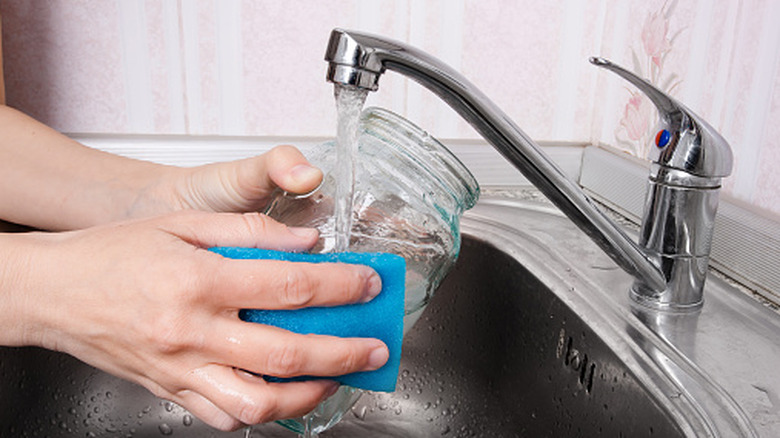
Whether it's a plant pot for a container garden or an old jar that you're upcycling to use for a batch of jam, WD-40 is great for removing the stubborn gunk left behind from stickers. Because WD-40 is a solvent, it works by breaking down the adhesives used to attach the labels. Once they've been neutralized, they can easily be scraped away.
To remove stickers from the glass using WD-40, spray the sticky section and allow it to soak for a few minutes. Once it's had time to work its magic, it should become easy to peel the gunk away. Then, clean the jar with soap and rinse it well with clean water, especially if you plan to use it for food.
Clean tea and coffee stains from your vinyl floor and countertops
Regardless of how visible you make that stack of coasters, it's inevitable that your guests (and your teenagers) will forget to use them from time to time. You can also end up with spills on your tile floor that leave lasting marks. You don't have to put up with tea and coffee stains forever, though. Instead, you can simply use some WD-40 to remove them, as the solvents make them easier to lift and wipe away. You just need to be mindful of which materials you use it on. Natural stone is a no-no, as WD-40 can soak into the stone and actually stain it. The same can be said for wood.
However, if you have vinyl flooring or countertops, it could well be your saving grace. Apply a few small sprays to the affected area, then wipe it down with a damp, soapy cloth. If you're cleaning an area in the kitchen or dining room, make sure that you give the surface a thorough clean once the stain is gone. The last thing you want to do is risk contaminating your food with WD-40.
Remove rubber-shoe scuff marks from your floors
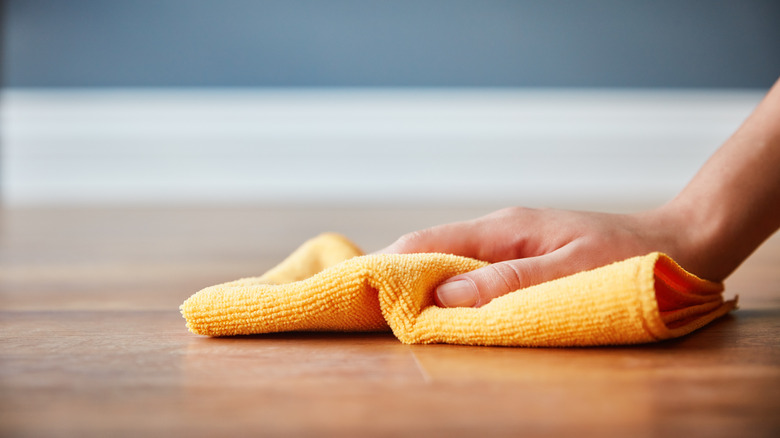
Before we go any further with this tip, it's important to say that there are different ways to clean different floors. Natural stone and unsealed wood floors, for example, require a very specific, delicate approach. Since they're prone to absorbing whatever you put on them, WD-40 should be avoided at all costs. But if you have vinyl or concrete flooring, then WD-40 could well be an excellent addition to your floor-cleaning armory, especially if yours tends to collect scuff marks.
Scuff marks occur when chair feet or people's shoes rub against the floor. The friction loosens tiny deposits of rubber that become stuck to the floor's surface. But don't worry. Being both a solvent and a lubricant, WD-40 can quickly get under such stains and help lift them from your floor's surface. Simply spray the scuff mark, give it 30 seconds or so to soak, then buff the stains away with a clean cloth. Give the floor a thorough clean afterwards with soapy water. Being a lubricant, if you don't clean WD-40 properly, you could end up creating a slip hazard.
Softening dried-up bird droppings
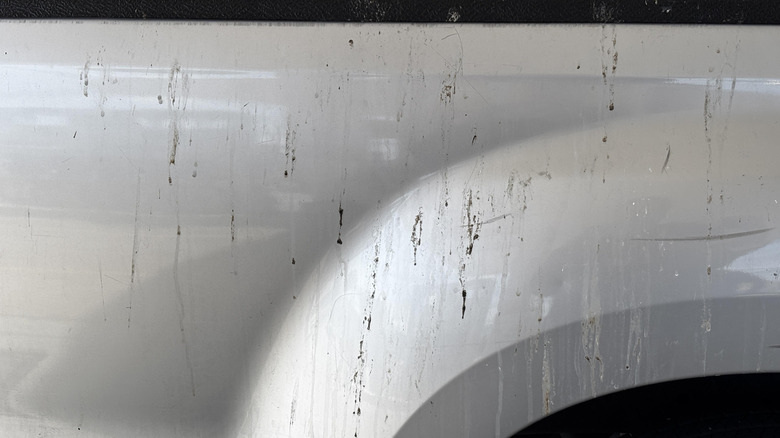
If parts of your property tend to get peppered by passing birds, then it's worth keeping a can of WD-40 handy in the garage. It could be your shed or your garage window, your car, or even the lid of your grill. Wherever they are, when bird droppings are allowed to dry, they can be tricky to remove without damaging the surface underneath.
Fortunately, provided you have a can of WD-40 to hand, this needn't be a problem. Just spray the affected area directly and give it several minutes to work. Once it's soaked in and started to soften the droppings, gently wipe them away. Be sure that you thoroughly clean the surface afterwards, too. Especially if it's your grill that you're cleaning. You'll want to make sure you remove all traces of both poop and petroleum.
Keep snow from sticking to your shovel

One of the niftiest uses for WD-40 in your basement is creating a non-stick snow shovel. It works by forming a non-stick barrier that prevents the snow from sticking to the blade. This stops the snow from freezing and building up on the metal, which makes clearing it off your drive much easier.
To make use of this hack, just spray a small amount onto either side of the shovel head, then wipe it down with a cloth to ensure the metal is fully covered. You can do this preemptively, too, which is worth doing if you're expecting the forecast to take a turn in the coming days. Even if you don't expect much snow, it remains one of the best tips for using WD-40. Being a lubricant and a solvent, it's excellent for removing debris from your shovel, and it's also great at protecting it from rust.
Use WD-40 to break down gunk and remove limescale from your toilet
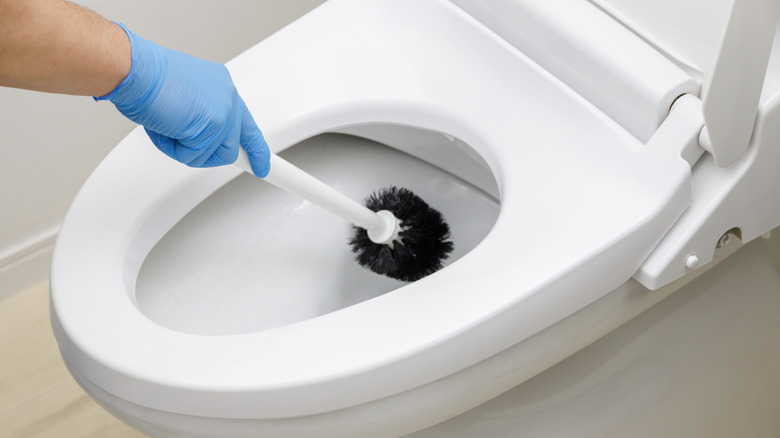
Whether you've run out of bleach or are searching for a way to remove stubborn limescale, don't worry. There's a surprisingly easy way to clean your toilet bowl stains, without rushing down to the store, and it's waiting on your garage shelf. In fact, not only can you use WD-40 in a pinch to clear the gunk at the base of your toilet bowl, but you can also use it to bust through limescale.
Made up mostly of calcium carbonate, limescale builds up over time in water-fed appliances, like toilets, and often results in unsightly and stubborn hard water rings. Fortunately, as hard as it can be to clean, limescale is actually porous. And with that being the case, it's a prime target for the oils and solvents in your trusty can of WD-40. To use it, spray the limescale in your toilet bowl, then leave it to work its magic. After a few minutes, it should start to penetrate, break down, and loosen the limescale's grip. Once it has, just scrub it with a regular toilet brush, and flush.
Apply a little lubrication to separate stuck glassware
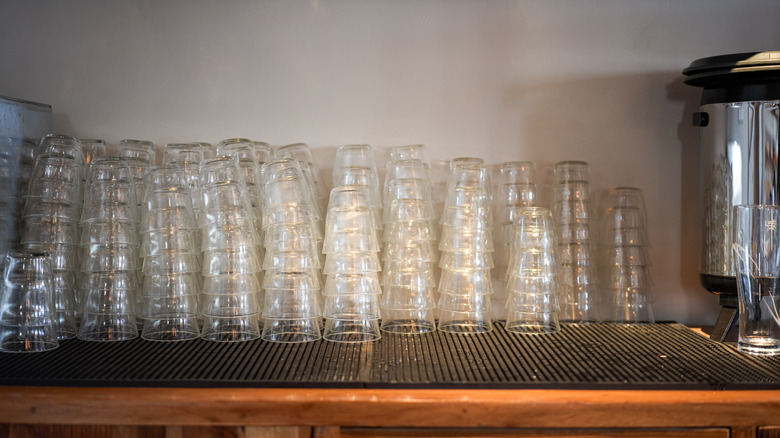
Whether you're trying to make the most of your storage space or simply save yourself another trip to the dishwasher, it can be tempting to stack your glasses. The problem with doing so is that every now and then, glasses can become wedged together. When they do, separating them can seem impossible without causing one, or both, to break. Fortunately, all you really need to pry them apart is a bit of WD-40.
Spray the spot where the two glasses meet, and allow it a minute or so to work its magic. Eventually, it should start to seep between the glasses, reducing the friction between them and helping to break the pressure seal that's holding them together. After a minute, try gently twisting the glasses apart without exerting too much pressure. Instead, if they fail to give way with a gentle twist, just allow the WD-40 a little more time to work. Once they're separated, clean the glasses thoroughly to ensure no traces are left behind.
Keep grass from clumping on your mower blades
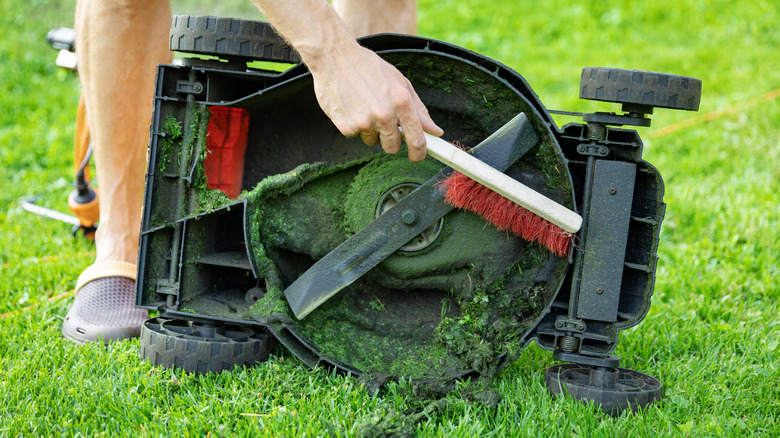
Mowing the lawn is one of the great pleasures of home ownership, and it's tough to beat the smell of freshly cut grass at the start of spring. At least, it's tough to beat it when the grass is not seemingly welded to the blades of your lawn mower. This makes mowing more time-consuming by forcing you to constantly stop and clear the blades. Luckily, all of this is very easy to avoid.
Using WD-40 to prevent grass from sticking to your mower works exactly the same as it does on your trusty snow shovel. The lubricant creates a slick, low-tension barrier between your blades and the grass, thus preventing it from sticking and clumping. It's especially useful in slightly longer grass that's still slightly damp and therefore more prone to sticking to the blades. It also helps to prevent your blades from corroding. Just make sure that you clean the blades first and allow them to fully dry before coating them.
Remove paint from tiled floors

If you're decorating your house, then a little spill here and there is almost unavoidable. It doesn't have to be a permanent problem, though. In fact, any spatters on your tiles can easily be loosened and removed with a bit of WD-40. Before you use it, though, it's important to know what your tiles are made from. If they're made from natural stone, then you shouldn't use the lubricant.
However, if you have, for example, vinyl or laminate flooring, then it can help remove the paint without the need for aggressive scraping. The WD-40's solvent will penetrate the layer between the dried paint and the surface of your floor, and in doing so, weaken the bond between them. It won't dissolve the paint, but it'll make it significantly easier to remove. Just apply a squirt to the paint spill, give it several minutes to work, then gently scrape it away with a plastic putty knife.
Use WD-40 to reduce the appearances of laminate floor scratches
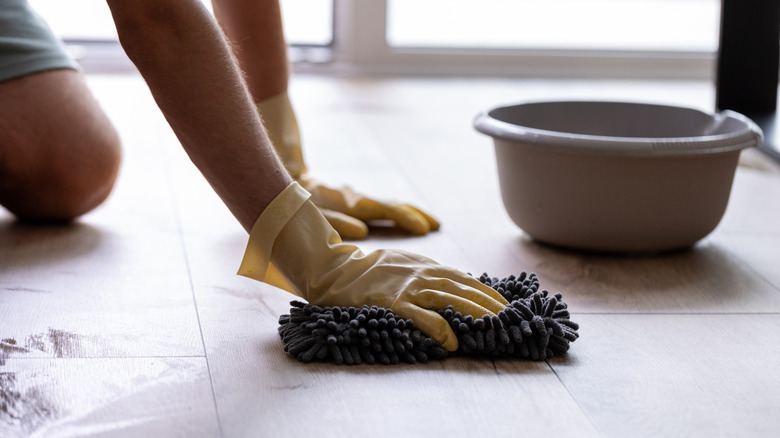
As well as busting through rust, did you know that WD-40 can also be used to remedy minor scratches in the surface of laminate flooring? It's not a permanent fix, and you may, in due course, need to reapply it from time to time. But if the scratches in your floor are shallow, then a gentle buff with a drop of WD-40 can make a world of difference.
To use this trick, clean the scratched parts of the surface thoroughly and allow them to dry. Apply a small amount of WD-40 to a soft cloth, then buff the affected areas in small circles until the scratches start to fade. Note that this should only be applied to small areas, and ideally, those away from your home's main traffic paths. The last thing you want to do is turn your entire hallway into a slip hazard.
Keep your stash of nails and other hardware from getting rusty
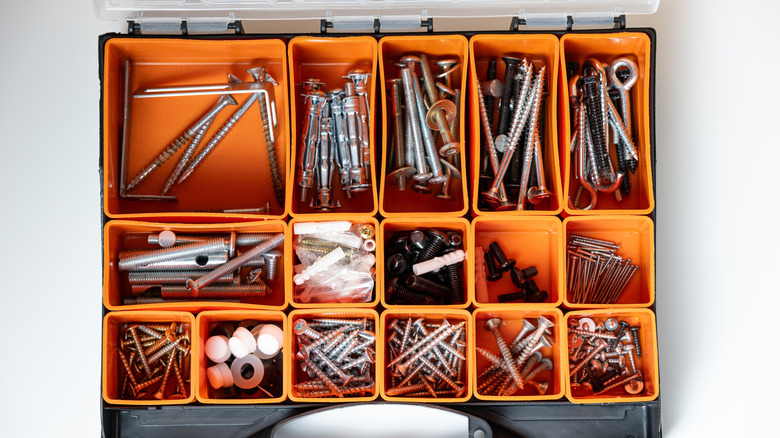
Is there anything more frustrating than organizing your DIY supplies, only to wander into your garage and find that your nails, screws, and other fixings have started to rust? Unfortunately, it can happen. This is even more likely if your hardware is stored where the humidity levels aren't constantly managed. But luckily there's a way to protect them.
Consider giving those buckets and bins of screws and nails a dutiful dousing of WD-40. Spray a little over the top, then mix the pot to ensure everything inside gets an even coat. That way, whenever the time comes to do a spot of DIY, you won't find yourself having to take an unplanned trip to the hardware store to replace a bucket of rusty nails.
Break down stubborn grease in your kitchen
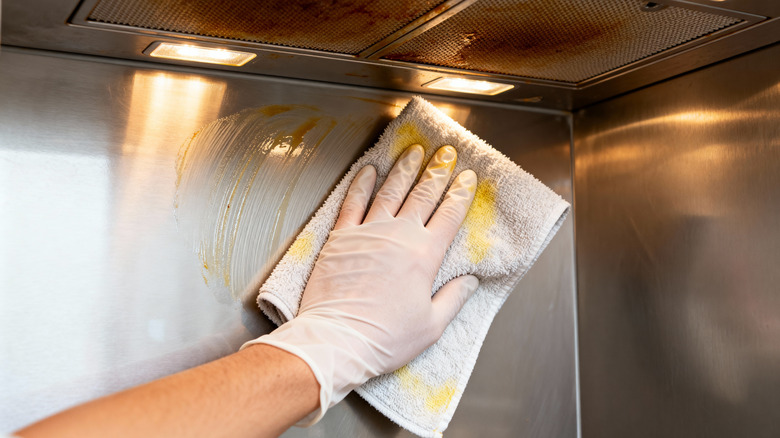
This idea may come as something of a surprise. After all, WD-40 is a lubricant. Surely it'll only add to the problem in grease-prone parts of the kitchen? In fact, while WD-40 does indeed contain lubricant, it's mixed into a solvent. In other words, it has some pretty impressive de-greasing properties. And while it does tend to leave some of that lubricant behind, that's usually far easier to clean away than regular kitchen grease.
The real trick is to ensure you use it on appropriate surfaces. In other words, you can't use WD-40 to remove grease from anywhere in the kitchen. For example, you'll want to avoid spraying it on unsealed wood cabinets and natural stone backsplashes. But if you have a metal range hood, greasy cabinet hinges, or a sticky stainless-steel fridge, those are absolutely fair game. Spray your WD-40 onto a cloth and wipe down the afflicted areas until the grease is gone. When you're done, make sure to go over the surface again with hot soapy water, and don't use it on the stovetop and in ovens. WD-40 is flammable, and the last thing you want to do is turn your kitchen into a fire hazard!