

13 Ways To Ensure Your Growing Cherry Tree Produces Fruit
We may receive a commission on purchases made from links.
Cherry trees can produce loads of fruit if you treat them right and grow them in the right conditions. But they're also a little bit precious and it doesn't take much to get a reduced or absent harvest. I'm a Master Gardener who specializes in growing food, and I love my fruit trees, but the cherries can definitely be a challenge. Some years, between the birds feasting on the fruit, and a reduced harvest because something wasn't quite right, I barely get enough to stock the freezer with cherry pies.
You stand the best chance of healthy, bountiful harvests for decades if you nail the basics. You can't do much about things like late frosts apart from keeping an eye on the weather report and offering young trees a blanket. However, you have much more control over other aspects. The type of tree, wider garden support for pollinators, planting location and depth, and soil health all play a part in big, juicy cherry harvests.
Match the tree to your climate and chill hours
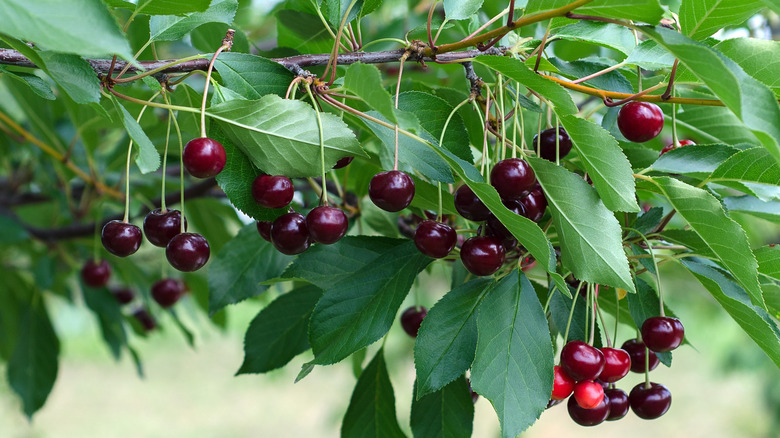
Where you live and the conditions in your garden determine how successful a cherry tree will be and which cherry trees stand the best chance of actually producing a respectable amount of fruit. Cherries need very specific growing conditions – sweet cherries need real winter cold to flower and crop the next year. They also need a fair amount of consistency with temperature when the blossom appears, as a sudden hard frost, once the tree is flowering, can decimate a whole year's worth of fruit. If your region doesn't get enough chill time in winter, the cherry trees can blossom and leaf out unevenly and may set fruit erratically or not at all.
Sour cherries are a little more forgiving and flexible than sweet varieties, so if you regularly get late spring frosts or limited winter cold, then they are probably a better choice than sweet ones. Find out the typical chill hour range is for your location, then make sure that the tree you buy falls within that range. Just because a nursery is selling a cultivar in your area, doesn't mean that tree is actually suited for your climate. Check the growing zone and recommended chill hours, which should be listed on the tree's nursery label.
Give it full sun from the start
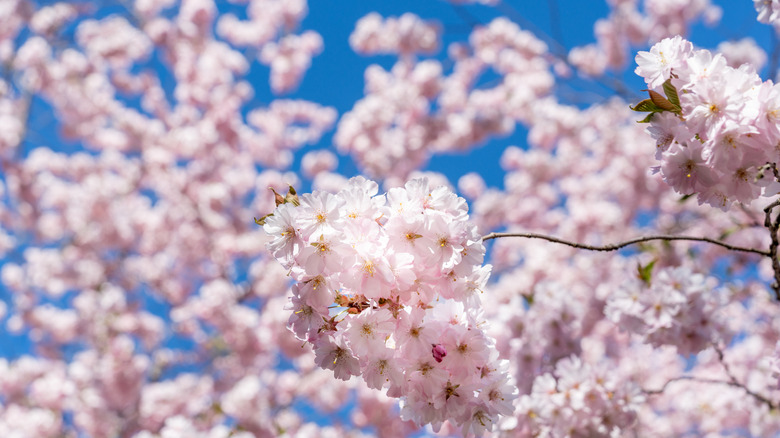
Cherries like lots of sun. Yes, they can survive in low to moderate light, but they may not produce much or any fruit. Growing fruit takes an awful lot of energy. Flower bud formation, fruit set, fruit growth, and ripening all require a tremendous amount of energy. To get enough energy and to replenish its reserves, a cherry tree needs lots and lots of sun. If the tree doesn't consistently get enough sunlight, it protects itself, conserving its energy by reducing blossom and fruit set.
If you're planting a new tree, map how the sun moves across your yard before you just dig a hole and stick the tree in it. Choose a spot where the tree gets a bare minimum of six hours of direct sunlight every day and more if you can manage it. In an ideal world, you want the whole tree to get at least six hours of sunlight, so don't plant it close to a building or near a larger tree canopy if you can avoid it. The exception is if you plan to espalier the tree, in which case you can grow it on training wires right against a wall, as long as that area gets six hours or more of direct sun per day. And don't forget to consider the tree's mature size. Dinky little juveniles can trick you into thinking they have plenty of space, but within a few years, their canopies can be in shade from structures or larger trees, so plan ahead.
Plant it in deep, well-drained soil
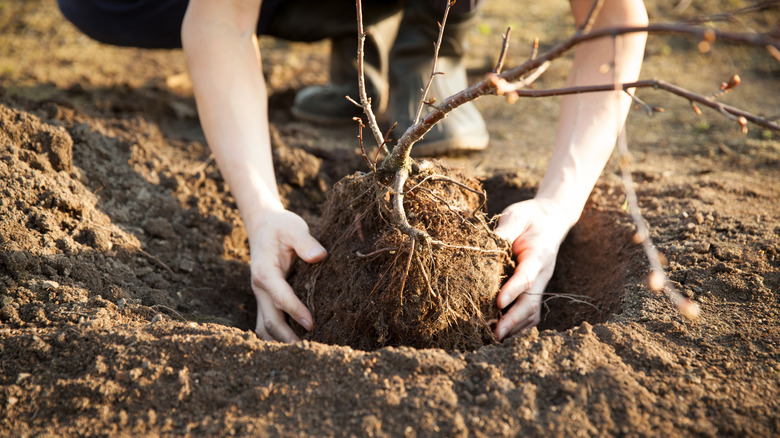
Sour or sweet, cherries are a little fussy about their soil. They do not like wet, compacted, or heavy soils. But they don't care for extremely dry soils, either. They also need plenty of nutrients. Essentially, to set lots of fruit year after year, the tree needs to be healthy. And that starts with the soil. Cherries need deep, loose, airy soil that drains freely and is rich in nutrients and organic matter. Soil that doesn't have good structure and airflow, or that stays soggy for extended periods, greatly increases the chance or root and crown rot in cherries.
As a permaculture specialist I can't stress enough just how important soil health, quality, and structure is. Heavy, wet soil makes everything harder for the tree, including nutrient uptake and disease resistance, so it makes sense that you'll end up with less fruit. Choose a planting location that has loose, crumbly soil that's full of lovely organic matter. Add plenty of well-rotted manure or straw and compost as a top dressing that will slowly break down and work its way into the soil. Avoid digging it in, if possible, as this causes other problems. You can also dig a wide, deep hole and add your enriched compost, manure, and kitchen scraps directly to it, then plant the tree and top-dress the surrounding area where the tree roots will eventually spread to. Don't plant the tree too deeply though. The root flare should sit right above the soil line.
Sort out pollination before you plant
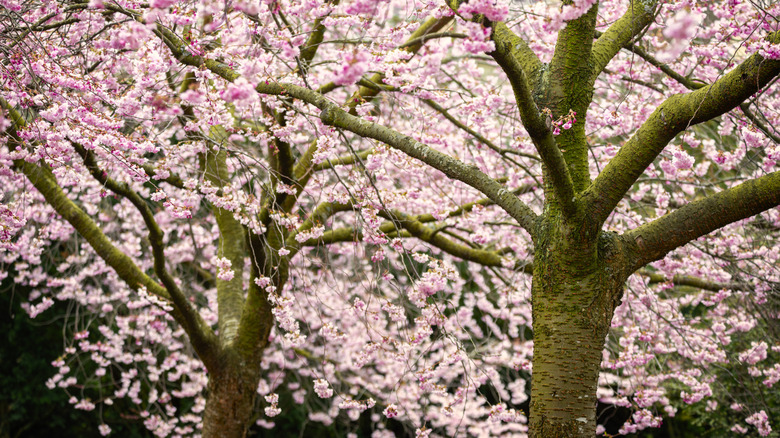
Pollination is the one that catches most people off guard when it comes to cherries. They buy a lovely tree, it bursts into flower, but when the blossom dies off, there's no fruit. Most sweet cherries aren't self-pollinating or self-fruiting. This means that they need a compatible tree nearby to actually set fruit. And this is the reason why, in so many old, established gardens, you'll see a cherry that looks like its wrapping around itself but, if you look closer, you'll see it's actually two trees planted in the same space. Gardeners did this to maximize pollination and fruit set. It's not ideal in terms of spacing and obviously the soil needs to be amazing and replenished regularly to support two trees in a small space. But it does work.
Your options are to get a self-fertile variety, like 'Celeste', 'Lapins', 'Stella', or 'Sunburst', or to make sure you have two compatible varieties in fairly close proximity. Remember to make sure whichever variety you're contemplating is suitable for your area. If your space is limited, choose a suitable self-fertile cultivar. It's better to have one large, healthy, self-fertile tree than to try and support two in a small yard. Many self-fertile trees coincidentally act as compatible pollinators for other cherry varieties.
Protect bee activity during blossoming
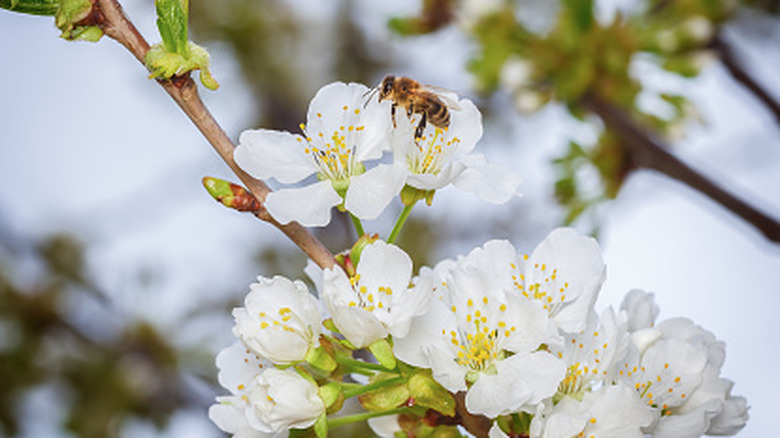
You can have oodles of gorgeous cherry blossom and still get minimal fruit if you don't have a strong pollinator population. Cherries depend heavily on bees and other insects to move pollen between flowers so that fruit can set, and their bloom window is short. So, declining pollinator populations mean declining fruit yields. Heavy chemical use, lack of other suitable food, and habitat disruption all contribute to poor pollination and fruit production.
This is one of the many reasons my focus is firmly on permaculture — because everything is connected. First, stop using chemicals, including insecticides and herbicides, ideally year-round, and especially during blooming time. Only use chemical controls if you really have to, and even then, go with bee-safe or pollinator-safe ones. And plant as many flowers as you can realistically support. Use flowering shrubs and fast-growing perennials as well as annuals. And make sure you include plenty of early blooming species, like daffodils, snow drops, and hellebores. As cherries tend to blossom fairly early, you want to already be encouraging bees to use your yard. You can also sow a pollinator-friendly wildflower mix.
Do what you can to dodge spring frost
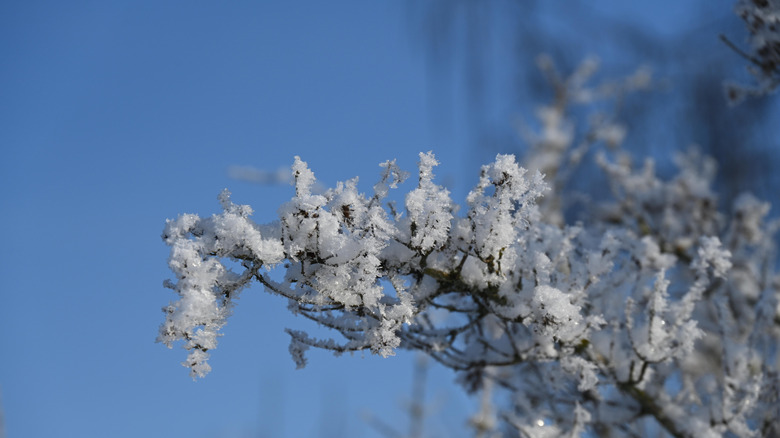
Late frost is a nightmare for cherries. They bloom early, but aren't particularly frost-hardy, so they are very vulnerable. While in bud, they are safer, but once those buds loosen and start to open, a hard frost can kill off large portions of them, resulting in far less fruit. Sweet cherries tend to bloom earlier than sour varieties, so they are at greater risk.
Get to know your garden and plant your cherry tree in the warmest parts, avoiding frost pockets at all costs. But on the flip side, you should also avoid hot pockets. These are spots that get super-warm on those early spring days but then lose their heat rapidly overnight. The problem with this is that hot pockets encourage a cherry tree to bloom too early, putting them at even more risk of frost damage. An elevated position with good air flow is usually a safe bet. For young trees, you can offer protection in the form of a frost blanket on nights when frost is in the forecast.
Water deeply and evenly
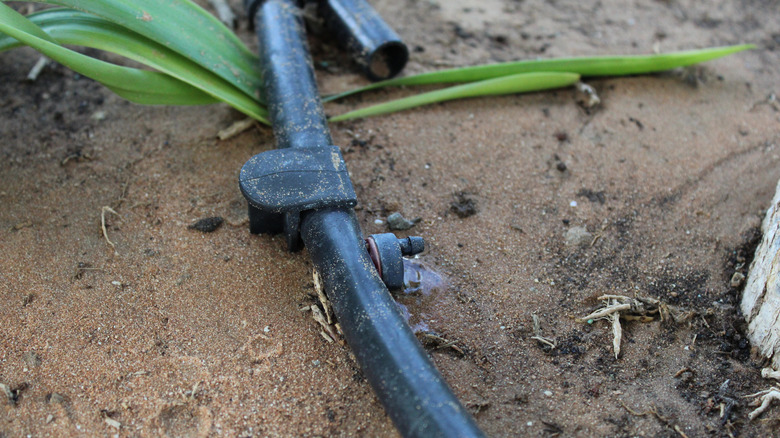
Cherry trees need steady, consistent moisture, especially while they are young and getting established. They'll also need supplemental watering when they mature during extended dry periods. To encourage deep rooting, resilience, and drought-tolerance, deep, less frequent watering is the way to go. If you water little and often, you train the roots to stay on the surface because water never penetrates deeply. Shallow roots dry out quickly and end up relying on you to supply water very frequently, and shallow-rooted cherries tend to produce a smaller crop.
I like to use a soaker hose placed well away from the base of the trunk, looped around the tree two or three times. Loop once 12 inches from the base of the tree, the second time mid way between the first loop and the outer edge of the drip zone (the circumference of the canopy), and the third time, if the tree is big enough, around 6 inches inside the outer edge of the drip zone. Once a tree is established, the root zone is around the same size as the circumference of the canopy, hence the need to water this entire space.
Keep the trunk from staying wet
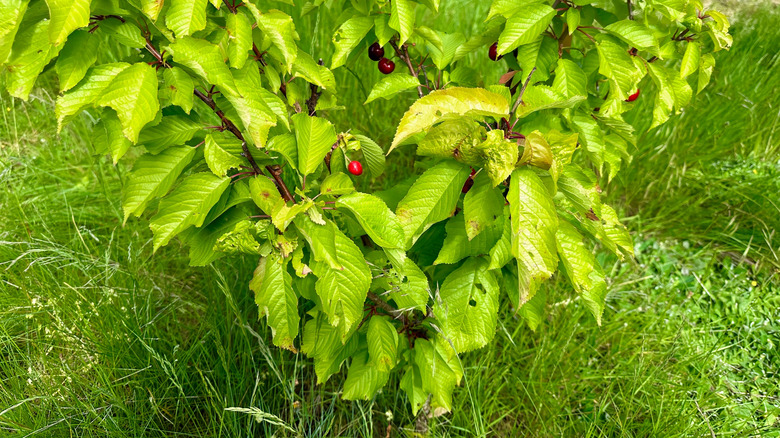
This is where cherry trees often struggle when planted in the lawn, or where the grass eventually carpets over the root flare and butts up against the trunk. And it's why I always recommend growing trees in properly prepared beds that you maintain. When the trunk stays wet, you're basically inviting rot, decay fungus, and root rot. Consistently unfavorable conditions at the base make the whole tree more susceptible to problems like crown rot, blights, and pests. It naturally follows that a weaker, unhealthier, more disease-prone tree will bear less fruit.
Set your tree up for success by keeping a generous ring of grass-free soil with a fairly deep mulch top dressing. But be careful with your mulching. Mulch is incredibly useful in the garden, and for trees in particular, as it protects the root zone, suppresses weeds, retains moisture, and prevents nutrient loss. However, piling mulch over the root flare and up the trunk is incredibly damaging. So make sure you keep mulch at least 4 inches away from the trunk and, ideally, spread it so it reaches the drip line. This covers the whole root zone. You can also bury your soaker hose under this layer and connect it to a timer, so you can be more hands-off with your watering.
Fertilize for balance, not for a big flush of leafy growth
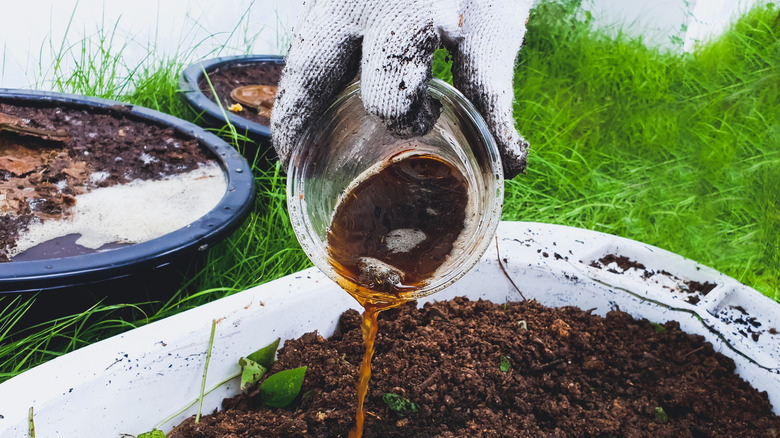
Most people think they're being helpful when they give their fruit trees a shot of high-nitrogen fertilizer. But nitrogen mainly pushes leafy growth, and using too much or applying it at the wrong time can actually cause poor fruit set. You'll get lots of leafy growth and probably a bunch of new shoots, but not many cherries. Additionally, al that extra greenery creates more shade, which cherries do not like. Remember, they need lots of sunlight to swell and ripen, so extra shade will result in smaller fruits that take longer to ripen.
I don't use synthetic chemical fertilizers because my specialties are permaculture and organic gardening. So my go-to is always building soil health. If you keep your soil healthy and feed it naturally, it'll always have the right balance of nutrients to support your cherry trees. Adding lots of compost and rotted manure a couple of times a year is a smart option, because this acts as mulch and slowly breaks down, releasing its nutrients over time. You can also do a soil test to determine whether you have any specific deficiencies, then add an appropriate substance to amend the soil and fill the nutrient gap. I use diluted nettle, manure, or comfrey tea to provide balanced support during times of stress, too.
Prune to let light into the canopy
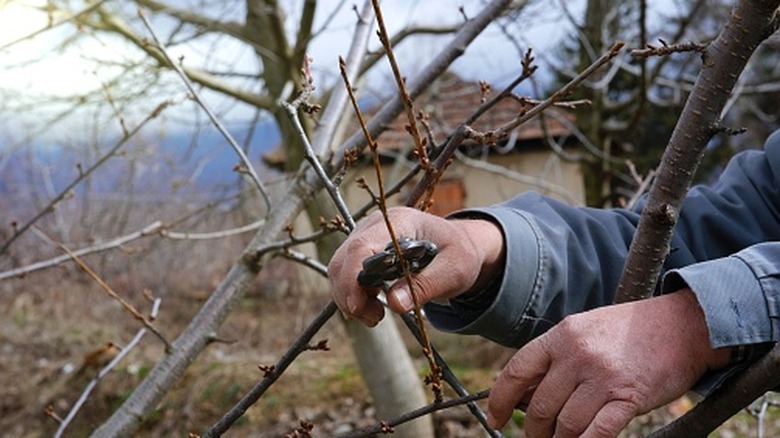
When I moved to my current property, the front yard was pretty overgrown and had a pair of really lovely mature cherry trees. They were big and healthy and produced loads of blossoms and leaves but not very much fruit. What they did produce were fairly small and slow to ripen. The best fruits were on the outer edges of the trees. This is a classic example of an overly dense, overgrown canopy. The lovely canopy simply had too many leaves, so it was blocking light from the interior.
If this sounds familiar, you need to selectively prune the cherry tree. First, remove any obviously problematic branches or limbs. That's anything that's broken, damaged, or obviously diseased. Also get rid of branches that cross and rub against each other constantly, as the damaged bark is essentially an always open wound that will invite pests and disease. Then get right under the canopy and look at where you've got the densest growth. For cherries, you want to create a nice, open, airy canopy structure. The trick is removing only what's necessary so you minimize the loss of fruiting wood. And never prune out more than a third of healthy growth at any one time. Sometimes it takes a few seasons of slow, well-selected thinning to get the best canopy structure and fruit yield, so be patient.
Train the tree early so it fruits earlier and stays manageable
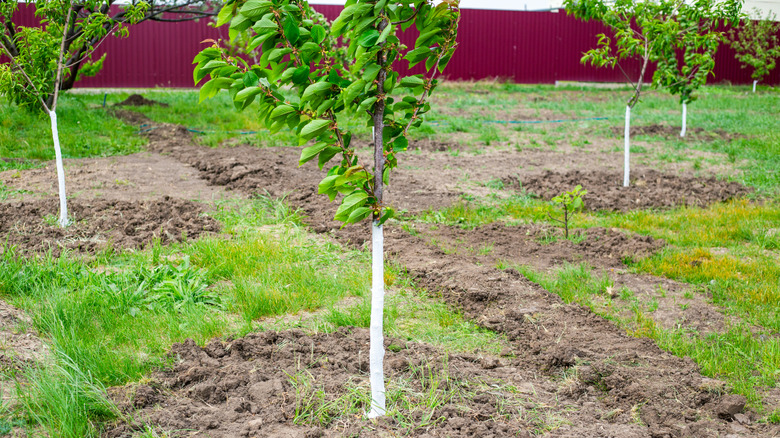
Young cherries get unruly quickly, if you let them. Generally, cherry trees, when left to their own devices, produce lots of upright growth with sharp, narrow branch angles. This results in difficulty with netting, pruning, and harvesting. Training them as soon as you plant them helps to limit this, and gets you a tree that's much easier to manage long term. Training also keeps the canopy open, allowing more sun through, which encourages earlier fruiting and ripening.
Even though it sounds weirdly complicated, training a cherry tree is ridiculously easy while the tree is young and the wood is flexible. The simplest way to get an open structure and branches growing at 90-degree angles is to use a sprung clothes pin. It absolutely does not require fancy equipment. On the leader, which is the central upright, you'll see little nubs where the new branches will grow. Locate the first one of these that's 30 inches or more from the ground and place a sprung clothes pin around the leader, right above this nodule. And then add another further up, above the next branch node where you want another branch to grow straight outwards. And so on, all the way up the leader. This doesn't harm the leader, as the clothes pins are flexible and won't bite into the bark. But it does force the branches to grow outward at roughly 90 degrees to the leader.
Protect the fruiting spurs
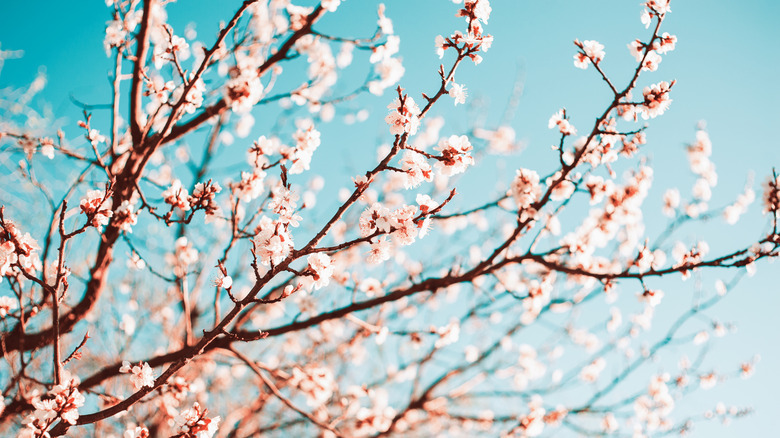
With cherries, old wood doesn't necessarily mean dead wood. It's one of the main reasons you shouldn't prune heavily or often and why you should work at thinning out the canopy slowly and thoughtfully. You need to keep the active fruiting spurs rather than constantly removing them.
If you've inherited an existing tree, like I did when I moved, don't just dive in and start hacking at it. First, identify the fruiting spurs, which are large, fat bud-like clusters. These are where the tree produces its fruit. While they are active and vigorous, leave them be. Only remove wood with fruiting spurs if that branch is damaged or as the spurs age, start facing downward, and produce fewer or smaller fruits. If that happens, cut the branch back to a younger, healthy side shoot.
Protect the crop from birds
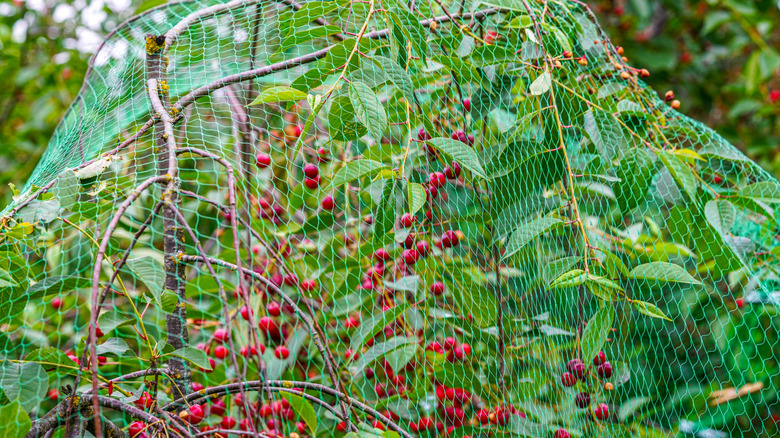
Birds are one of my biggest bugbears when it comes to cherries. They love the sweet, juicy fruit, and they'll gobble up a whole crop before they can fully ripen. Yes, I am very much into permaculture and I promote the idea of sharing our space and produce with the wild things, but there are limits. And birds are so greedy when it comes to cherries. This is a particular problem for home growers who only have one or two trees, as birds will flock to those singular trees and devour every last fruit.
The only reliable method is to net the tree after the blossom dies off and the fruit sets. However, netting the whole tree is difficult, and too often the net gets torn. It can also trap and kill birds. So, I embrace the fact that the birds will absolutely get a good portion of the cherries, but I make branch sleeves to protect the best branches with the most fruit. You can buy long fruit protector bags like these Endpoint mesh bags, or you can make your own sleeves with some fine mesh or netting and some zip ties. All you need do is cover a branch and zip tie each end of the mesh, then remove the ties when you want to harvest and reuse the material next year. You can also string up some old CDs and DVDs as the reflective surface is a fairly good deterrent against birds and pesky critters.