

The Ancient Japanese Flower Arrangement Method That Embraces The Beauty Of Nature
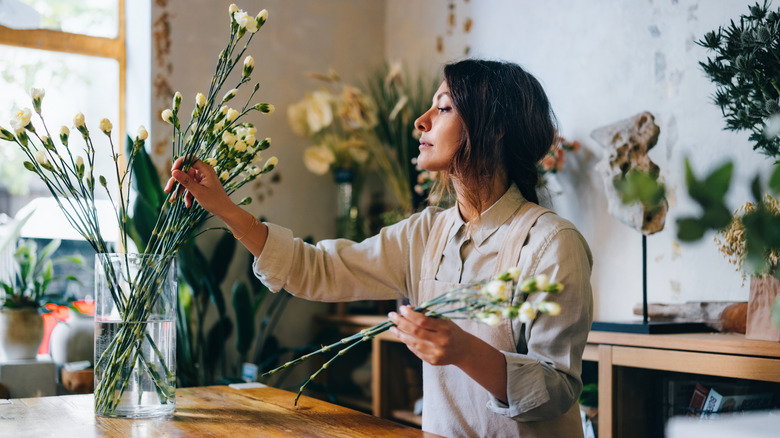
The ikebana method of Japanese flower arranging is a minimal style intended to showcase the simple seasonal beauty of plants. The word "ikebana" combines the Japanese words ikeru (to arrange, be living, or to have life) and hana (flower); in other words, "making flowers alive." Its design elements are derived from formal, precise principles, but also encourage instinct and emotion. Whether combining colorful summer blooms or finely-textured autumn leaves, an ikebana arrangement showcases nature's elegant and simple beauty.
Despite its formal framework, ikebana style often looks very fresh and natural. The most noticeable aspect is the low height of containers or bases used. This allows the grace and form of stems and branches to be part of the arrangement, and showcases their natural form. There are special vases made for ikebana, but any container can be used that works with the design principles. Inspired choices guided by creativity and feelings are encouraged in this satisfying art form.
On her blog, Japanese design expert KonMari described ikebana as an art form that conveys a specific emotion or feeling to observers, and this emotion should guide the choices of plants and materials for the design. This principle also places emphasis on the process of making the arrangement, and not just the appearance of the finished product. That process can reinforce feelings of connection to nature and appreciation for its beauty, and the fleeting temporality of the seasons.
Design basics of ikebana
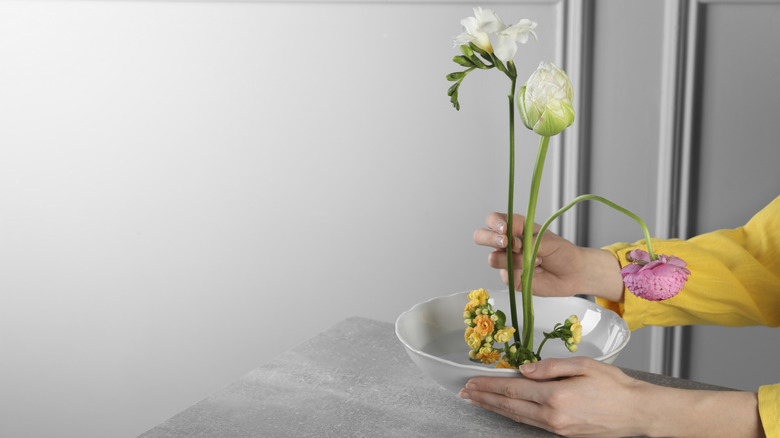
There are three elements of ikebana that inform its visual structure: shin, soe, and hikae. These elements are central to the look of balance and harmony that defines ikebana. Each element has priority in the arrangement, from highest to lowest, and their symbolic placement corresponds to their physical position also.
The shin is the tallest and most prominent part of the arrangement, symbolizing heaven or the spiritual realm. The soe is the secondary element, which corresponds to humanity: it connects the shin and hikae to each other. The hikae is the lowest and least prominent element, and symbolizes the earth or the physical realm. As an example, an autumn ikebana arrangement could include slender branches of maple or sycamore leaves (shin), small apples, short stems with acorns, or pinecones (soe), and short clusters of chrysanthemums or asters (hikae).
These elements roughly correspond to the simple "thriller, filler, spiller" formula, which is a visual guideline for creating container arrangements. However, there is deeper meaning to these three principles of ikebana, which speak to how plant shapes symbolize the natural world. The shape of ikebana usually emphasizes arranging the plants in a somewhat rounded or triangular shape to show nature's interconnectedness and allow these principles to work in harmony.
How to create ikebana arrangements without special materials
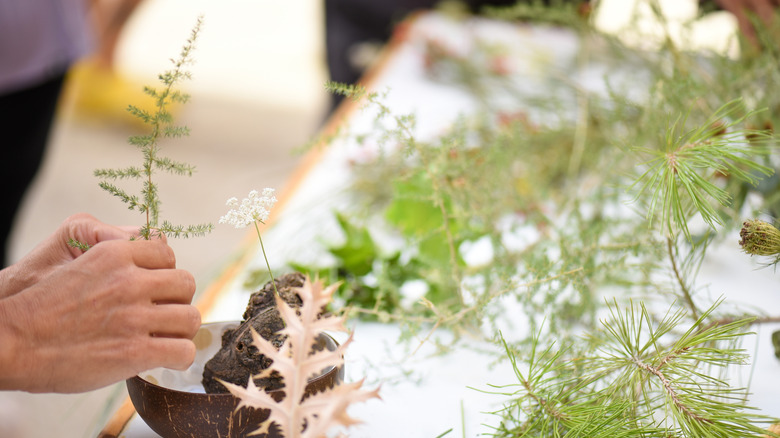
Ikebana has no specific rules about the plants chosen, other than seasonality. There's no need to purchase special floral arranging supplies or vases in order to be able to follow the guiding principles of ikebana. Low containers such as bowls, tumblers, teapots, or boxes can be used.
Using foraged materials from nature, as opposed to purchasing cut flowers from a shop, is very much in keeping with the idea that the arrangement should be inspired by beauty and guided by emotion. Because ikebana designs rely on some plants being displayed in an upright way, be sure to leave long stems on branches and flowers so you have plenty to work with. You can tie small stems together with string, wire, or twist ties. You can also use dried materials for ikebana, like hydrangea flowers, twigs, or tree bark — just make sure to handle them carefully.
If you're putting your ikebana arrangement in a vase with water, change the water every couple of days to keep flowers fresh. The best way to prolong ikebana's seasonal beauty is to create new simple displays to reflect nature's changes, as opposed to using additives in the water. Finding new buds in spring, new flowers in summer, or new leaves in autumn will inspire new designs that renew your connection to nature.