

Stop Weeds From Growing In Gravel Without Dangerous Chemicals With 9 Alternative Solutions
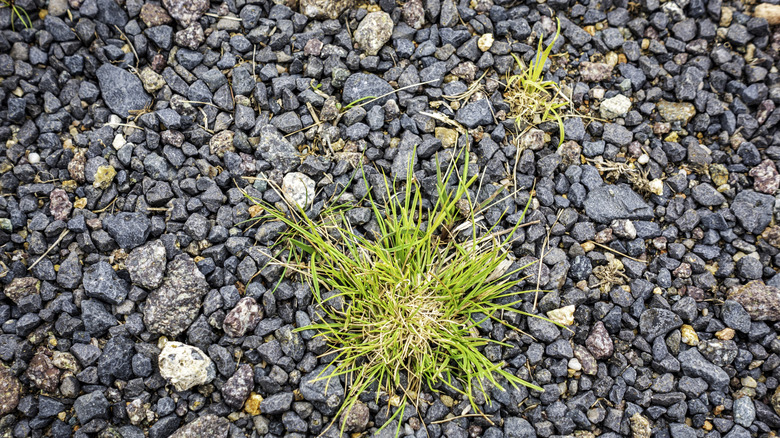
Gravel driveways and walkways can add a touch of class to a property, and some landscaping designs even include gravel used as mulch around shrubs and plantings. Because gravel is so porous, however, it can often become a haven for weeds. In my work as a professional gardener, I often have to deal with weeds growing through gravel. However, as an organic gardener, toxic herbicides are not an option for my business, nor do I ever use them personally. So here are some non-chemical ways to prevent weeds growing in gravel.
There are a few different tricks for preventing weeds in gravel. But you may be dealing with weeds at various stages of growth before you can focus on prevention. Early spring is the best time for prevention-based strategies. And while prevention is best, it's not always possible, so it's good to have a few approaches to choose from. These practices vary in terms of effort and time commitment, as well as cost.
Some weeds with deep tap roots (like dandelions, burdock, or purple loosestrife) may prove to be very stubborn to vinegar or other DIY solutions involving pouring or spraying. Mature weeds often need to be pulled out before more preventive methods can be effective. However, using boiling water or salt/vinegar solutions 24 hours or more before pulling can help wilt or weaken the root to make the process easier.
Vinegar
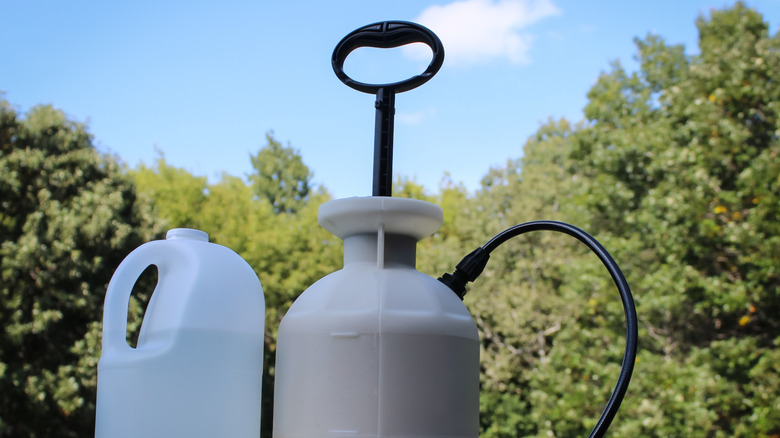
Ordinary white vinegar is an effective non-toxic weed deterrent and weed killer. It's mainly effective for emergent weeds, so get out there in early spring as growth starts to appear. If you decide to use horticultural vinegar, be sure to wear gloves and protective eyewear as it is very potent. Vinegar-based sprays will affect other plants, not just weeds, so be careful when spraying to ensure you only target weeds you want to remove. For best results, use vinegar at least 24 hours before rain, on a day without wind.
Boiling water

If you have a relatively small area to deal with, boiling water is an extremely effective way to kill weeds that are just emerging. It's a bit labor intensive to do large areas, but other than the cost of the electricity or gas to hear the water, this is a virtually free method. It can be dangerous, however. Be very careful handling boiling water. Don't carry it in an open container as it can cause serious scalding or burns if it spills on you. Using a portable electric tea kettle container with a lid works well for this.
Angular gravel
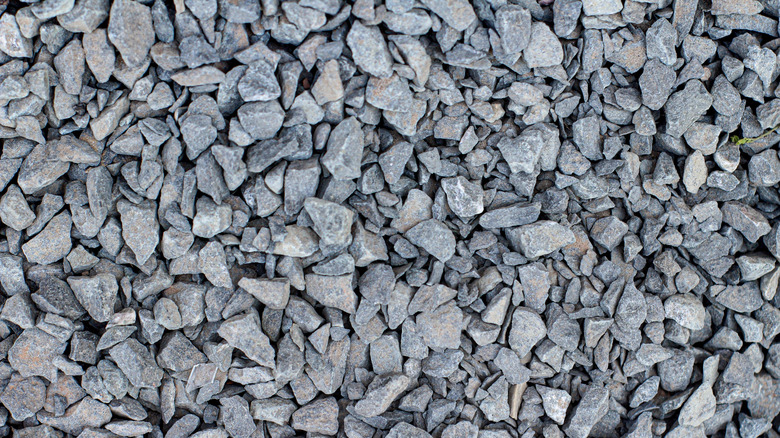
One of the easiest ways to stop weeds in gravel is using the right kind. There's definitely a preference for rounded gravel shapes for its texture and color, but because the shapes of the stones don't "lock together," there is a better chance of weeds breaking through. Angular gravel has a rougher surface and the shapes create a more effective barrier to weeds. If you're not attached to the aesthetics of pebble or rounded gravel, this is a good option for weed prevention.
Cardboard

Cardboard is a common recycled item these days, so it's easy to come by. I use it for layer gardening, and it's also useful as a weed barrier beneath gravel. For gardening use, I remove tape and staples beforehand, though this may not be necessary for cardboard used beneath a gravel driveway or walkway. You can layer cardboard easily (cutting or tearing it if needed) to cover gaps or holes to prevent weeds from poking through. Pro-tip: laying the cardboard down before rainfall so it gets damp before spreading gravel helps it lie flatter and stay in place more easily.
Burlap
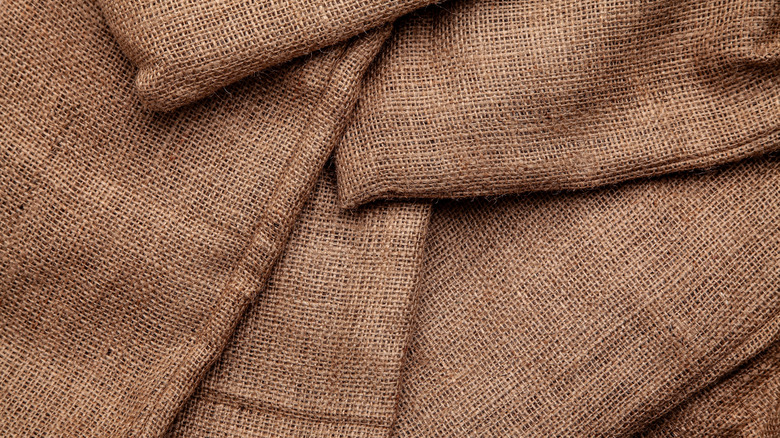
In addition to cardboard, I also use burlap for layer gardening, and this can also be a good material for preventing weed growth in gravel. Burlap's strong fibers and woven texture can be especially effective for blocking weeds that tend to spread via their root systems. A good place to get free burlap? Your local coffee roaster! They often import coffee beans that are shipped in burlap sacks and have plenty left for upcycling. Just lay the burlap over the soil surface, and be sure to overlap to cover gaps before adding gravel.
A fresh layer of gravel
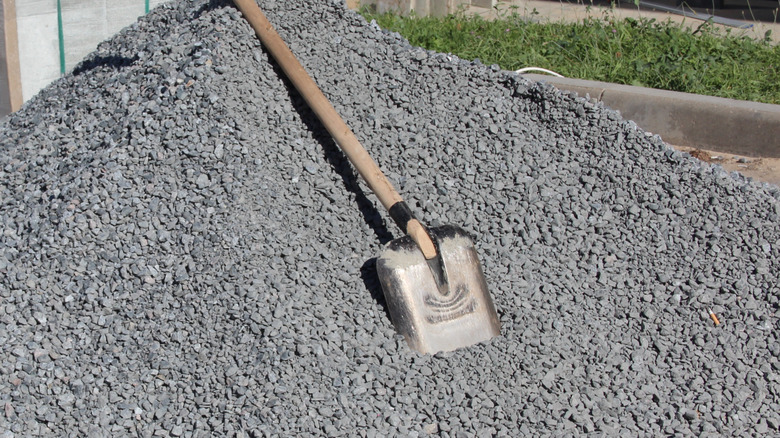
Sometimes the easiest solution to a problem is the most obvious one. In this case, you can fight weeds by adding more gravel. However, this method is a fair amount of work compared to others, and can also be a considerable expense. If you have gravel on hand, it's a quick way to cover up emergent weeds and prevent them from getting sunlight. Otherwise, this method is best when you're already planning to invest in gravel to refresh your walkway, driveway, or beds.
Landscaping fabric
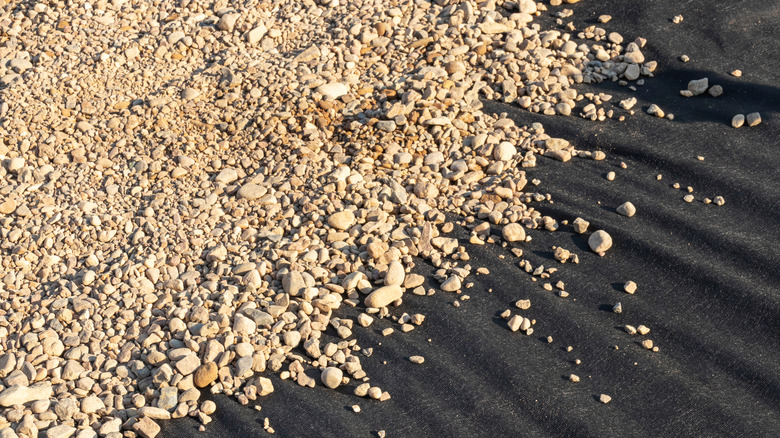
If you have a big project and are hiring a landscaping or hardscaping crew, chances are they will offer to use landscaping fabric underneath your gravel. This can be a somewhat costly option, but you can also DIY this method with rolls of fabric from the hardware store. Personally, I'm not a fan of this material in the garden, because I find that over time, some stubborn weeds learn to "coexist" with landscaping fabric and grow through or around it. But for use with gravel, landscaping fabric and cardboard combined can be a very effective option.
Homemade weed killer
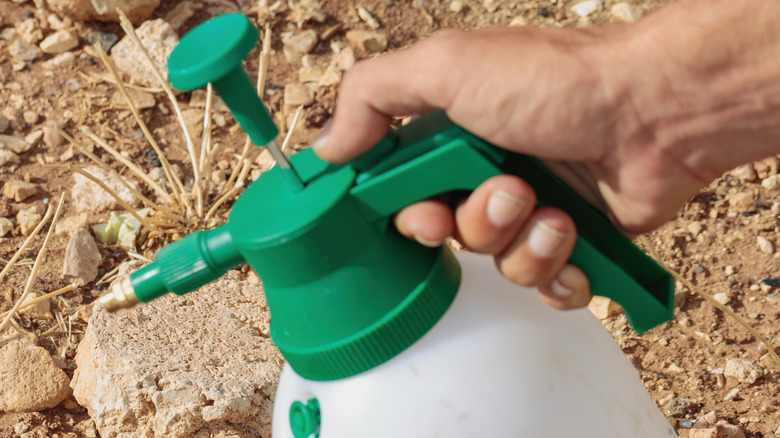
One simple and effective method for a DIY weed killer that is far less toxic than chemical herbicides is to combine dish soap (like Dawn) with salt and vinegar. The soap makes this mixture more effective because it will cling to plant material, helping fight weeds longer than salt water or vinegar alone. The suggested recipe ratio for this mix is one gallon of white vinegar with one cup of salt and a tablespoon of dish soap. Too much soap may cause your sprayer to clog.
Weed torch
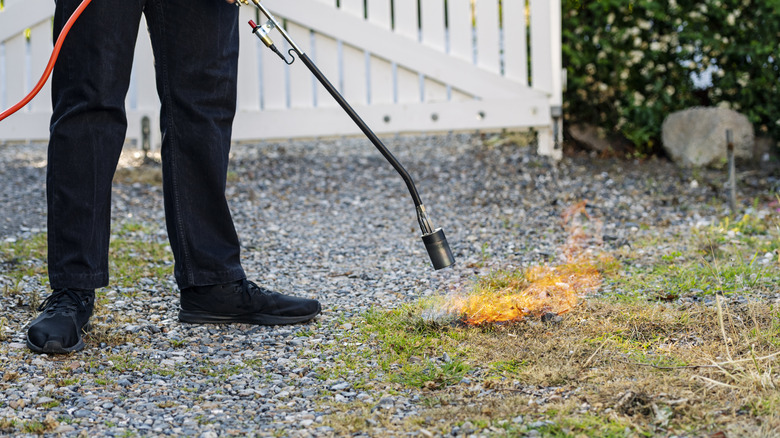
Using a propane weed torch is a fairly dramatic solution, but certainly an effective one. It's also surprisingly affordable, assuming you already use propane for other things like backyard grills. Most weed torches sell for between $30 to $50. Gravel is one of the few surfaces where this method can be used in a way that won't harm nearby plants. However, basic fire safety caution must be used, especially during times of drought. Never use a weed torch when there's a burn ban in effect or if weather conditions could potentially cause fire to spread, like very windy days.