

The Only Flower You Need To Attract Beneficial Ladybugs To Your Garden
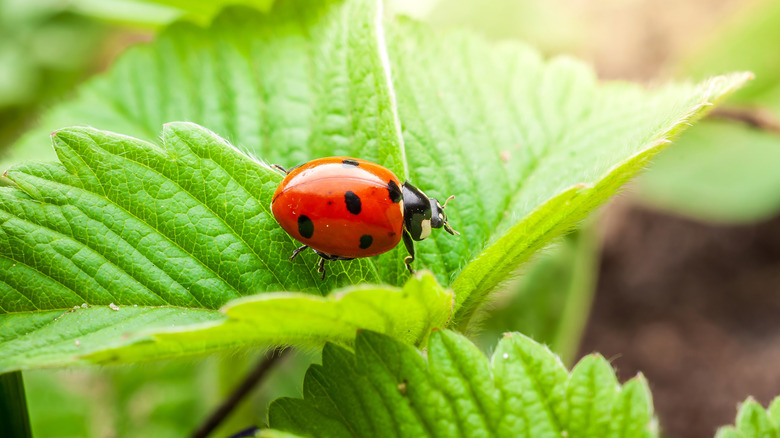
Besides adding a touch of fun and whimsy to your backyard, the adorable ladybug, also called a lady beetle, can do more for you and your garden than you might think. These iconic insects are actually incredible pest control, ravenous to eat the bugs you detest in your garden. There are numerous plants that naturally attract ladybugs into your garden, but there is one flower in particular that they love to flock to: zinnias (Zinnia elegans). When you incorporate zinnias into your flower beds, you aren't just adding vibrant blossoms to your property, though that is a bonus. You are also adding a plant that brings in helpful insects like ladybugs who enjoy the flower's bright colors, its delicious pollen, and the other bugs it can attract.
Ladybugs enjoy zinnias, and they also double as the flowers' pest control. By planning zinnias in your garden, you are providing ladybugs with another common source of one of their favorite foods: aphids, both adults and larvae, which feed on numerous plants. According to Terminix, a single ladybug can eat up to 5,000 aphids in its lifetime. You may recognize aphids by their tiny, soft-bodied forms, the cornicles that protrude from their abdomen, and their notorious shade of green. These pests drain the moisture out of your flowers, causing your plant's leaves to yellow, curl, and decay. However, if you add zinnias to your garden, you will hopefully bring an army of ladybugs to the rescue, snacking on your garden's aphids and keeping all of your flowers — not just your zinnias — alive and well.
Tips for growing zinnias in your garden
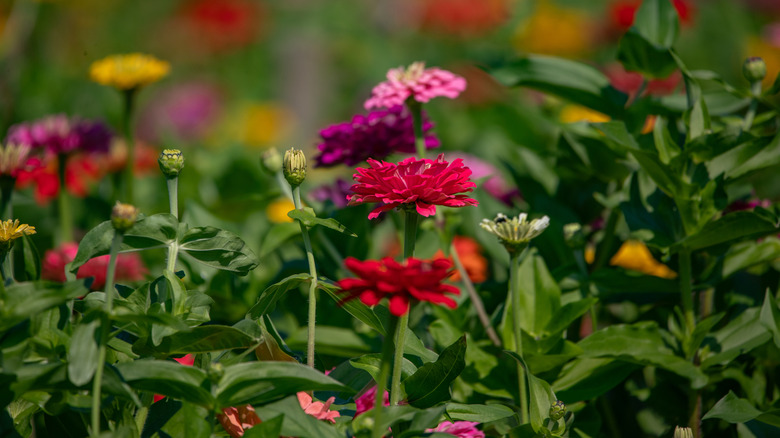
When selecting which type of zinnias you want to add to your garden, there are numerous varieties, shapes, and cultivars to choose from. These annuals can come in a plethora of colors, ranging in shade from bright red to hot pink and vibrant orange to sunshine yellow. Growing and caring for zinnias is relatively easy, and these plants do not require a ton of maintenance in order to thrive. You can plant them as soon as your region is not as risk for frost. All they require is full sun and well-draining soil, and they can grow anywhere from 8 inches to 4 feet tall.
While zinnias are known for being generally low-maintenance plants, you want to make sure that you avoid some common mistakes when growing them in your garden. Check that you are only watering the roots and bottom of the plant, as too much moisture can cause the leaves to fall prey to disease or bacterial growth. It is also recommended to water your zinnias in the morning and not later in the day to avoid excess moisture. If they are left in partial shade, they may also be susceptible to disease. Zinnias, like most plants, can be prone to the fungal disease powdery mildew. This can be solved by removing any affected sections of the plant as well as treating it with a fungicide or neem oil. Overall, zinnias are forgiving flowers and are wonderful additions to any property, bringing color and beneficial insects like ladybugs to your garden.