

Catch This Stinky Invasive Weed Before It Takes Over Your Yard
Weeds are every gardener's nightmare. They steal nutrients from your beloved plants and make even the most carefully tended yards look messy and neglected. However, some weeds are more than just annoying — they are invasive. Take, for instance, stinknet (Oncosiphon piluliferum). Stinknet, also known as globe chamomile, is a herbaceous plant native to South Africa. It was first identified in California in the early 1980s. Since then, it has spread extensively throughout the Southwest U.S. and further afield. It's even been declared invasive in some parts of the U.S. And why the name? Well, stinknet's foliage and resinous flowers emit a strong unpleasant odor, especially when they're crushed.
However, the real problem with stinknet is not the smell. It is actually how aggressively it spreads, competing with and even smothering native plants. As if that weren't enough, stinknet is a fire hazard, and it can trigger allergic reactions on bare skin. Put simply, you don't want it around. Gardeners need to be on the lookout for stinknet, so learning to identify this problematic plant is essential. The biggest giveaway that you've encountered this species is its leaves and flowers. The foliage resembles that of a carrot, while the flowers are very distinctive — spherical and yellow — and appear on the plants from January to April. You will often find clusters of stinknet in open, neglected areas like road edges, where it can grow up to 4 feet tall.
Monitoring and preventing stinknet from growing in your yard
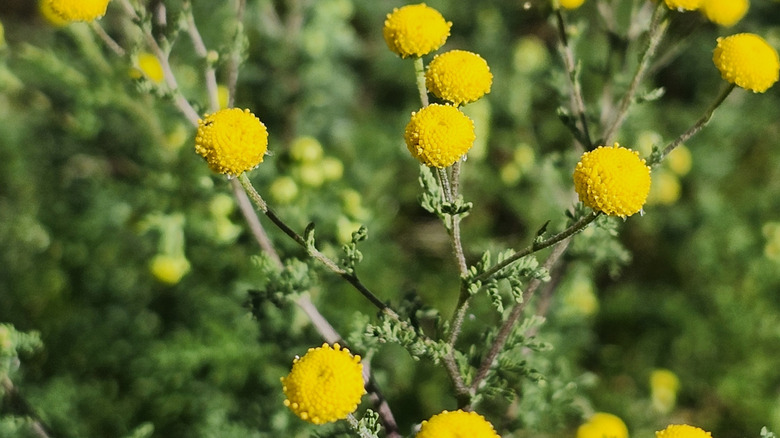
Keeping stinknet out of your garden starts with active searching. You can start monitoring for stinknet from late winter right through into early summer. However, the best time of year to look for this invasive weed is spring, when its bright, yellow flowers make them really stand out against other plants. When these relatively small plants aren't flowering, they can be difficult to spot. You also risk mistaking them for native — and, therefore, less problematic — so-called weeds.
Consistently monitoring your yard and garden for stinknet is only the first step in battling this plant. You also need to take measures to keep stinknet from invading your yard in the first place. This is where mulching can help. There are many ways to use mulch in your yard and garden, and whatever method you choose will work wonders in your battle against stinknet. Mulch blocks the sunlight the seeds need to germinate. If you cannot mulch your garden beds, try planting shrubs or trees to create dense shade. Stinknet seedlings are small and grow poorly in shade.
Clean and disinfect your gardening tools regularly, especially if you use them outside your own yard. If you live in an area with high stinknet populations, ask visitors to clean their clothes and shoes when entering and leaving your garden. These hygiene practices reduce the risk of seed spread. Lastly, remember that stinknet seeds can remain viable in the soil for years. Minimize soil disturbance in your garden beds wherever possible since the plant thrives in disturbed soils.
Getting rid of stinknet from gardens and yards
Sometimes, no matter how careful you are, stinknet will still sneak into your yard. When that happens, your only choice is to face it head-on. You have two options: mechanical control or chemical control. If the infestation is just getting started or is restricted to a small area, hand-pulling works well. It seems simple — you pull the plants out by their roots. However, you must make sure that you remove the entire root system. If you don't, the plant will grow back. If the infestation is large, hand-pulling won't work.
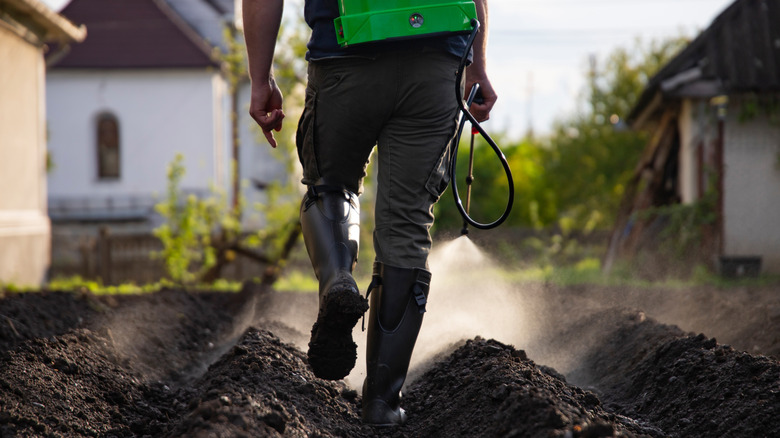
You can try trimming or mowing the patch. However, mowing alone won't solve the issue unless paired with other follow-up treatments. Plus, it can spread the seeds and cause respiratory and skin problems in sensitive individuals. If you're struggling to control a stinknet infestation mechanically, chemical control is the next step. You can use preemergent and postemergent herbicides on stinknet.
Postemergent herbicides are most effective when the weed is in the rosette or bolting stage, so timing is critical. Choose between a non-selective herbicide, like glyphosate or safer store-bought weed killer alternatives to glyphosate, or a selective herbicide, like aminopyralid. Always follow the manufacturer's instructions to the letter. Apply preemergent herbicides in fall before the first winter rains. A mix of preemergent and postemergent herbicide can be applied in spring, right after new seedlings have popped up. Watering the ground after application helps to distribute the chemicals throughout the soil and disrupts seed establishment.