

Hold The Fertilizer: Do These Lawn Care Tasks First

You hear it from expert gardeners and turfgrass specialists all the time: don't forget to fertilize your lawn. This outdoor chore is considered imperative to a lawn care routine for many reasons, from maintaining healthy blades to creating a stable root system that will endure harsh conditions. Despite popular belief, adding fertilizer to your grass isn't the first item on your lawn to-do list. There are a bunch of chores you need to check off first, no matter where in the U.S. you live. Important pre-fertilizer tasks include testing your soil, thoroughly watering your lawn, mowing the grass, and aerating the ground, just to name a few. Once these chores are done, you're all set to add fertilizer for a luscious lawn.
Working out exactly when to prepare — and later fertilize — your grass is vital. A good rule of thumb is to fertilize your lawn twice a year: once in the spring and once in the fall. Fertilizing too often risks overfeeding your grass. If you're unsure what brand of fertilizer to use, Scott is the overall best lawn fertilizer brand, according to customer reviews.
The ideal timing may also vary depending on where you live. For example, if you reside in the warm southern U.S., you'll likely need to do your lawn chores in late spring and early summer. For those in northern climates with cool-season grass, it's better to take action in early fall. The lawn will bounce back once spring comes around again. As tempting as it may be to skip the preparation and simply add fertilizer to your turfgrass, resist the urge. Though they may indeed feel like chores, these steps boost the health and aesthetics of your lawn.
What to do before you fertilize your lawn
As mentioned, before adding fertilizer to your lawn, you need to prepare the grass. This process starts a few days before fertilizing. First and foremost, you should complete a soil test to assess the current health, pH levels, and nutrient levels of the soil underneath your turfgrass. You'll then have all the information you need to determine the type of amendments to add — from the balance of nutrients in the fertilizer (the NPK, or nitrogen-phosphorus-potassium ratios) to adding lime or sulfur to adjust the pH. If, for example, you add too much nitrogen to your lawn, you risk pest infestations and disease.
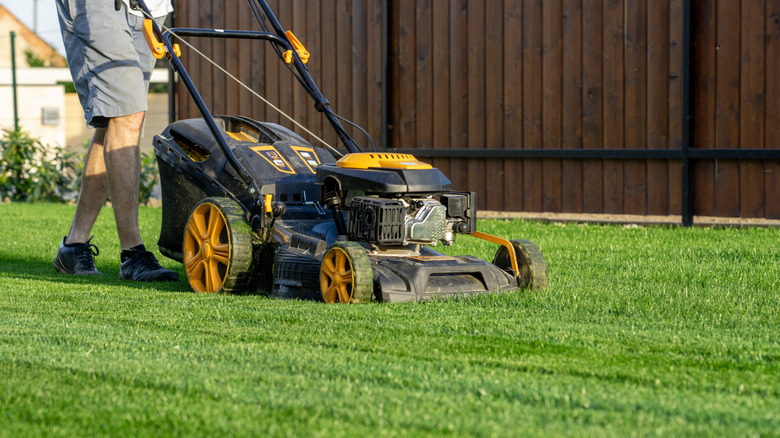
Mowing your lawn is another essential lawn care step to do before spring fertilizing. Try to run the mower over your grass one to two days before you add fertilizer. Granules or liquid applied to a short, neatly trimmed lawn will quickly filter down into the soil and, most importantly, the roots of your grass. Mowing after fertilizing can disrupt this process. It can also lower the efficacy of the fertilizer and promote nitrogen burn. You can also opt to aerate your soil with a rake, which accelerates fertilizer absorption. There's one time to never fertilize your lawn and that's when it's wet. Water your lawn one or two days before you apply any type of fertilizer. If you're expecting a big storm, hold off tossing those granules around. The rain will probably wash them away, ruining all of your hard work.