

The Crack-Resistant Tomato Variety That Won A 2026 Gardening Award
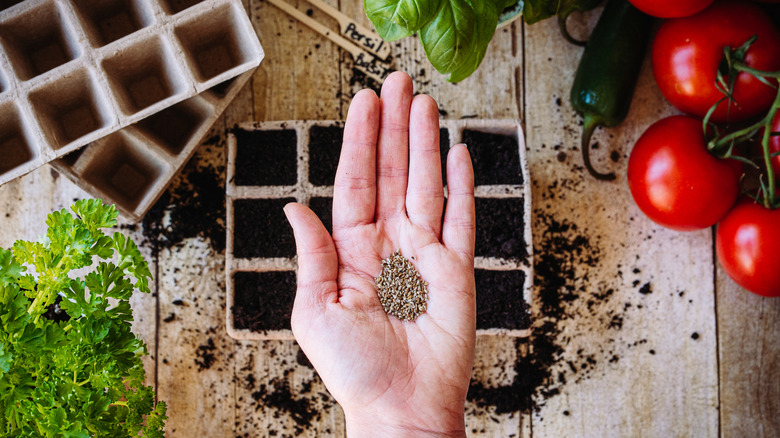
No matter how hard you work at watering, pruning, and patiently waiting for your tomato to ripen, there always seems to be a point when cracks begin to appear on your harvest. Tomato cracking usually happens when the plant experiences sudden changes in water availability. When the fruit absorbs water too quickly, the inside expands faster than the skin can stretch. Sometimes, this process leaves a long, unsightly scar extending straight out from the stem. Other times, cracks appear in a spiral that circles the fruit.
Cracked tomatoes are still technically edible, but they are much more likely to attract pests, which can be costly in the last few days before the fruit is ripe enough to harvest. Of course, you can try to keep your tomatoes from cracking and splitting with a few good watering tips, but choosing a crack-resistant variety can also make a big difference. In 2026, All-American Selections (AAS) named one such tomato variety an exciting solution to this annoying garden problem: BadaBing! F1 tomatoes.
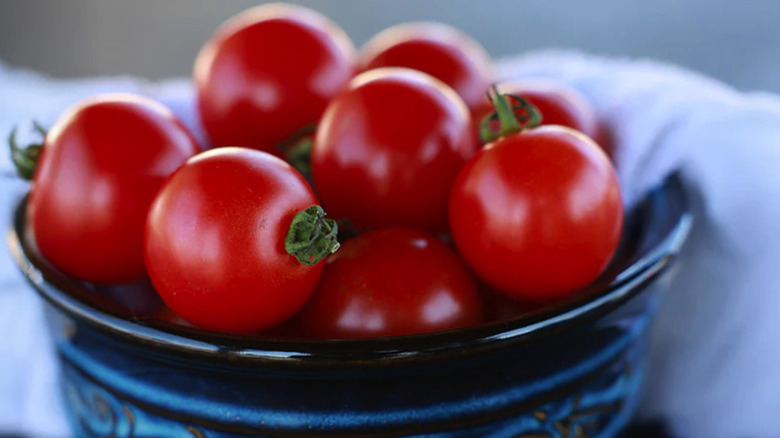
BadaBing! F1 (Solanum lycopersicum 'BadaBing! F1') is a hybrid cherry tomato variety that grows best in full sun. It is known for its vibrant, large fruits and, of course, its crack resistance. BadaBing! F1 was recently bred by Frogsleap Farm in partnership with Cornell University as part of the Cream of the Crop series. It is the first AAS award winner to have TomatoGuard, which protects the fruit against septoria leaf spot, early blight, late blight, and root knot nematodes. BadaBing! F1 was awarded an AAS regional award for the Great Lakes, Heartland, Mountain/Southwest, and Southeast regions.
What is the AAS award, and why the BadaBing! F1 tomato won
The AAS award is a national and regional award given to various new garden plant varieties based on performance. This can include production, disease resistance, and flavor. It is decided by a panel of independent judges who are experts in their field. The judging takes place at various locations across the country, ensuring the winners are tested in each region for accurate evaluation.
BadaBing! F1 isn't the only variety bred specifically for damage resistance. Jasper tomatoes are one of the best tomato varieties to grow for resistance to cracking and blight, but they are much smaller and much more tangy than BadaBing! F1. The bottom line is, BadaBing! F1 is an easy-to-grow, pest- and crack-resistant, early-season variety that is bursting with flavor and juice in a large, almost cocktail-sized skin. The overall quality of the tomato, paired with the garden benefits, is just one of the factors that contributed to the BadaBing! F1 winning a 2026 AAS award.
The judges consistently provided positive feedback for the BadaBing! F1 tomato, which ultimately led to the variety winning its AAS award for the plant and fruit size, gardening benefits, and flavor. One judge said, "Unique cocktail-size fruit, exceptional appearance and flavor, and remarkable disease resistance set this one worlds apart." Other judges mentioned the reliability and size of the harvest as deciding factors, stating, "Overall, did very well, heavy producer, taste and texture good."
How to grow BadaBing! F1 tomatoes in your garden
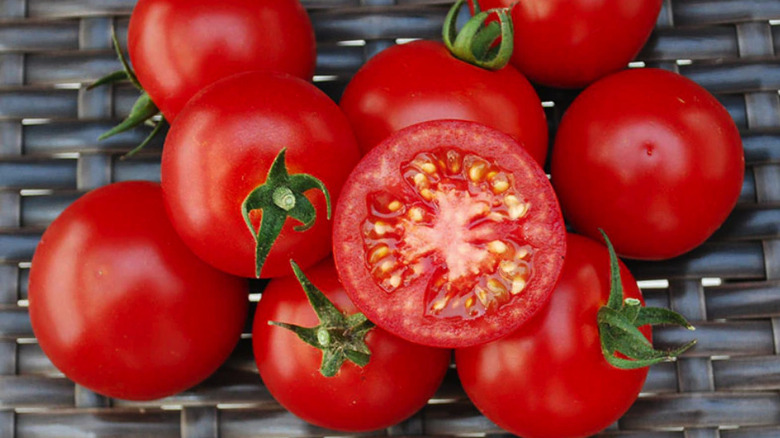
Like most tomato varieties, the BadaBing! F1 requires full sun, quality soil, and support to produce a bountiful harvest. BadaBing! F1 might be considered crack-resistant, but it's still a good idea to use a simple pre-planting tip to help prevent tomatoes from splitting: good drainage. With proper care, it produces bright red 1½-inch fruit just 65 days from transplant, though some distributors say it can take up to 75 days. The plant is also compact, reaching a height between 36 and 40 inches tall, which can make it more manageable for container growing.
Before planting, select a location that has full sun and enough space to leave 24 inches between each plant and 3 to 5 feet between rows. Start seeds at a depth of ¼ inch indoors four to six weeks before the last frost in your region.
Once the threat of frost has passed and the seedlings are ready, transplant them into the ground, containers, or raised garden beds. You can add organic fertilizer to ensure healthy growth. You'll also want to add tomato cages, trellises, or stakes to help support the plants as they grow. Water them consistently to prevent cracking, especially during dry periods.