

Spring Rain: How To Time Spraying Weeds In The Lawn With The Weather
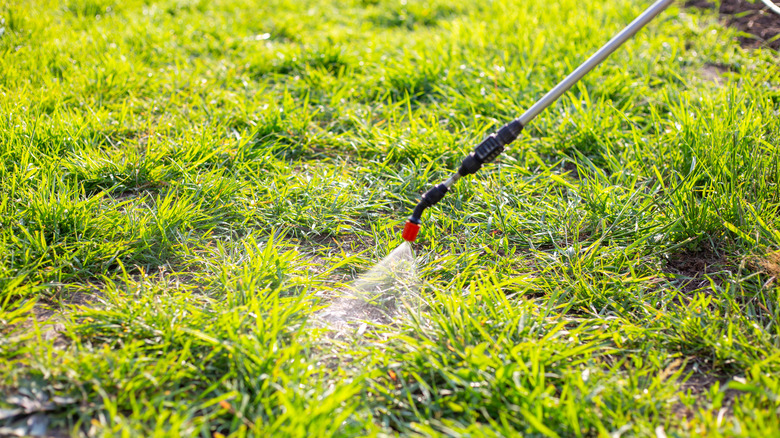
Battling the weeds in your yard and garden can feel like a full-time job. Once these pesky plants take hold, it can be extremely difficult to get rid of them. Pulling alone doesn't always do the trick when weeds can keep spreading via rhizomes and scattered seeds. If you're trying to combat an especially severe infestation, you may turn toward herbicide spray to stop pesky weeds from growing. However, this method requires extremely careful application with a strict adherence to the product's instructions. If you live in a region where it rains frequently in spring but you want to catch your weed problem early, you may need a little guidance for applying herbicide in different weather conditions.
Put plainly, you should avoid applying herbicide if you're expecting rainy weather. This is due to how herbicides work to kill weeds. After you spray a weed in your lawn or garden, it will absorb herbicide through its leaves or root system. The chemicals must pass through waxy coatings on the roots and leaves to effectively kill off the weed, which can take some time. Rain can wash away the treatment before it gets a chance to breach this waxy barrier. Plus, you wouldn't want herbicides to flow into garden beds or nearby waterways, where they might harm desirable plants and wildlife.
Different herbicide brands will require different lengths of time to effectively kill weeds. Some varieties may require 6 to 8 hours to soak in completely, while powerhouse brands like Roundup can finish the job in 30 minutes. Conversely, you should also avoid applying herbicide right after it rains. Instead, wait until your lawn is completely dry to avoid excess moisture that could dilute or wick wick away the treatment.
Avoid spraying before rain or during dry spells
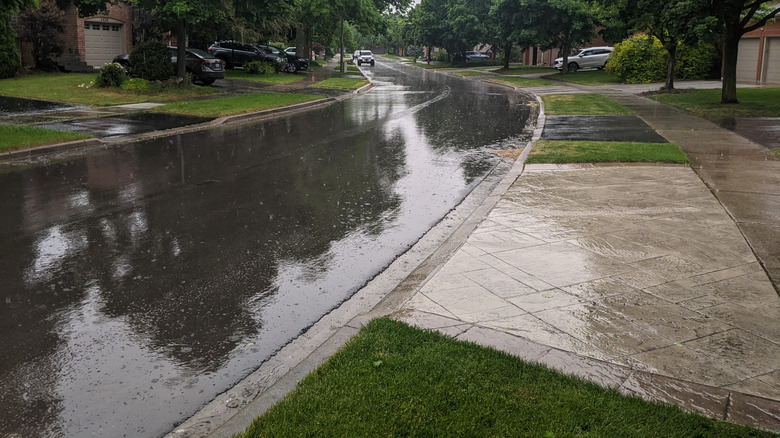
Rain is not the only weather condition to consider if you're attempting to get rid of weeds with herbicide. Temperature and wind can also impact the effectiveness of herbicide. If you notice high winds in the day's forecast, you should wait to spray. Breezy conditions can inadvertently move herbicide and accidentally harm plants you didn't intend to target. Extremely dry, hot conditions aren't ideal for spraying weeds either. This is because water-stressed plants tend to bulk up the waxy cuticles on their leaves to reduce moisture loss. That means herbicide spray won't be as effective at absorbing into the plant.
While herbicide sprays offer a quick way to kill weeds, they are potent chemicals that must be handled carefully in order to work properly and reduce the risk of harm to nearby plants. If you're feeling trepidatious about using herbicide during the rainy season, there are plenty of other practical DIY solutions for killing weeds, such as creating a more eco-friendly, gentle spray with clove oil, lemon juice, vinegar, and salt. Another sustainable option that still works on a wet lawn is to use a flame torch to kill weeds.
Regardless of your method, however, you'll still need pull dead weeds to avoid more plants from popping up from leftover seeds and rhizomes. Ultimately, the best way to get rid of weeds long-term is to keep up with regular maintenance. A dense, healthy lawn is one of the best defenses against weeds, so in addition to your weed-removal, put effort into seeding, mowing, fertilizing, and mulching areas with thin grass.