

Not All Yard Holes Are From Animals. Here's What Else Could Be To Blame
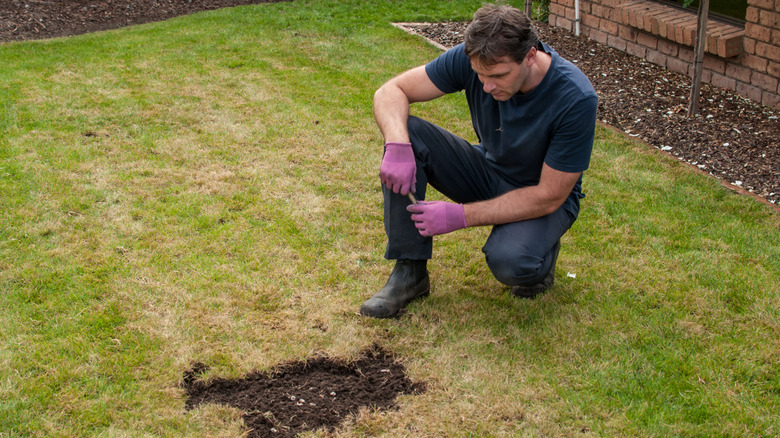
If you see sudden holes or sinking patches of soil out in your yard, you might think that animals are digging and tearing up your lawn. While pests like moles or voles can be responsible, they may not be the only cause. Some of the more surprising culprits are beneath the surface and out of sight. Heavy rain can seep down into the earth and wash soil into gaps that are under the ground, leaving behind noticeable dips or holes that didn't come from an animal.
It helps to understand what the holes in your yard really mean. During periods where lots of rain or runoff occur on the ground, water creates a hole underneath the soil. Eventually, the top layer of earth can collapse, and holes will appear on your lawn. They can be any size, from small, rodent-looking ones to bigger sinkholes. This happens after water has eroded the underlying material until the surface can't support itself any longer. You may see it happen after the seasons change, as the ground freezes and then thaws. So, after a stretch of temperature swings or intense rainfall, what looks like animal damage may actually be the ground giving way.
If you've recently graded your yard or moved soil around for some home improvement projects, your activity could be the reason for the holes. Large rocks can become buried during all the movement, making the ground uneven. The soil next to those rocks becomes more waterlogged during heavy rainstorms and can break down easily, leaving holes.
Signs your yard holes aren't from animals
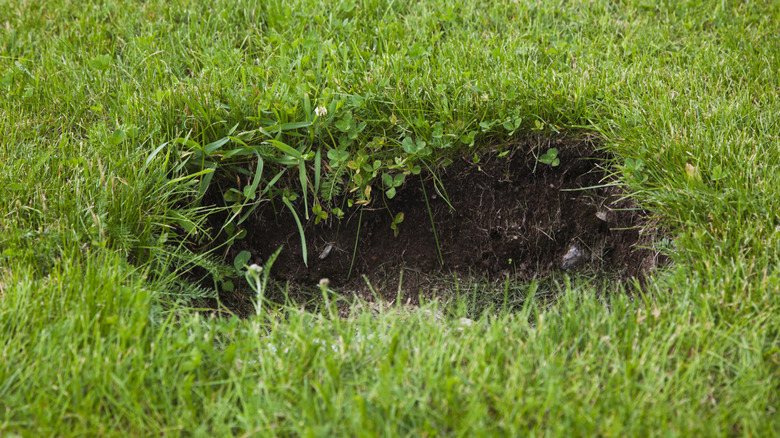
It's fairly easy to tell whether your yard holes are caused by animals, erosion, or human activity. There are signs to indicate each cause. For instance, rodents often leave mounds of dirt or scattered soil around the hole area from their digging. They can leave their droppings and you'll likely see some tracks or footprints at the entrance. You may also find several interconnected holes. Snake burrows can have shed skin or smooth tracks leading through the grass. If you notice that you have uprooted plants or bumps in your garden, that is another clear sign that animals are causing the holes.
If it's a sinkhole or a rain-related, the ground usually slopes downward toward the hole. It indicates erosion caused by water saturation. The hole will generally be larger than what an animal might accomplish. You will also notice it appears after a heavy rain or during the spring season after thawing. Other signs of possible sinkholes rather than pests in your yard include seeing slanting fences, cracks in concrete, or puddles that develop after a storm.
Not every yard hole comes from animals. If you notice soft, sinking areas after a rain, when you've recently done lawn projects, or in spots where there is no visible digging, it's worth exploring what's happening underneath. You should address the matter, especially if it is a sinkhole, before attempting to fill the patchy holes with grass seed or dirt. Paying attention to dips or pooling water on your lawn can help you to pinpoint the cause before it becomes worse.