

Is It A Snake Or Bunny? How To Tell What The Hole In Your Yard Is From

As you get outside and tackle yardwork, you might notice that a few critters have taken up residence. One of the telltale signs? A myriad of holes in the lawn. Since several species dig, burrow, nest, or even make old holes their homes, it's smart to learn how to identify which animal belongs to which hole. Two common types you may be on the lookout for are snake and rabbit holes. A snake hole is circular, usually up to two inches in diameter, with smooth edges resulting from the snake's slithering – though snakes don't create these holes themselves. A rabbit, on the other hand, digs a shallow hole, often surrounded by or covered with dead grass or twigs, to act as camouflage.
There are several snakes you don't want to see in your yard, making it important to learn how to spot their homes. Likewise, you'll want to know how to identify rabbits' shallow nests so you don't disrupt baby bunnies during yardwork.
How to tell a snake hole from a rabbit's nest
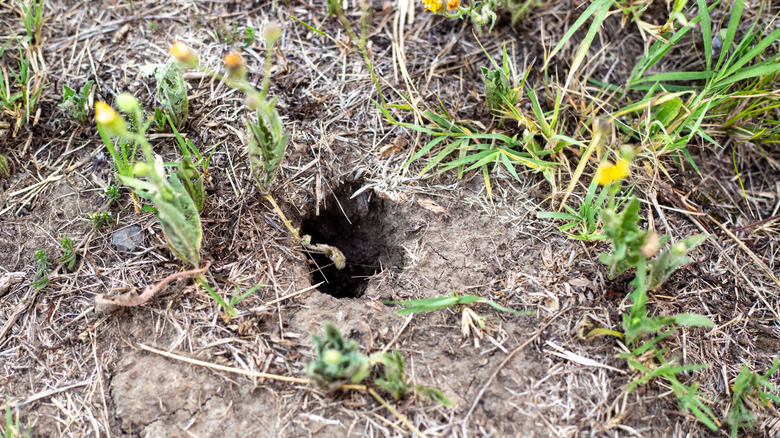
Snakes don't have the ability to dig or burrow. Instead, they take up residence in holes previously made by rodents such as chipmunks, moles, or mice. Because of this, the size of the holes they live in will vary, ranging from ½ inch to a few inches in diameter. Since these holes could belong to a number of animals, there are some other surefire signs you have a snake problem to look for. If you notice shed snake skin near a hole, the opening is free of spiderwebs or debris, or you find tubular-shaped droppings, the holes in your yard likely belong to slithering friends.
While it can sometimes be difficult to tell a snake hole from a rodent hole, rabbits' nests are easier to recognize. The problem, though, is that these furry critters camouflage their holes, so you might not notice one until you're right up on it. This is why you should walk your mowing path before starting the mower. One distinctive sign is a patch of dead-looking grass.
Rabbits often build nests in open areas but rely on camouflage to protect their babies, so don't be surprised if you find one in the middle of the yard. Rather than appearing as a rodent or snake hole burrowed in the ground, the nest will be placed in a shallow depression in the yard. The mother rabbit will then camouflage this small hole with fur mixed with grass or even leaves to conceal her baby bunnies from threats. If you find a rabbit's nest, the best thing to do is simply leave it be.