

The Repotting Tip That Leads To A Healthier ZZ Plant
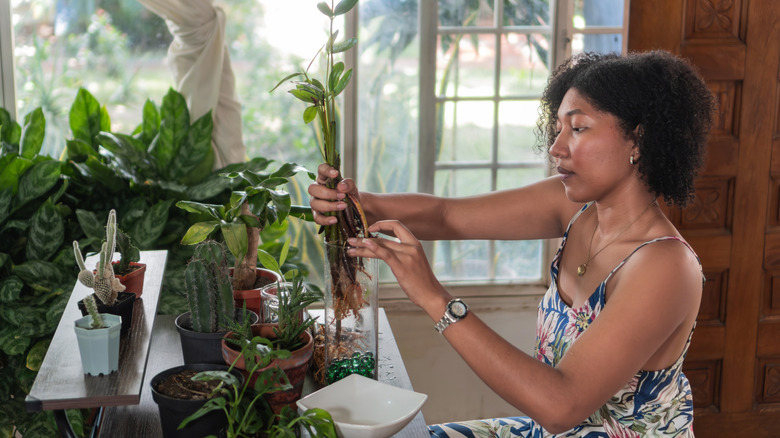
The ZZ plant (Zamioculcas zamifolia) is considered one of the most low-maintenance and forgiving houseplants, making it a popular option for gardeners of all levels of expertise. These medium sized, vertical, and bright green plants only require a few basic conditions, including well-draining soil and partial shade, as well as waterings as infrequent as twice a month. Since ZZ plants tend to grow on the slower side, repotting is not frequent need. However, when it comes to repotting and caring for a ZZ plant, there is one trick that you may not know that could boost your ZZ plant's overall health. The ZZ plant prefers its potato-like rhizome to be buried just below the lid of the container, as opposed to deeper in the soil.
While you may assume the ZZ plant stems from a "bulb" like many other plants, it actually comes from a rhizome. This is a horizontal plant organ that stores its water and nutrients. Roots protrude from the bottom of the rhizome. While bulbs tend to be buried in pots according to their individual height, the ZZ plant's rhizome needs to be tucked just beneath the soil. This will help to keep the rhizome from suffocating in the soil and help the plant to grow above the surface.
How to properly repot a ZZ plant
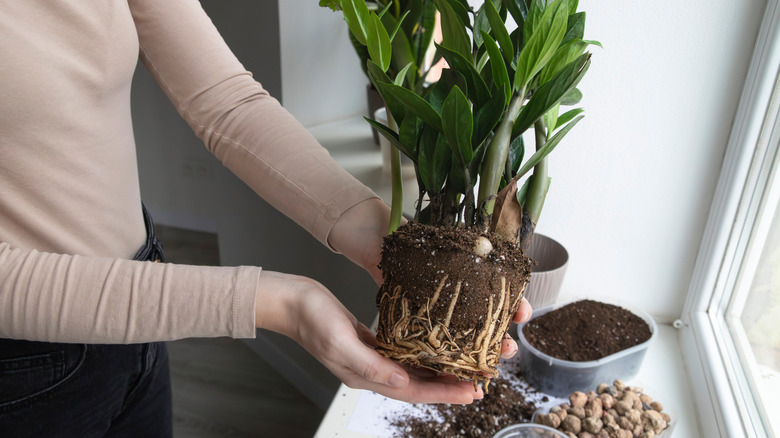
If you want to repot your ZZ plant like a garden expert, complete this task at least once a year, usually in the spring or early summer. You can usually tell the plant requires a new home if the roots are starting to grow through the bottom drainage holes or if the plant itself is elevating the soil level. Before starting the repotting process, give your ZZ plant a once-over to check the health of its roots. This will help determine whether or not you need to remove any dying sections before repotting.
When selecting a new container for your ZZ plant, make sure to choose one that is only slightly larger than the previous one. If a ZZ plant is housed in a new pot that is too big, the plant will prioritize root production as opposed to growing above-soil shoots. Larger containers also increase the risk of leftover water, which can cause the development of mold or fungus. Before actually repotting, allow your ZZ plant to dry out for about a week, which will aid in the removal process.
There are a ton of tips to keep your ZZ plant thriving, but ensuring correct placement of the rhizome is an important one. How deep you repot your plant into your fresh soil usually depends on the plant type and size, but across the board, a ZZ plant's rhizome should be inserted just an inch underneath the soil's surface and sparingly covered with soil to avoid suffocation. Once the rhizome is buried, you can gently water your newly-housed ZZ plant.