

How To Propagate Swiss Cheese Plant For An Endless Houseplant Supply
We may receive a commission on purchases made from links.
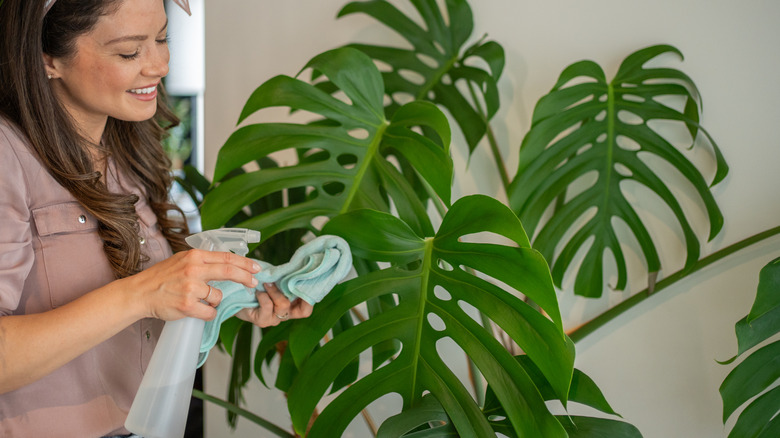
Taking a single trailing vine and turning it into a house full of new plants is actually pretty simple once you know how Monstera deliciosa grows. Most people call it a Swiss cheese plant because of the holes that develop in the leaves as they mature. Since these tropical climbers will only grow outdoors in USDA Hardiness Zones 10 through 12, they have become a houseplant staple. They get big fast and look great in any room of the house. Pretty much anyone can learn how to successfully grow and maintain a Swiss cheese plant. If you keep your houseplant healthy, you can propagate new plants for free by taking cuttings and sprouting them in water.
This propagation process isn't difficult, but you do need to know exactly where to make your cuts. Like other tropical vines, there are specific spots along the stem of your Monstera deliciosa that will grow a sturdy root system. By making a few strategic snips in just the right place, you'll have enough cuttings for an endless cycle of growth. You could fill up every empty corner of your home with Swiss cheese plant or give away monstera babies with distinctive perforated leaves to anyone who visits. You just need to make sure the plant you plan to take cuttings from is healthy. Assess your plant to make sure it has vibrant green leaves, lots of well-developed stems, and is free from pests and diseases.
Look for nodes on the vine to make sure your cuttings grow roots
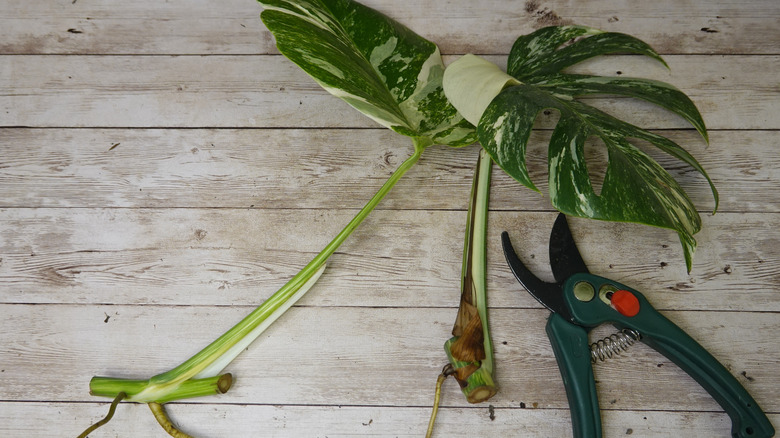
First, you need to identify the nodes along a stem — they look like little bumps right at the point on the stem where the leaves grow. Nodes are vital because the roots of your new plant will sprout from them. If you just cut off a leaf or section of stem without a node or two, the clipping might grow a few weak roots, but it's unlikely to grow into a thriving plant. To easily propagate your Monstera deliciosa and get a good start on root growth, pick a young, healthy stem section with a few small but strong leaves and some nodes. Don't cut off too much of the parent plant — it needs enough leaves to recover well from pruning.
Use your sharpest pair of houseplant shears or even a clean kitchen knife to make your cuts. Wipe your tools down with rubbing alcohol before taking any cuttings. You don't want to accidentally expose a fresh cut to germs. Make your cuts between ½ inch and 1 inch below the node to give the seedling enough room to develop lots of roots. If there's a leaf right at the bottom of the stem (near the cut end), pull it off so the leaf doesn't end up sitting in the water and rotting. Removing extra leaves also helps the plant focus its energy on growing new roots instead of trying to keep the submerged leaf healthy.
Place your cuttings in a glass jar filled with water and watch the roots grow
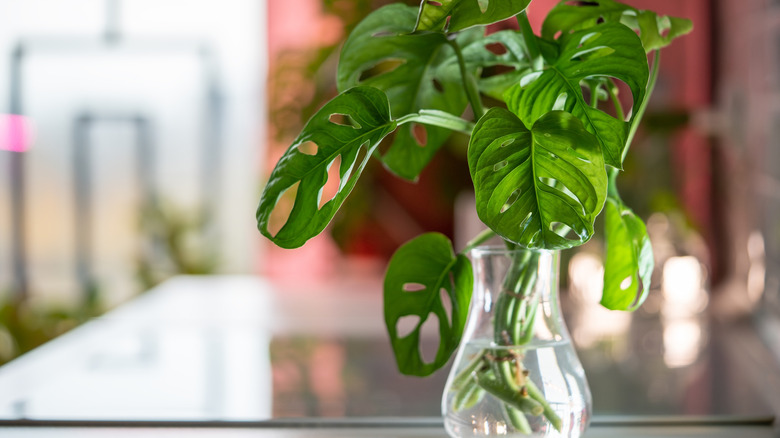
One of the best things about starting new Swiss cheese plants in water is that you get to see the roots develop in real time. Drop your fresh cutting into a clean glass jar filled with fresh water — filtered or distilled water is better than chlorinated tap water. Make sure the node is completely submerged and keep the jar in a bright spot out of direct sunlight. You don't want the water heating up too much because it can promote algal growth. Using a transparent container is helpful because you can spot any signs of trouble with your cutting, like mushy stems or cloudy water, before they become a real problem.
Every few days to a week, swap out the old water for fresh room-temperature water. It only takes a minute and keeps your cutting clean and healthy. After a few weeks, you should start to see tiny white roots poking out from the node. Let those roots grow until they're a few inches long. Once the root system is established and all the roots look healthy, the plant is ready to be moved to a pot with the best soil for a thriving monstera: a well-draining, soil-based mix with a neutral pH. Soil Sunrise Monstera Houseplant Custom Blend costs about $16 for a four-quart bag. This method of Swiss cheese plant propagation is reliable and ensures any new plants you create have a healthy start before they even hit the dirt.