

The 2026 Kitchen Design Trend That Brings A Sense Of Nature Indoors
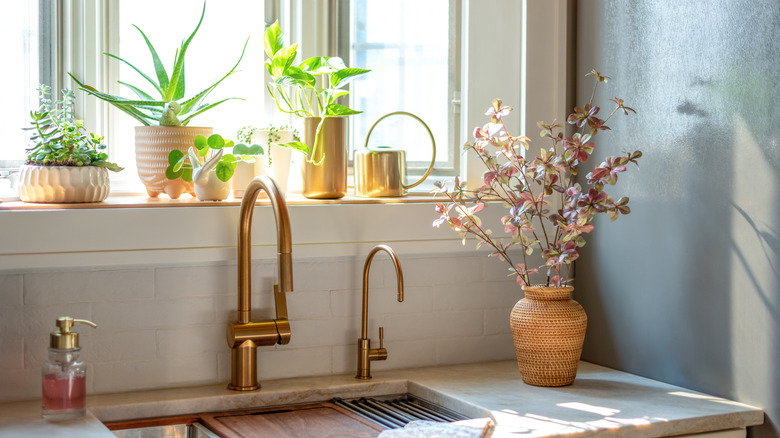
For nearly a decade, kitchens have been designed to look as bright and airy as possible. That meant incorporating white cabinets, cream colored walls, white subway tiles, and an off-white or gray countertop, whether that was marble or quartz. But it seems that people are finding that look a little too sterile for today's times, and there is a new trending design concept that focuses on bringing a sense of the great outdoors to your cooking area instead. To understand the reason behind this shift and find ways you can incorporate this trend in your own home, House Digest spoke exclusively with the National Director of Design for Thomas James Homes, Jennifer Cooley. "Nature inspired palettes, textures and materials are expected to be a defining kitchen trend in 2026," she explained. "Kitchen design is moving away from bold pops of color on island cabinetry and brightly colored backsplash tiles in favor of a more organic and grounded aesthetic."
Part of the bioliphic trend that sprang up during the pandemic, people want their kitchens to be more nature-inspired as a way to make their spaces feel more soothing and calming. They want their homes to be a retreat from work, stress, and technology, and there is no faster way to feel grounded than to be surrounded by materials and colors found in nature. Cooley also explained some of the ways this trend is already appearing in modern kitchens: "This includes natural wood cabinetry, handmade zellige tiles, neutral color palettes such as muted greens, tans, and off-whites, as well as natural stone countertops like quartzite and marble." You can even look into environmentally-friendly countertop materials for your space to stay true to the trend.
How are homeowners bringing nature into their kitchen
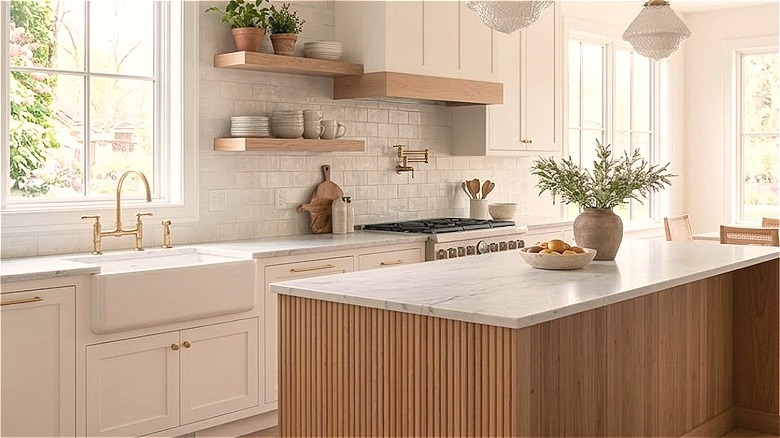
To visualize the trend, Cooley offered examples of how she implemented nature into one of her own designs. "We used rift cut white oak cabinetry in the kitchen to highlight the material's natural grain," she said. "In addition to its visual warmth, the cabinetry proved highly practical. The homeowners have young children, and the natural wood helped disguise fingerprints and minor wear, making the kitchen both beautiful and family-friendly." In another example, Cooley used handmade artisanal tiles in a backsplash to bring an earthy touch indoors.
Leaving us with a few more practical design tips, Cooley opines, "In spaces with limited natural light, it is best to use lighter toned woods, tiles, and countertops to prevent the kitchen from feeling dark or heavy. Lighter materials help maintain warmth and balance while still achieving a natural and organic look." Since light wood furniture and home decor is coming back in style, sticking to the color palette and materials our expert recommends will make your kitchen seem in-vogue.
Things you should know before adapting this trend
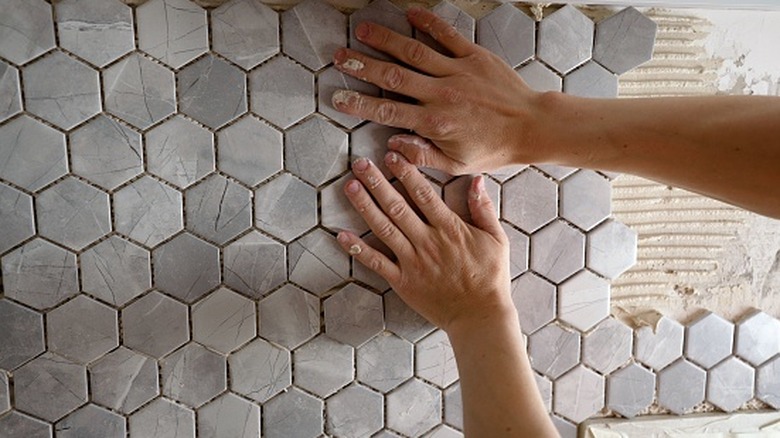
While the trend sounds good in theory, incorporating it in the real world can be a bit challenging. The key to making this trend work is to balance the aesthetic with your practical requirements. Pay attention to the role this room plays in your home and how much daily traffic each feature receives. Do you like hosting guests here or cooking with kids? Skip the precious marble and instead focus on something that wears more uniformly, like soapstone. Do you have sticky fingers constantly touching cabinet doors, or are you a messy cook? Opt for darker cabinet colors like dark green or eggplant over a beigey mushroom.
Additionally, creating a biophilic-inspired kitchen can also cost substantially more due to the natural materials being utilized. "Homeowners should plan for approximately a 40% to 50% increase compared to the cost of a more traditional kitchen. Many of these natural materials are not mass produced and require skilled artisans for fabrication and installation, which contributes to the higher overall investment," Jennifer Cooley exclusively tells House Digest. That being said, if you're on a tight budget or can't spring for considerable upgrades in one go, feel free to undertake the project in smaller segments. For example, swapping cabinet hardware, decorating with wood cutting boards, or sprinkling a few plants around your kitchen can give the room a quick and budget-friendly upgrade. "Homeowners can introduce color and personality through decor and accessories, refreshing the space without the expense or commitment of a full renovation," Cooley advised. "The result is a kitchen that feels enduring, flexible and livable."