

How To Differentiate Between Bee Hives And Wasp Nests In Your Yard
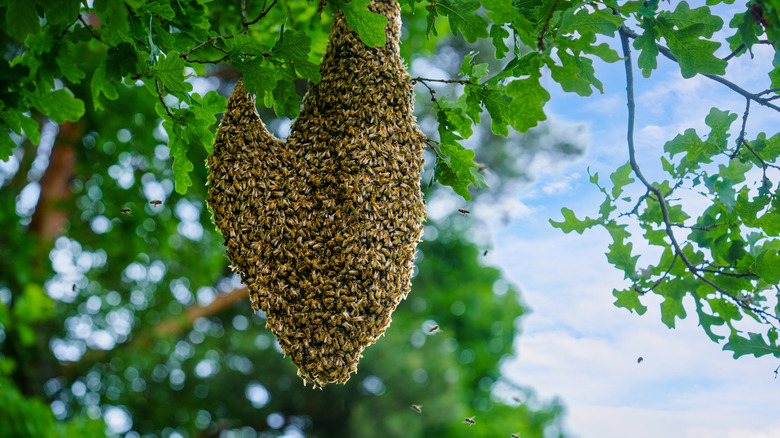
The springtime brings warmer weather, blooming flowers, and the desire to spend more time outdoors. But spring also means stinging insects like wasps and bees wake up from their winter hibernation. You may dread the idea of finding a wasp nest or a bee hive in your yard, especially if you have allergies. The two main ways to differentiate between a wasp nest and a bee hive are the appearance and the location.
Wasp nests are typically small and shaped like an oval. The material of a wasp nest will look gray and papery. Honeybee hives, on the other hand, are usually larger and rounder than wasp nests and have hexagonal patterns. They're made from wax and often conform to the shape of the space where they're being built.
When it comes to a hive's location, the type of bee has a big impact. Honeybees usually build their hives in the branches or cavities of hollow trees. Bumblebees, on the other hand, typically establish a hive underground in a secluded location, like an abandoned animal burrow. Carpenter bees are a third common species that don't build a shared hive. Instead, individual carpenter bees build single nests in trees or by drilling a hole into the siding of a wooden structure.
There are several common types of wasp nests, and the location of the nest can differ based on the species. Aboveground nests are usually easier to spot in trees, but can be more hidden if they're established in bushes or shrubs. Other common spots for wasp nests include sneaky spots around the home like overhangs or eaves. Certain wasp species, like yellowjackets, build nests underground. They'll usually choose a hidden spot like an old animal burrow or dig into the ground and excavate their own nest site.
What to do if you have a bee hive or wasp nest in your yard
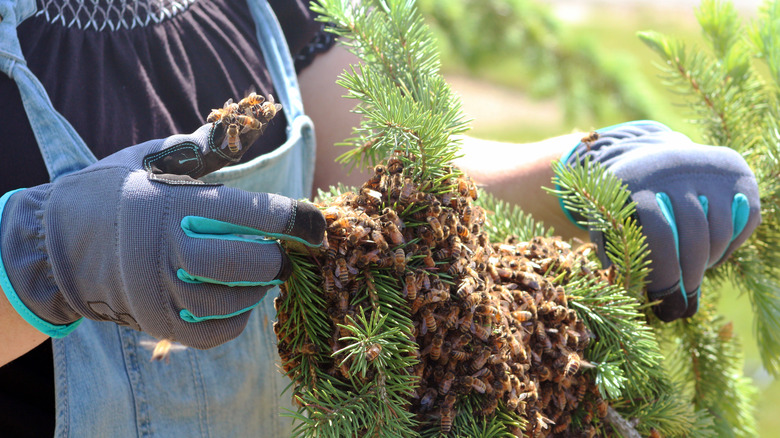
Once you've identified whether you have a bee hive or wasp nest in your yard, you may want to explore ways to get rid of it. If they don't pose a major sting risk, there are a few reasons to avoid removing the wasp nest or bee hive. For example, bees are pollinators who are beneficial to the environment, while many wasp species are natural predators that can keep other insect pests at bay.
If you decide you'd like to get rid of a wasp nest in your yard, it's safest to call a pest control professional or exterminator. You can also buy a range of extermination products from your local hardware store if you decide to handle the nest yourself. If you have a bee hive in your yard, consider looking into professional bee removal services in your area. Because some species of bees are at risk, you should prioritize finding a safe and humane way to get rid of the bee hive instead of exterminating the colony. Depending on where you live, you may be able to find local beekeepers who can help with relocating the hive.