

22 Perennials That Thrive In Damp, Soggy Soil
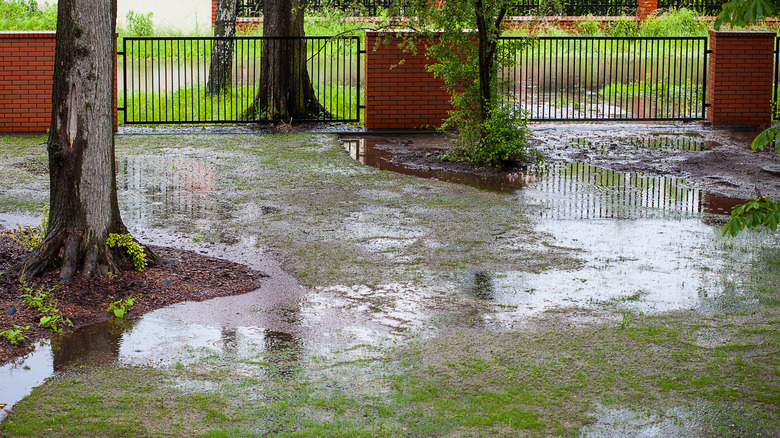
Talk to a fellow gardener, and odds are they may be dealing with a tricky spot in their backyard that refuses to dry out. It could be hollow at the bottom of a hilly slope or below a downspout. The area may be covered in clammy, clay soil that never seems to drain. Regions with naturally high water tables can suffer from damp soil for extended periods. While you could certainly address these issues by installing drains or mounding soil for a better slope, it's arguably easier and more economical to grow perennials that thrive in such conditions. They will return reliably year after year or even remain evergreen.
Luckily for us, there's an array of moisture-loving plants to choose from. You can consider growing swamp milkweed, cardinal flower, flowering fern, Cherokee sedge, globe flower, or Japanese iris — to name just a few. Keep in mind, however, that tolerance for wet and compacted ground varies across species. For instance, Allegheny monkey flower can tolerate long periods of standing water, but rose mallow can handle only short, infrequent spells of extreme damp. Assess your specific situation before putting any plants in the ground, lest they die of asphyxiation. Also, try to include a variety of plants with different heights, foliage textures, and bloom colors so your garden is visually appealing to you and attractive for wildlife.
Swamp milkweed
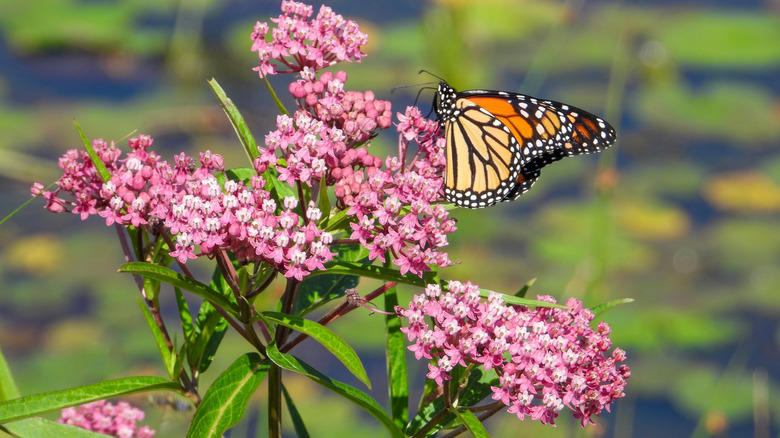
In the wild, swamp milkweed (Asclepias incarnata) is found in wet ditches, marshy margins, bogs, and ponds. These conditions translate well to low-lying, moist, or occasionally wet sites in a cultivated garden. The native perennial will tolerate short dry spells, too. Swamp milkweed attracts monarch butterflies and beneficial insects; they're drawn to its nectar-rich, fragrant pinkish-purple flowers and larvae-friendly foliage. The best flowering occurs in full sun, though a little light shading is okay. Direct contact with sap can irritate the skin, while accidental consumption can upset the stomach. Swamp milkweed thrives in Zones 3 to 9.
Halberd-leaved rose mallow
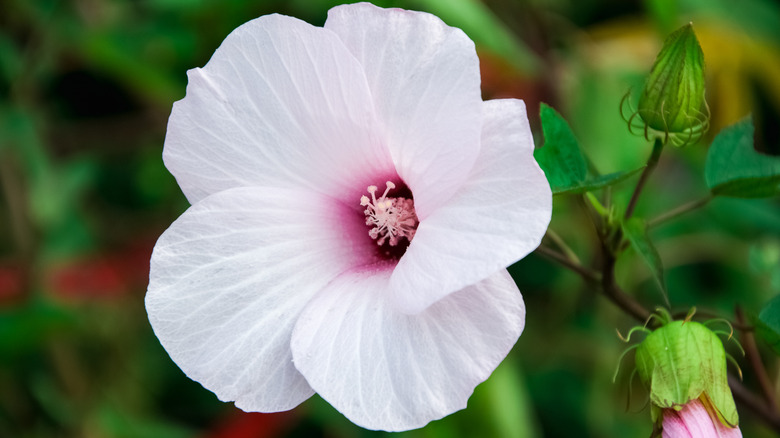
Halberd-leaved rose mallow (Hibiscus laevis) is a fast-growing, heat- and humidity-tolerant perennial that thrives in damp conditions. It produces showy, whitish-pink flowers that remain on display throughout summer and fall, bringing in butterflies, hummingbirds, moths, and bees. Plant it where it receives about six hours of direct sunlight and has space to spread up to 4 feet wide to minimize the risk of disease. It's ideal for damp coastal and woodland gardens or for planting around ponds in Zones 4 through 9.
False dragon head
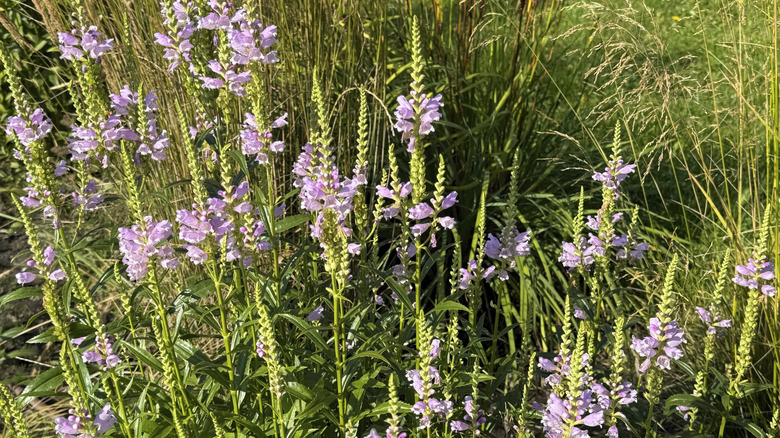
Native to the eastern U.S., false dragon head (Physostegia virginiana) is a vigorous, sun-loving perennial you can successfully overwinter in Zones 2 to 9. Its pink or lavender flower stems dutifully remain in any position they're twisted into, leading to its other common name, obedient plant. It thrives in organically rich, consistently moist, or infrequently wet soils, so much so that it becomes weedy. Fortunately, it has shallow roots, so you can pull out invaders and plant them elsewhere. Alternatively, you can plant the better-behaved cultivar 'Miss Manners,' which doesn't require frequent division.
Dogtooth-daisy
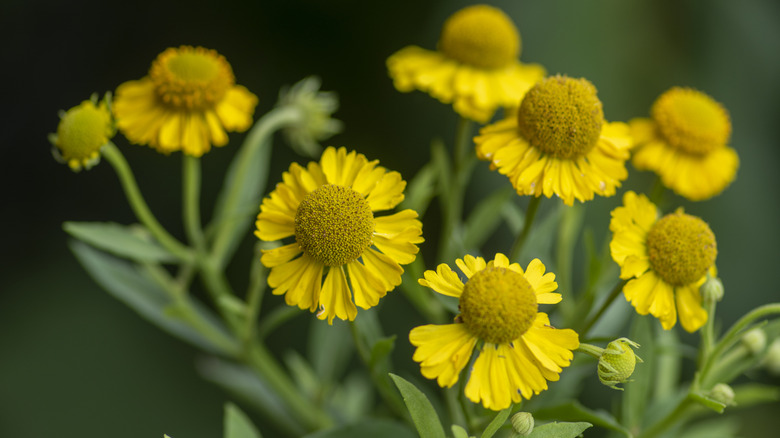
Dogtooth-daisy or sneezeweed (Helenium autumnale) is a colorful perennial that will have butterflies and bees flocking to your yard from summer right through to the first frost. They're attracted to the pollen in the wheel-shaped, daisy-like yellow or orange flowers. To prolong blooming, you must diligently deadhead the spent flowers. Shearing the foliage in early summer helps promote a fuller mound. You don't need to put down stakes. This perennial is intolerant of poor soil. It thrives in fertile, damp, clay soil that's frequently flooded or compacted. The plant is hardy in Zones 3 to 8.
Cardinal flower
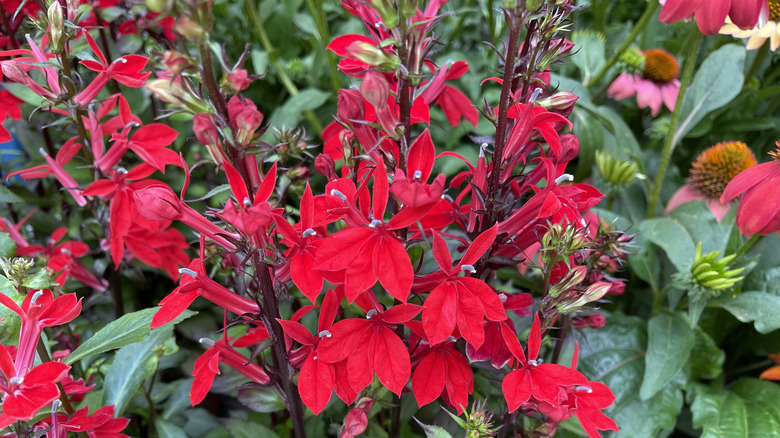
Cardinal flowers (Lobelia cardinalis) come into their own while other plants are winding down in late summer. They boast bursts of burgundy red flowers that hummingbirds and butterflies love right into October. Hardy in Zones 3 through 9, cardinal flowers perform better with dappled shade or morning sun in southern climes and full sun exposure in the north. Keep the beds mulched to retain the moisture they need and insulate the roots in winter. Cardinal flowers require fertile, damp soil and can withstand occasional flooding. All plant parts are toxic if consumed in large amounts.
Southern blue flag iris
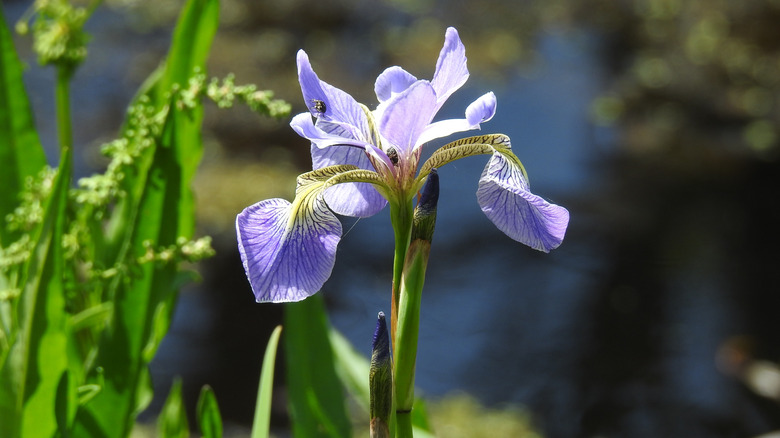
If you have a low-lying area that's inundated with up to 6 inches of water, you can likely grow southern blue flag iris (Iris virginica). Make sure the soil is sandy, not clay-based, is acidic, and is rich in organic matter. If it isn't, amend it accordingly. Site blue flag iris where it will receive full sun, though in warmer areas, it will perform better in partial shade. This plant flowers in spring for about three weeks, and the strappy foliage contrasts nicely with the yellow-crested purple blooms. Grow it in Zones 5 to 9.
New York ironweed
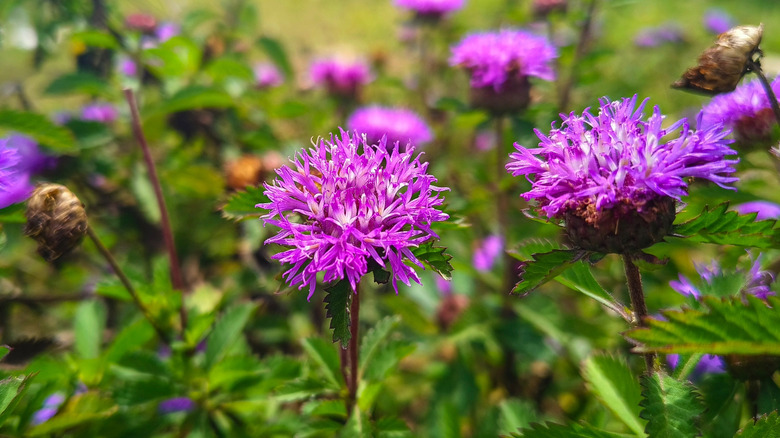
New York ironweed (Vernonia noveboracensis) is a deer-resistant perennial wildflower that grows in Zones 5 to 9. Plant it in a damp spot, around pond margins, or in other wet sites in your garden. It will grow up to 8 feet tall and half as wide, providing vertical interest. If you want a short plant, you can trim it to 2 feet tall in spring or add interest by trimming the stems to different heights. Stem-nesting bees overwinter in the dead stems, while butterflies are attracted to the fluffy purple blooms that appear from July to September.
Queen of the prairie
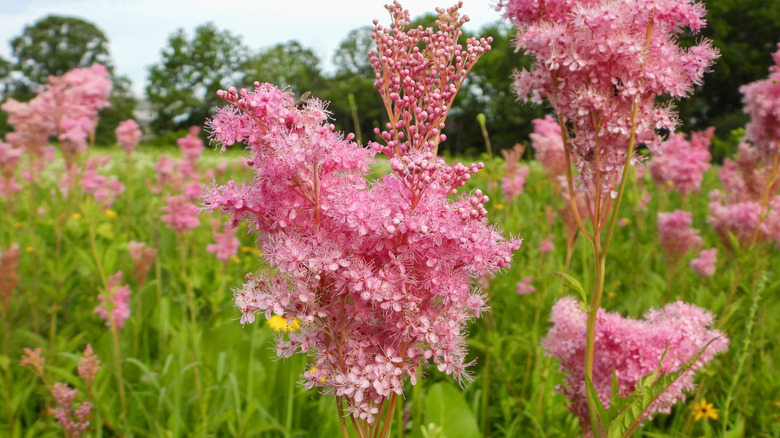
Clad in pale pink blooms, queen of the prairie (Filipendula rubra) brightens summer gardens in Zones 3 through 9. Ideally, you don't have to deadhead these plants, as the dried flowers look ornamental. Bear in mind that queen of the prairie self-seeds and can form a colony. You may have to separate the clumps in spring to contain its spread. It thrives in consistently damp soils in full sun or partial shade. It can also handle poorly draining clay soils. It's best used in large gardens where it can grow up to 8 feet tall.
Spotted Joe-pye weed
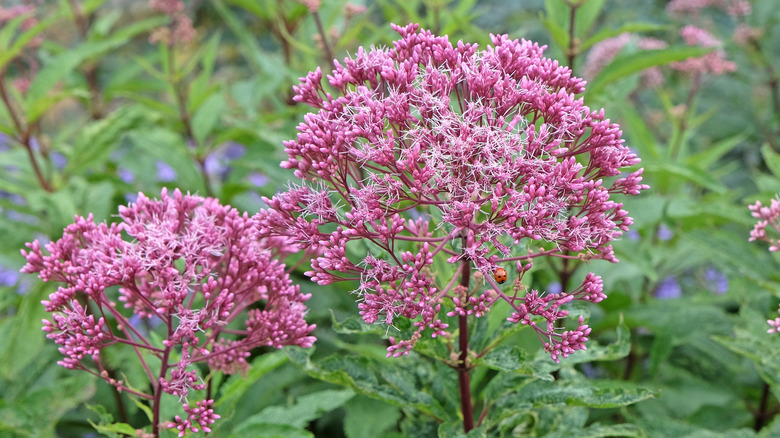
Prevalent in the calcareous meadows of the eastern U.S., spotted Joe-pye weed (Eutrochium maculatum) is a low-maintenance perennial you can plant in sticky clay soils — provided they're alkaline. Aside from its tolerance for the wet, you'll likely enjoy this perennial's billowy purple blooms, especially when you see them covered in honey bees and butterflies. It can grow nearly 7 feet tall and is best used as a vertical accent. Plant it in garden borders for deer and rabbit deterrence in Zones 3 to 9. Spotted Joe-pye weed can handle full sun to part shade.
White turtlehead
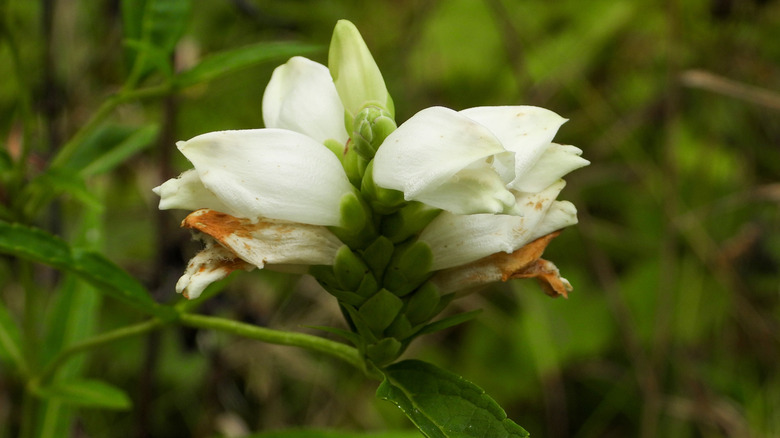
Want to grow a beautiful perennial flower that loves damp soil and attracts hummingbirds and bees? Consider planting white turtlehead (Chelone glabra) in your garden. This 3-foot-tall plant is endemic to the moist land and floodplains of the central and eastern U.S. It has a natural tolerance for wet conditions. Don't plant in a location that's too dark, or the foliage may droop. Pinch the tops of the stems in spring to control the plant's height or put in stakes for support. With its pink-tinged white blooms, white turtlehead provides fall interest in Zones 3 through 8.
Japanese iris
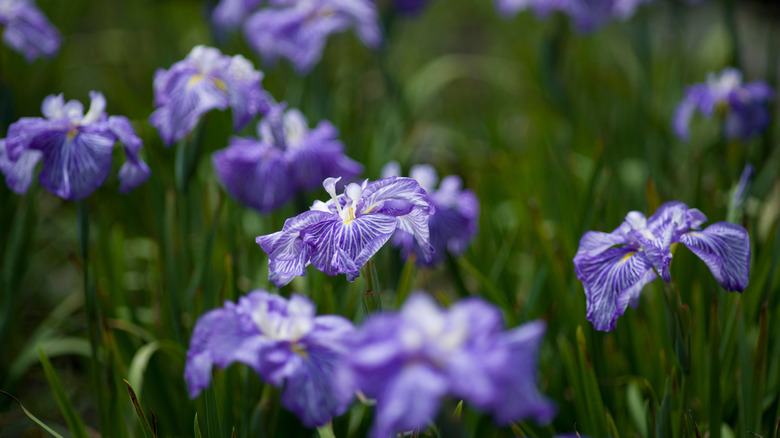
Japanese irises (Iris ensata) provide a wonderful splatter of color during the summer, when their butterfly-like flowers are on full display. They enjoy organically rich, moisture-retentive soils and can tolerate standing water so long as their root crown isn't underwater. If the area remains continually wet throughout the winter, skip these perennials; they won't survive. Alternatively, you can start them in pots and half-bury them in the wet areas. Then you can move them to a drier site for the winter. Japanese irises like a lot of sun and are cold-hardy in Zones 4 to 9.
Goat's beard
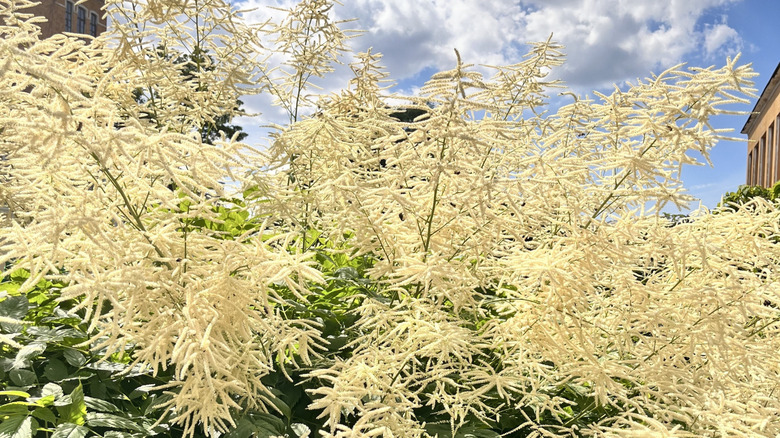
Named for its white feathery flower plumes that look similar to a goat's facial hair, goat's beard (Aruncus dioicus) is a deer- and rabbit-resistant perennial you can plant in Zones 3 to 7. As long as the soil remains soggy, it can handle full sun. Otherwise, it grows best in partial shade. Goat's beard can take a couple of years to fully mature. You may have to plant annuals around its base to keep weeds away until it fills out. To ensure the plant doesn't flop, enrich the soil with organic matter before planting.
Canada anemone
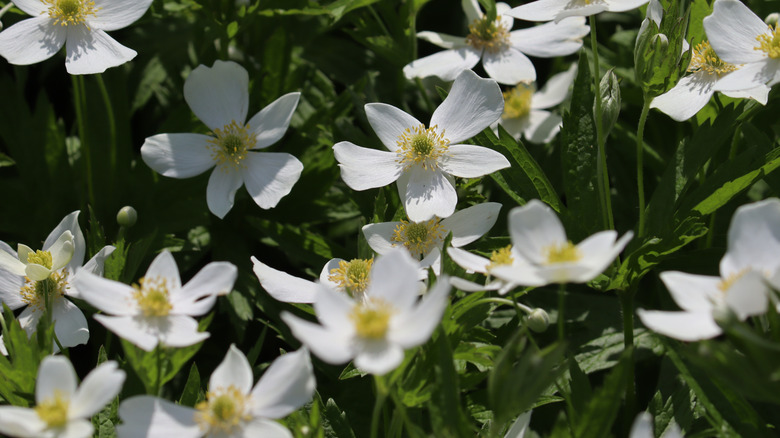
Meadow or Canada anemone (Anemone canadensis) is a short groundcover you can plant in a wet site for quick coverage. Around mid-spring, white flowers dance atop green leaves; the plant blooms for a month or more. Canada anemone enjoys damp soil that's rich in gravel or loam, and it will tolerate clay soils. You may plant this pretty perennial in full sun in cold climes and moderate shade elsewhere in Zones 3 through 8. In excessive shade or wind-exposed sites, the flowers may flop. Note that Canada anemone can spread aggressively if not well-managed.
Great blue lobelia
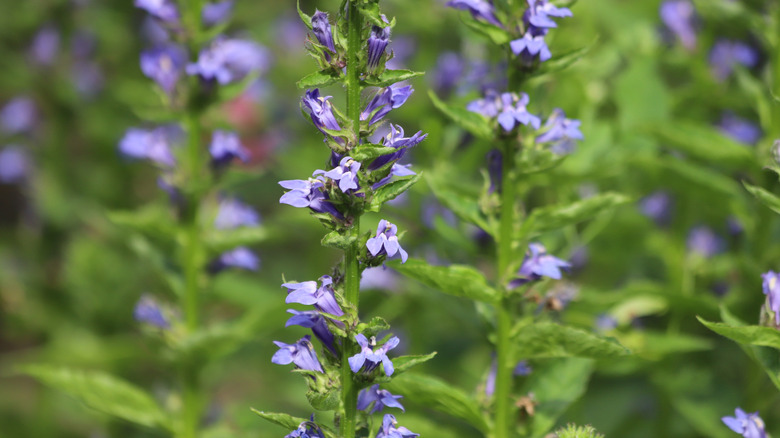
Great blue lobelia (Lobelia siphilitica) is endemic in the eastern U.S. and is an excellent choice for turning a soggy, loamy spot into a pollinator haven. Bumblebees, hummingbirds, and lots of other pollen-lovers visit the double-lipped blue flowers from mid-summer right up to fall. Unfortunately, despite being a perennial in Zones 4 to 9, it's short-lived. Either separate the clumps for new plants or allow them to go to seed so they may self-sow and return next year. You may have to keep an eye out for slugs and snails.
Golden ragwort
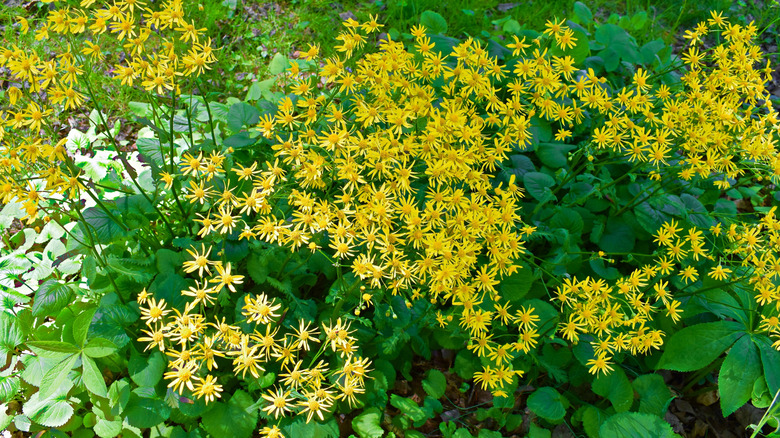
To green up a boggy spot and help early spring pollinators, plant golden ragwort (Packera aurea) in your garden. It produces nectar-rich, yellow flowers that bees enjoy, while northern metalmark butterflies lay their eggs on its foliage. However, you must deadhead and prune the plant regularly to keep it tidy and limit its spread. Allowing some seed production is a great way to attract birds. Golden ragwort should retain its foliage through the winter in Zones 3 to 8. Be careful not to touch the plant without gloves, as the leaves can irritate the skin.
Culver's root
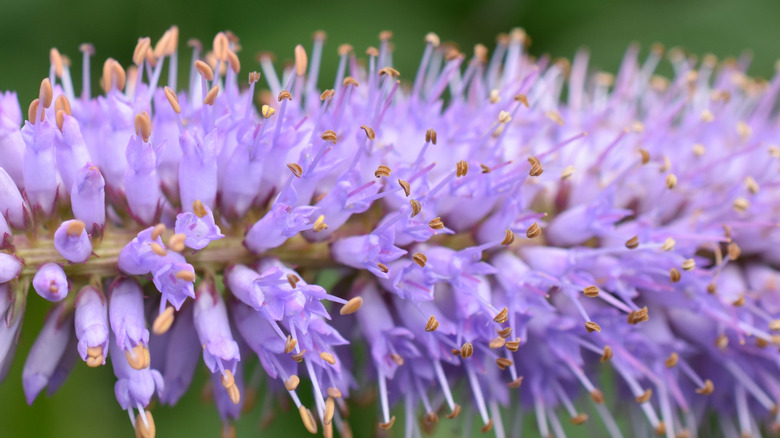
Culver's root (Veronicastrum virginicum) takes time to fill out a space — sometimes up to three years. But the perennial makes up its slow growth by thriving in the same spot for several years. You will enjoy the flush of lilac-white flowers arranged candelabra-like fashion and the legion of monarchs, local bees, and syrphid flies that visit them in mid-summer. Deadhead the blooms to push the show into fall. Deer dislike the foliage of Culver's root, making this plant ideal for consistently damp borders with ample sun exposure. Culver's root grows successfully in Zones 3 through 8.
Jack-in-the-pulpit
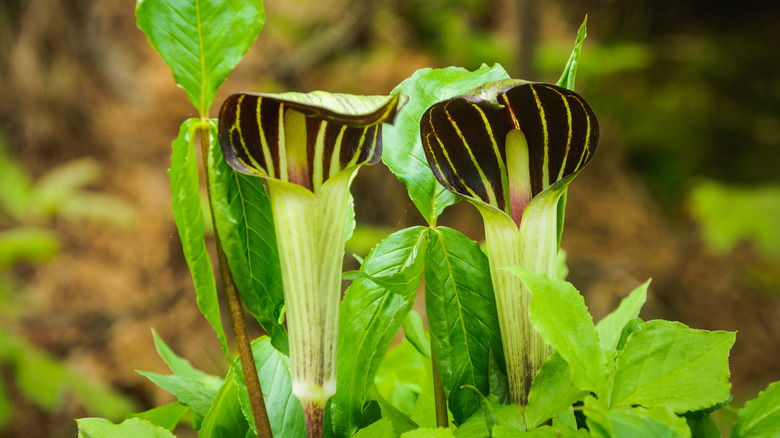
Jack-in-the-pulpit (Arisaema triphyllum) is a low-maintenance perennial that's native to the central and eastern U.S. It is hardy in Zones 4 through 9. The plant is unique in that it can decide whether it produces male or female flowers that season. Use cultivars like 'Black Jack' and 'Mrs French,' which have black or white variegation, to jazz up your plantings. Jack-in-the-pulpit is semi-dormant in summer and produces red berries later in the season that last through fall. It's an excellent choice for shaded, consistently moist soils, though it won't tolerate heavy clay. The flowers are pollinated by flies.
Globe flower
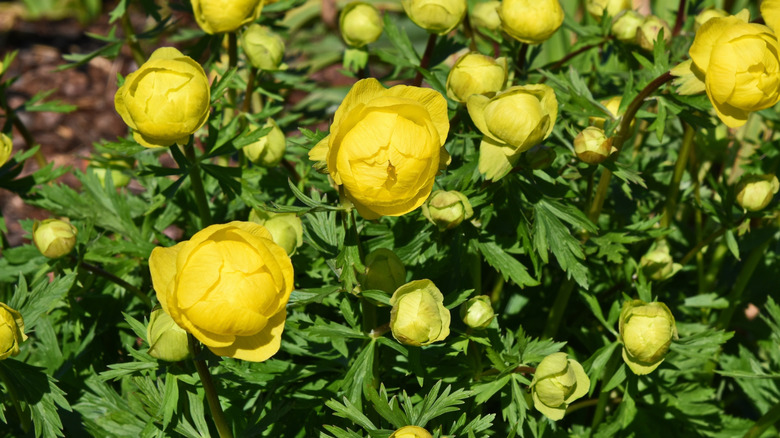
Globe flower (Trollius europaeus) makes a colorful splash in damp soils in early summer gardens when its buttercup yellow flowers are in bloom. The plant grows over 2 feet tall and half as wide, and thrives in poorly draining soil. It doesn't like warm weather — globe flower is hardy in Zones 3 to 6 — and prefers a partially or deeply shaded site. The plant goes dormant when overexposed to sun, but trimming the foliage to ground level can help it bounce back. If the conditions are favorable, globe flower will self-sow and naturalize.
Marsh marigold
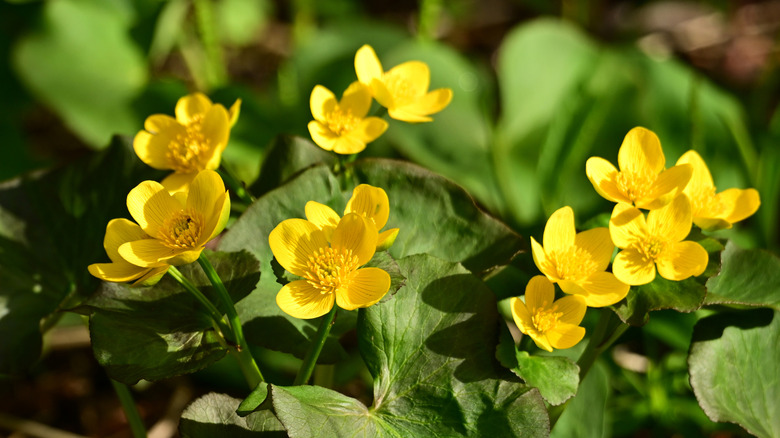
Celebrate early spring with marsh marigold (Caltha palustris), a perennial that breaks out into sprays of yellow flowers around that time. To coax the most blooms out of this plant, give it space in a full-sun site. However, if you live in warmer parts of its hardiness range, which runs Zones 3 through 7, offer it some afternoon shade to prevent it from going dormant. Marsh marigold enjoys moist to soggy acidic soils and can handle frequent flooding. It is endangered in some U.S. states, including North Carolina and Wisconsin, so planting it benefits the ecosystem.
Flowering fern
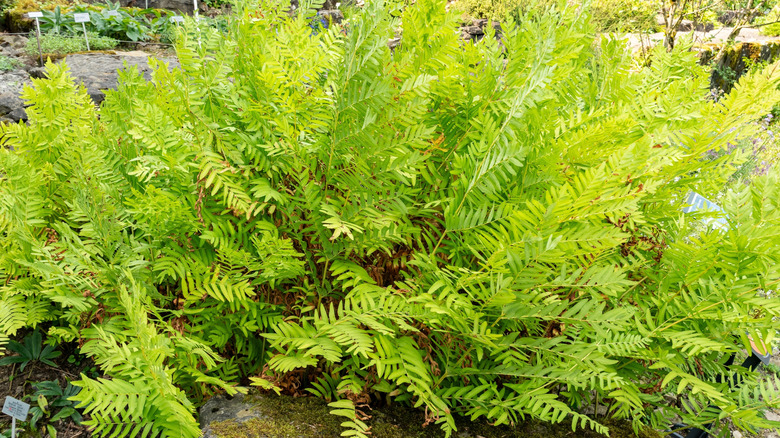
Flowering fern (Osmunda regalis) is a deer-resistant perennial you can plant in gardens in Zones 3 through 10 — as long as the clay soil stays consistently damp or the area floods repeatedly. It is a clever way to hide that unsightly septic tank in your yard. Give flowering fern dappled or partial shade and it will thrive. It has pink foliage when spring arrives that deepens to green and later, in fall, to rusty red. Despite the name, it doesn't bloom in the conventional sense and instead sports brown flower spikes up to 6 feet tall.
Allegheny monkey flower
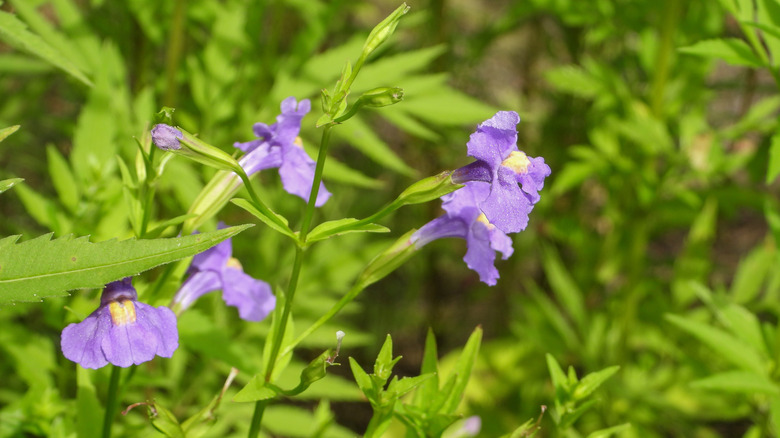
Got a partially shaded spot that remains soggy year-round? Plant it with Allegheny monkey flower (Mimulus ringens), which thrives in wet conditions. It can even tolerate up to 6 inches of standing water without contracting foliar diseases. From summer through to the first frost, you'll see wonderful foliage clothed in bluish-violet or pinkish-white flowers. It's fairly popular with bumblebees and butterflies, so let it naturalize — it spreads both through seeds and rhizomes — to create a pollinator patch. This North American native perennial grows in Zones 3 to 8.
Cherokee sedge
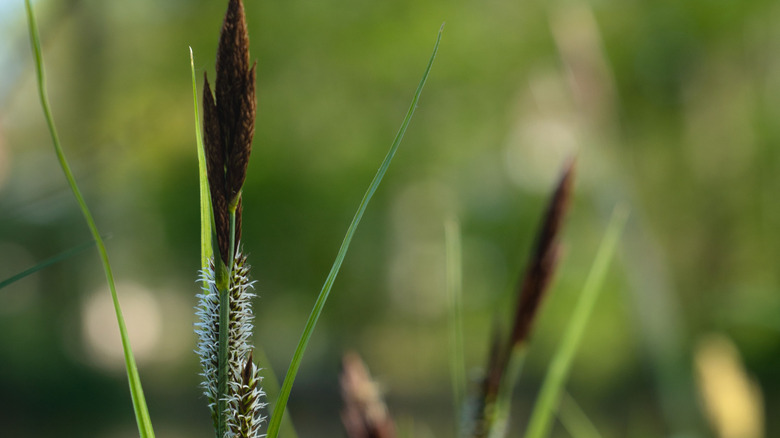
Create airy texture in damp, soggy spots while solving your soil erosion problems with Cherokee sedge (Carex cherokeensis). This semi-evergreen perennial sprouts grass-like blades that arch outward, creating a uniform 1- to 2-foot tall and wide mound. In mid-spring, it produces green flowers that bear wheat-like seeds. Satyr butterflies lay their eggs on the foliage. Birds shelter in the spiky leaves or harvest them for nesting material, and they eat the seeds. Even though this plant spreads by rhizomes, Cherokee sedge isn't aggressive. Give your plant partial shade to full sun in Zones 6 through 9.