

Say Goodbye To Sandy Soil Issues With A Hardy Ground Cover Solution
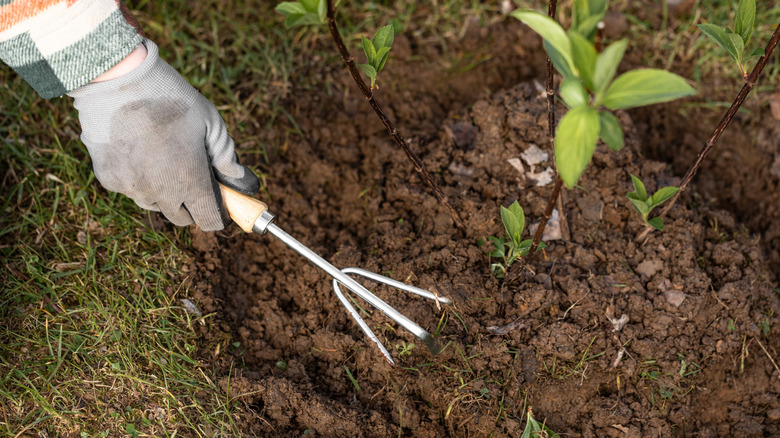
Gardeners typically strive to maintain balanced, well-drained soil. Many plants thrive when water flows easily through the soil. In most cases, there shouldn't be too much water pooling on top of soil but it also shouldn't drain faster than a plant can soak it up. This isn't always easy to achieve in some regions. Sandy soil can be especially challenging to deal with, drying out and losing nutrients rapidly. Not a lot of plants thrive in this environment. While it's not impossible to improve sandy soil, it's certainly a labor of love.
Instead of fighting stubborn sandy soil, why not consider planting a beautiful ground cover that can actually improve the soil? Beach bean (Canavalia rosea) is a fast-growing flower that thrives in sandy soil. This long-lived perennial is hardy in USDA Zones 9a to 11. It's frequently used for erosion control and dune restoration. The beach bean is also a drought-tolerant and salt-tolerant plant.
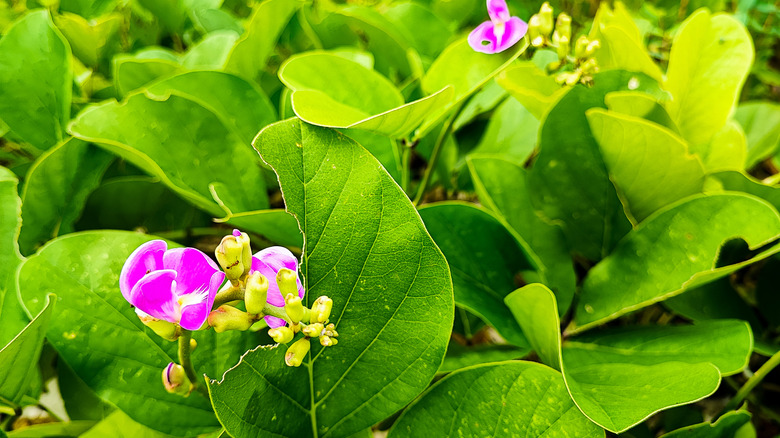
As a member of the fabacea family, this mat-forming plant is a nitrogen fixer. It leaves soil more stable and nitrogen dense than it found it. It works to fill in the wide gaps between sand particles, stabilizing the loose sediment. Practical use aside, beach bean is also beautiful. It features evergreen foliage with blooms peaking in the summer. The flowers are showy and pink with a similar appearance to those of sweet peas.
How to grow and care for the beach bean plant
Growing and caring for beach bean is fairly easy. You can readily grow it from seed. Since this plant seed has a thick outer shell, you'll need to give it a little assistance for a higher chance at successful germination. Either soak it in water or scarify the outer shell before planting. Seeds can take anywhere from one to eight weeks to germinate. You can propagate this plant through cuttings too, so if your neighbors have beach bean, ask if they can gift you a vine segment or two.
The beach bean grows generously in warm, tropical and subtropical climates such as in Florida. It does well in full sun but can tolerate partial shade too. Be sure to wait for the plant to dry out completely between waterings. While this plant can survive in nutrient-poor soil, it thrives when supported with a fertilizer with a 5-10-10 NPK ratio every two to four weeks during the growing season.
Deadhead spent blooms regularly to enjoy the beach bean's flowers all growing season. Cut back dead or diseased vines in the fall. If you expect frost during the fall or winter, cover the base of your plant with mulch. Once spring arrives, remove the mulch and clean up any overcrowding. Beach bean is not recommended for snug spaces where it can't spread out. Using a twisting network of tendrils, stems, and aerial roots, this plant will quickly form dense mats along the ground or crawl upwards onto neighboring structures. Keep in mind that this plant can grow quite aggressively, taking over a landscape rapidly. Be sure to prune when needed.