

The Flowering Herb You Can Plant To Attract Pollinator Bees
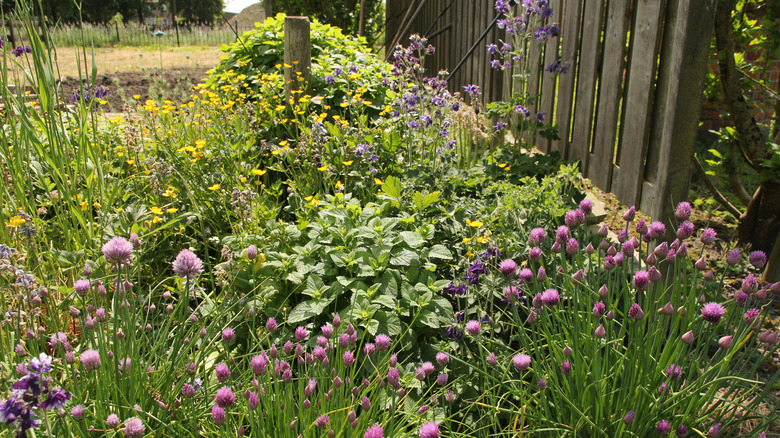
Every enthusiastic home gardener wants a vibrant yard filled with pollinator bees. While there are plenty of great plants for your pollinator garden, one that's really helpful is chive (Allium schoenoprasum). Chives have flowers that can draw bees to your yard. They bloom in mid spring to early summer so you can count on them to attract the lovely pollinators. Plus, they're an herb that's easy to grow.
What makes chives a great pick here is their purplish to pinkish color. Bees' vision works differently than that of humans; they have receptors in their eyes for seeing UV, blue, and green. What that essentially boils down to is that purple is one of the colors that most attracts them, so a patch of flowering chives is practically a beacon to them and will catch their attention. They also bloom in April to May; these spring blooms are critical for pollinators. It helps bridge a blooming gap for them between when early spring flowers bloom (like primrose in March and April) and when summertime perennials tend to bloom (think yarrow in June).
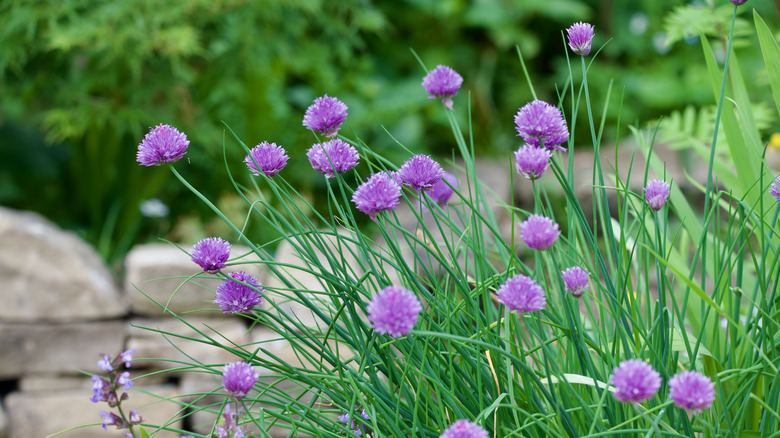
The chive flower itself has a lovely spherical shape that's made up of small florets clustered tightly together. Flowers measure about 1 inch across, and can grow as tall as 18 inches. Plus, the flowers act as natural pest repellent. Adding this simple herb transforms your outdoor space instantly. It looks beautiful and gives you a tasty food garnish, while providing a meal for the bees along with a nice place for them to rest.
How to grow chives in your yard for bees (and you)
Growing your own chives is easy, no matter your skill level in the garden. This plant is a perennial, so you only need to plant it once then the herb replants itself in the garden every year after that. Chives are hardy in USDA zones 4 through 8 and like well-draining soil. They're drought tolerant and can easily handle full to partial sun.
Just keep one rule in mind while managing your backyard herb garden: don't harvest the entire plant. Yes, chives are one of the best toppings for loaded baked potatoes, but constantly trimming the green stems back stops them from ever producing flowers. So to strike a balance, cut some for you, but let a solid portion of your chive crop go to flower for the bees. You can even split your chive planter right in half if you want. This easy compromise keeps you and your local bees fed and happy. Plus, planting this delightful herb is the tastiest way to become a neighborhood hero for your local bee population.