

How To Safely Prevent Algae From Growing In Your Bird Bath
We may receive a commission on purchases made from links.
Keeping a concrete bird bath clean can be a real struggle against nature. Concrete's porous design means it acts like a sponge for things like algae spores, leading to that icky green slime that looks unappealing and is also attracting mosquitoes to your yard. While you want your feathered friends to have a refreshing spot to splash, scrubbing out a bird bath every few days isn't a chore anyone wants to do. And to top things off, not all algae cleaners or algicides are safe for birds. The whole thing gets stressful fast, but that's where agricultural lime comes in. Consisting mostly of calcium carbonate, lime can be an effective, eco-friendly alternative that'll keep your bird bath cleaner.
Agricultural lime is often sprinkled on the ground to neutralize odors and repel pests around livestock, including chickens and ducks. It can also be used to adjust the pH of ponds and other water features. Agricultural lime products like First Saturday Lime are designed to repel insects, kill mosquito larvae, and reduce algae growth, making it one of the best tips for keeping your bird bath beautiful.
Of course, it's also safe for animals to be around (and even ingest), so birds won't be hurt by splashing around in a bird bath you've put it in. In fact, calcium carbonate can be a good source of calcium to support strong bones and eggshells. What makes it so great for concrete bird baths in particular is that it creates a kind of invisible shield across the bottom of the basin, blocking the tiny pores that algae tend to anchor in. This helps keep your water super clear and clean with way less effort on your part.
Use a natural agricultural lime to prevent algae growth
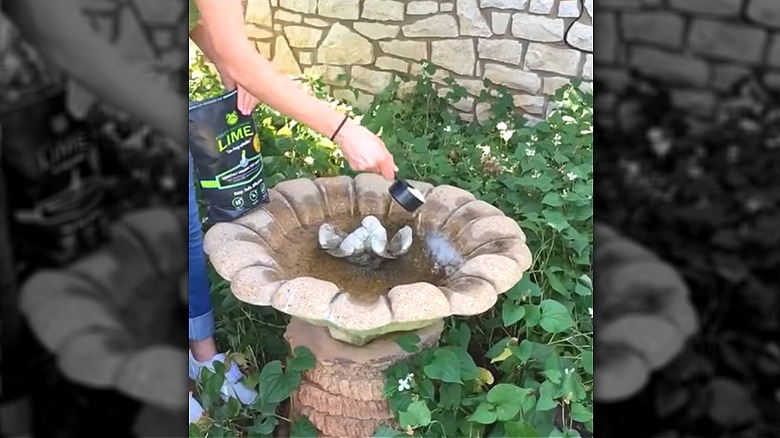
Not every lime product is the same, and some are formulated specifically for use in garden soil or other unique applications. To be safe, look for a product with minimal ingredients. First Saturday Lime is a good option because it is labeled for use in ponds and bird baths, and it contains only calcium carbonate (calcite) and citric acid — two natural ingredients which are both safe for birds.
To get the best overall results, it always helps to start with a clean slate. Empty your concrete bird bath and pour in a mixture of of 9 parts water and 1 part distilled white vinegar. Scrub the basin with a stiff-bristled brush to loosen algae and lingering buildup. Once the basin is clean, fill it back up with fresh water and sprinkle in some lime powder (about an eighth of an inch on top will do fine). You'll see the lime slowly settle toward the bottom to form that invisible shield. Because it's insoluble, it won't just disappear; it'll stay active and effective for up to a month.
Maintenance is just as easy as the initial setup. As the name on First Saturday Lime cleverly suggests, you can make it a habit to treat your bird bath on the first Saturday of every month. That's an easy-enough routine to stick to, and ensures your beaked besties have a safe place to hydrate and bathe. The environmentally-friendly product transforms an annoying weekly chore into a quick monthly task that keeps everyone happy. Your backyard birds will definitely chirp their thanks for the upgrade, leaving you to learn how to properly clean your backyard bird feeder.