

16 Hanging Basket Flower & Plant Combinations For A Stunning Porch Display
We may receive a commission on purchases made from links.
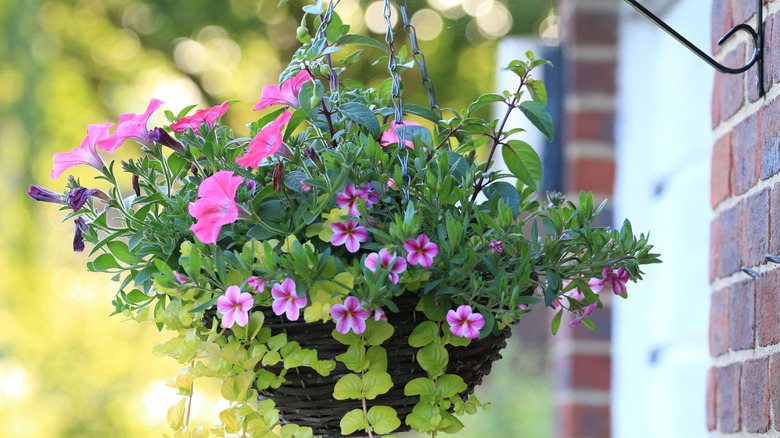
There are several ways to brighten your front porch, but one of the most timeless methods is to hang vibrant flower baskets. It can be tricky to choose the right combination of flowers, but there are a few tricks you can use to ensure a compatible and complementary pairing. Some flowers work better together than others, and it's important to plan your arrangement in advance.
If you've been searching for delicate and colorful flowers that look stunning in flower baskets, these groupings offer a balance of texture, color, and cascading movement that will instantly give your porch a finished look. Gardening is a personal practice, no matter how small your plot of soil. The flowers you choose for your front porch should reflect your personality, as they are often the first thing visitors notice. Explore some of the most beautiful and well-balanced pairings, along with essential tips to ensure your flowers thrive in a DIY hanging basket.
Blend browallia with impatiens and torenia
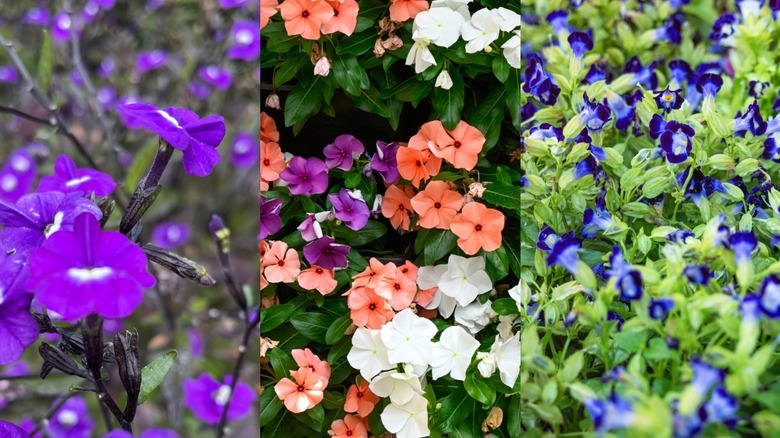
Create a charming array of small blue, pink, and purple flowers. Use hardy browallia as the base of your hanging plant and pair them with two other flowering annuals for a dynamic display. Incorporating impatiens and torenia can create an eye-catching, colorful combination. All three of these flowers prefer well-draining soil, and grow best in full to partial shade.
Browallia is low-maintenance and resilient, making it a safe choice for your basket's focal point. Because torenia will cascade over the side of your pot, try planting it near the edge of your basket. While some species of impatiens also cascade, other varieties are best for filling the gaps in your hanging pot. When it comes to color selection, you can create a more monochromatic look with blue-purple browallia, purple torenia, and fuchsia impatiens, or you can use your impatiens as a pop of pink or coral contrast.
Try pairing your classic begonia with green dichondra
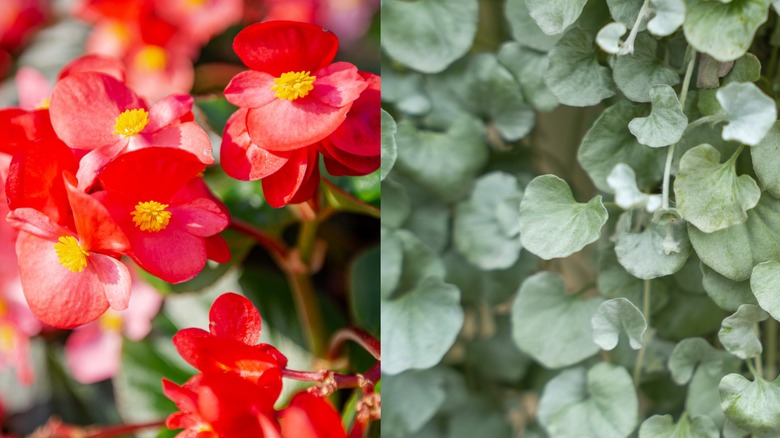
Begonias are a popular flower for hanging baskets – and for good reason. They cascade beautifully and are tolerant to sun. While you can certainly fill an entire basket with begonias, a leafy touch can make the blossoms pop even more. The addition of green dichondra will add visible texture and allow your begonias to shine. Keep in mind that the care of your begonias is dependent on the specific variety. In general, both begonias and dichondra prefer well-draining soil. They can both tolerate warm conditions, but note that dichondra tend to prefer more direct sunlight than begonias – so a balance of sun and shade is ideal.
If you want to brighten up your porch in autumn, you can choose this beginner-friendly begonia for beautiful fall flowers. For a cascading appearance, there are a few varieties to choose from. For example, tuberous begonias are a vivid option for hanging baskets. Beyond green dichondra, you can also create a beautiful display with silver-falls dichondra.
Elevate double impatiens with leafy coleus
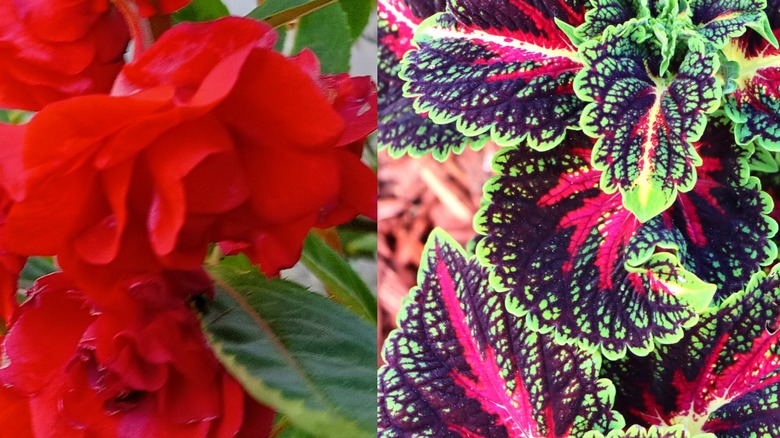
If you enjoy a bright, warm color scheme, you'll love the look of double impatiens flowers paired with coleus. The salmon pink and orange coloring of the impatiens will look beautiful with the warm tones of the coleus leaf. Double impatiens and coleus grow well in partial shade, and bright sunlight can actually fade the coleus leaves. Make sure the spring frost has passed before hanging either of these plants outside.
There are plenty of color combinations to consider, but red and pink-toned coleus can elevate the rosy color of the impatiens for a cohesive look. If you prefer a deeper, more dramatic appearance, coleus with burgundy or brown leaves can create a moody feel with red impatiens. After you've selected your color scheme for your basket, make sure to review everything you should know before planting impatiens.
Curate a classic hanging herb garden with thyme and rosemary
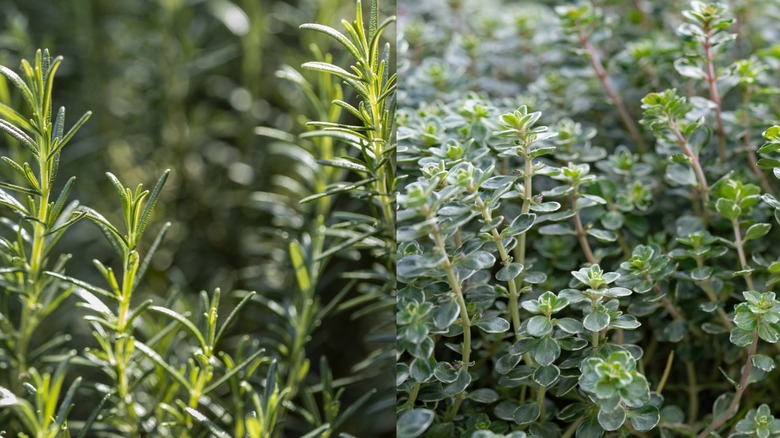
If you're looking for low-maintenance hanging basket plants that can take heat and add beauty to your patio, don't overlook fragrant herbs. Design a drought tolerant hanging basket with edible herbs like thyme and rosemary. These two are a timeless pairing that will offer an aromatic harvest. Often grown together, both herbs prefer full-sun and very well-drained soil. That means if your porch is south facing, you're in luck!
When in doubt, it's best to ignore your herbaceous hanging basket, rather than risk overwatering. For these two herbs, drier is definitely a better environment than one that is too moist. Thyme and rosemary make a great pair in more than one way. In addition to their shared growing conditions, both plants repel pesky bugs and insects. As you aim to select the best varieties for a hanging basket, consider prostrata rosemary, which will actually climb over the edge of your pot, rather than sticking straight up in the air.
Hang an edible summer garden with basil and tomato
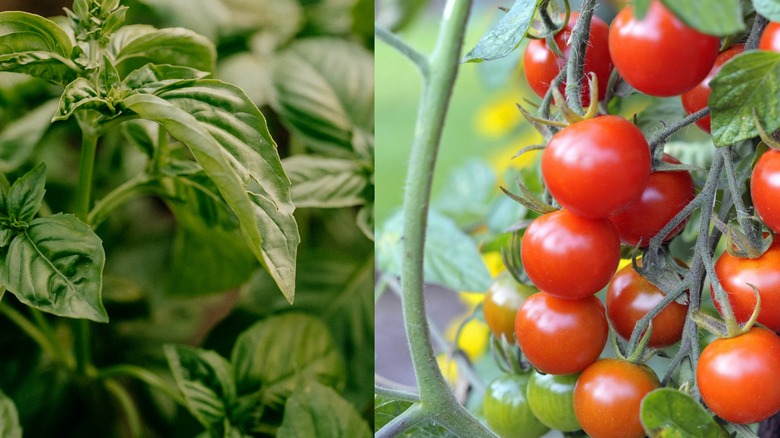
Thyme and rosemary aren't the only great flower choices for a full sun hanging basket. If you love the idea of a sunny hanging basket that can be used for culinary purposes, you can also create a tasty garden with tomatoes and basil. These two summer plants are a sunshine-loving pair, and the tomatoes will cascade beautifully over the edge of your pot.
Nothing beats the smell of fresh tomato vines and basil leaves. Cherry tomatoes are the best space-saving option, and they will also cascade over the edge of your basket. In fact, there are particular varieties that have been bred specifically for hanging containers. 'Patio Choice' and 'Tiny Tim' are two types to consider.
A playful pot of succulents with sedum and echeverias
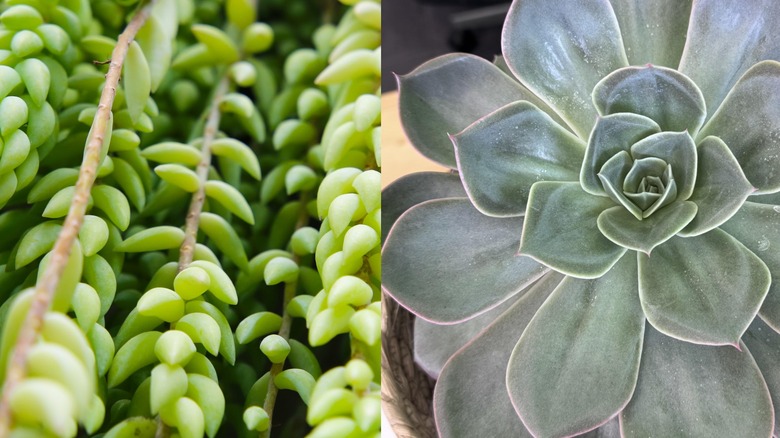
Succulents can combine to create a beautiful hanging basket. Sedum, also known as Burro's Tail, will cascade and dangle well over the edge of your basket, and echeveria can create a textured centerpiece. They both require the same, minimal level of watering, and are very easy to take care of. Sedum and echeveria are both winter dormant, which is a must when you are selecting succulents to plant together.
If you are enamored with the cascading look, it's best to plant your sedum around the edges of your basket. Echeveria plants are perfect for the center, as long as you make sure you give the younger plants enough space to expand. For a boho look, consider a macrame hanging basket to complement your succulents, like the Koalaime Hanging Planters. Before transferring them your hanging basket, you can repot your succulents like a pro with these helpful tips.
If your hanging basket is shady, try ivy and ferns
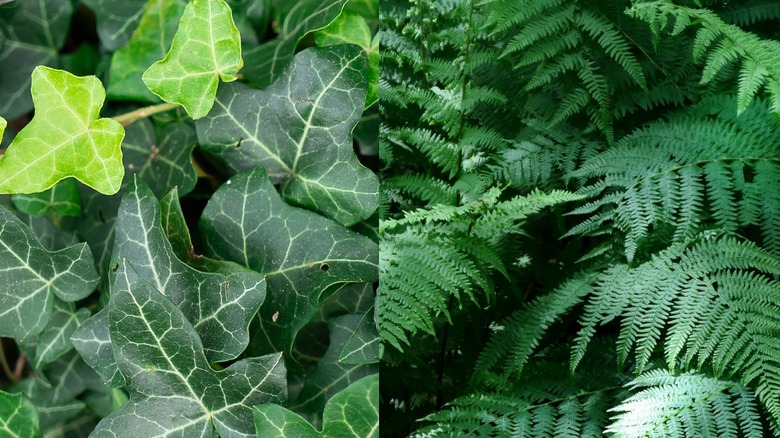
If you prefer greenery to colorful flowers, consider an organic display of two deep green, leafy plants. Ivy and ferns will grow together harmoniously and thrive in shaded areas. This pairing is proof that even if your porch or awning doesn't get a lot of sun, you can design a basket garden full of lush greenery. Both ivy and ferns like moist environments, but make sure the soil doesn't stay soggy.
There are many species of ferns and ivy to choose from, but one easy pairing is the 'Hart's Tongue' fern with English ivy. Make sure to plant the ivy at the edge of the basket to create a trellising effect. For an earthy look, choose a basket with a natural texture like the Legigo Metal Hanging Baskets with a coconut coir liner. If you feel like you're missing a floral touch, purple iris can be a compatible addition.
Contrast cool dusty miller with colorful geraniums
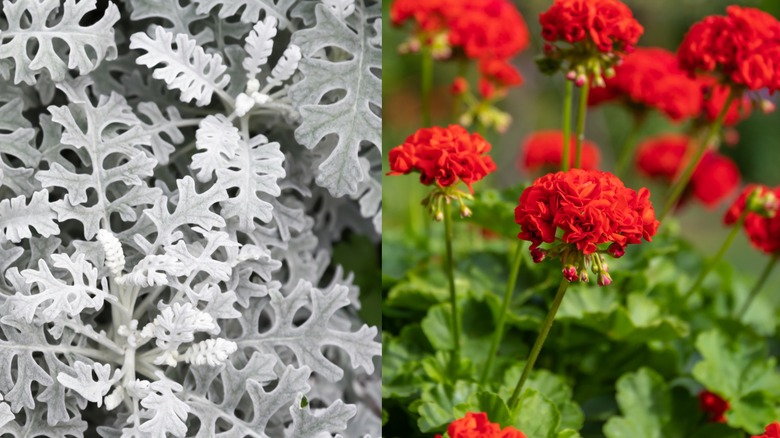
This duo is ideal if you want a unique combination with strong visual contrast. Choose vivid pink or red geraniums and balance the bold hue with cool, gray-green dusty miller. The vibrant geraniums will look even brighter against the dusty miller, creating an eye-catching porch display. Geraniums and dusty miller are a perfect pairing both visually and when it comes to compatibility of conditions.
Dusty miller and geraniums both do well with lots of light, which means you should consider hanging your basket where it will be exposed to direct sun. The pairing can fit into small containers, making this duo a great option if you have limited space on your patio. If you want to add a third plant to your arrangement, sedge grass is another compatible plant that can create a multi-textural look.
Plant Swan River Daisies next to asparagus fern
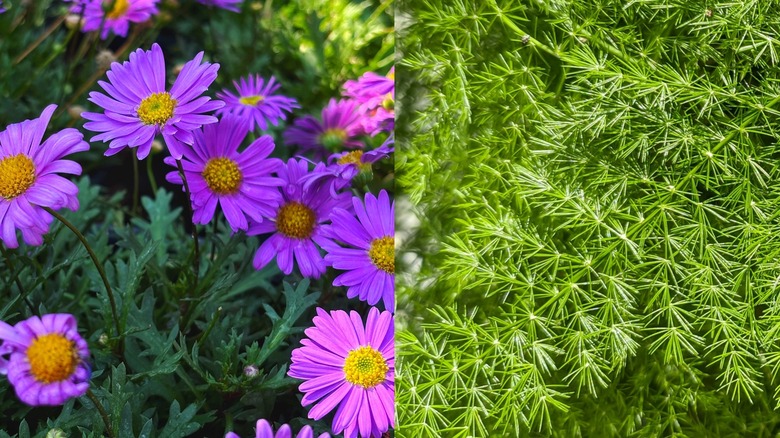
Swan River Daisies have a whimsical appearance, and asparagus ferns can add playful tufts of green. These two plants will create a basket garden that appears wild and unruly in the most charming way. Swan River Daisies and asparagus ferns can thrive in partial shade or full sun, making them highly-versatile for hanging baskets. When it comes to watering habits, they can both tolerate droughts once established. Consistent moisture is preferable to promote healthy growth.
If you want to attract pollinators, Swan River Daisies are a must for your hanging basket. They come in blue, pink, purple, and white shades, all beautiful colors to pair with the deep green of asparagus ferns. Both Swan River Daisies and asparagus ferns will cascade gracefully over the edge of your hanging basket. Together, they create a whimsical, cottage-style porch display that looks effortless and welcoming.
Pair ivy with petunias in the summertime
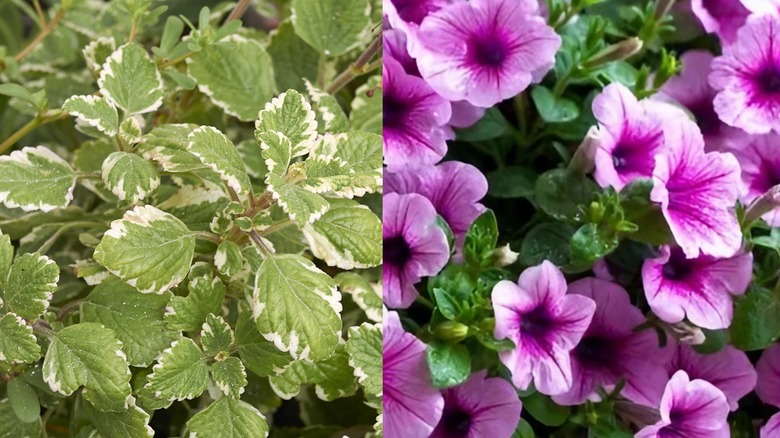
Ivy is beautiful, but sometimes summer calls for a more playful look. If you like the concept of a classic ivy basket but feel you're missing a splash of summer color, there is a simple solution. Try planting petunias in your pot of ivy to give it a pop of contrast in the summer. While the ivy will last all year round, the petunias are perfect to change up the look in the warmer months.
Because they are typically annual flowers, don't expect your petunias to last more than one season. This short lifespan makes it especially important to pair them with plants that will thrive under the same conditions during that time. For the ivy, Swedish Ivy can be a better option than English Ivy as the ideal growing conditions are more compatible with petunias. Both Swedish Ivy and petunias prefer well-draining soil and sunny conditions, whereas English Ivy likes shade.
Add fragrance to your porch or patio with lavender and thyme
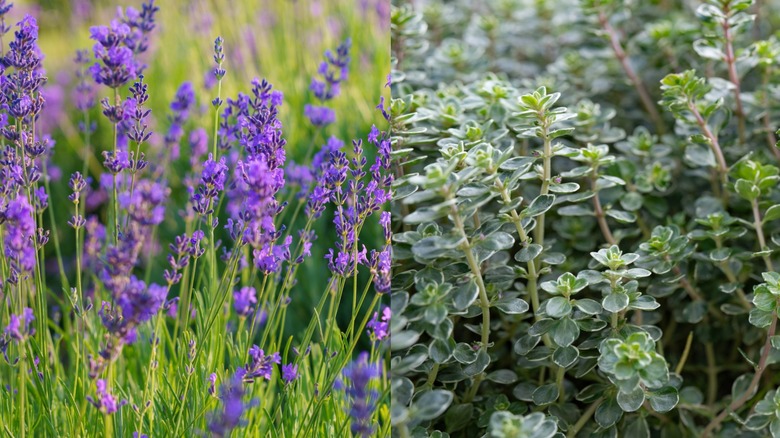
For another fragrant herb pairing, consider the timeless power of lavender and thyme. These two bucolic herbs can make your hanging basket look perfectly Provençal. Take inspiration from the South of France and the Mediterranean countryside with a pairing that is complement one another. Be very careful not to overwater these two herbs, as they are used to arid climates with lots of sun. Keep in mind that drier soil will result in higher concentrations of essential oils.
Lavender and thyme are both wonderful choices if you want to bring pollinators to your porch. Thyme can be harvested year-round, whereas lavender will require a close eye to determine when it has reached full-bloom. If you want to add a third herb to your hanging basket, sage can also grow beautifully with the herbaceous pair. Make sure to hang your herb basket within easy reach to make harvesting more accessible.
Lantana and cuphea grow in the same, sunny environment
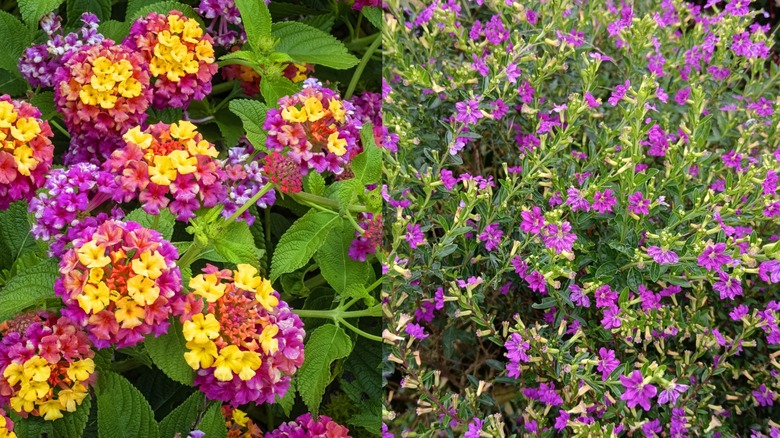
If you've been searching for stunning hanging basket flower combos that thrive in the heat, this pairing is something to seriously consider. Lantana is a popular hanging basket plant for its yellow, orange, and red blossoms. Cuphea can also thrive in the same, sunny environment, and both plants are drought-tolerant. The two plants are also known for attracting hummingbirds and butterflies.
For a cohesive look, you can choose red cuphea to pair with warm-toned lantana. For a more multi-colored appearance, go for pink or fuchsia cuphea. If you want to add another sunny plant to your arrangement, Petchoa is also compatible with cuphea and lantana. Keep in mind that lantana's berries are toxic to several animals, so your hanging basket is out of reach – even from cats. Before you plant your hanging basket, make sure to review how to successfully grow and take care of lantana.
Sweet potato vines and geraniums are affordable and lush
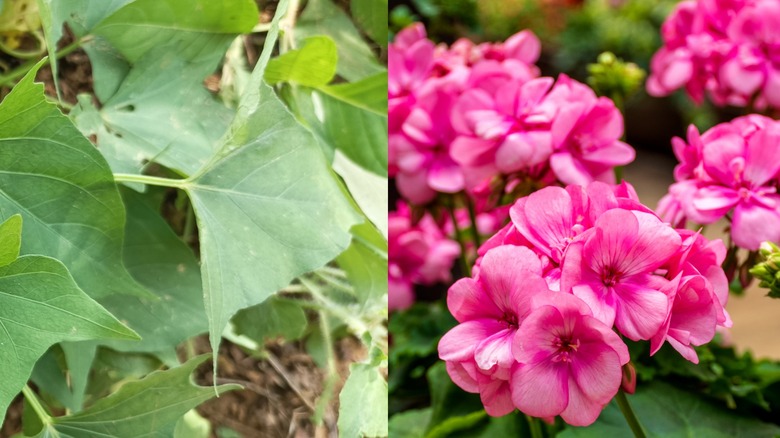
If your goal is a hanging basket that will look lush for very little cost, sweet potato vines are a great go-to. These leafy vines will cascade dramatically, becoming fast-growing focal points for your front porch. For visual balance, add geraniums to your hanging display. Soil should be evenly damp and well-draining for both sweet potato vines and geraniums to thrive.
To contrast the light green sweet potato vines, bright red geraniums can create a simple basket that still looks bold. If you prefer a more understated look, go for light pink or even white geraniums. When choosing a hanging pot for your dynamic duo, make sure it is large enough to contain a sufficient amount of water to saturate the roots of both plants. Repotting may be necessary, as both plants can outgrow their containers.
Combine edible cherry tomatoes with floral petunias
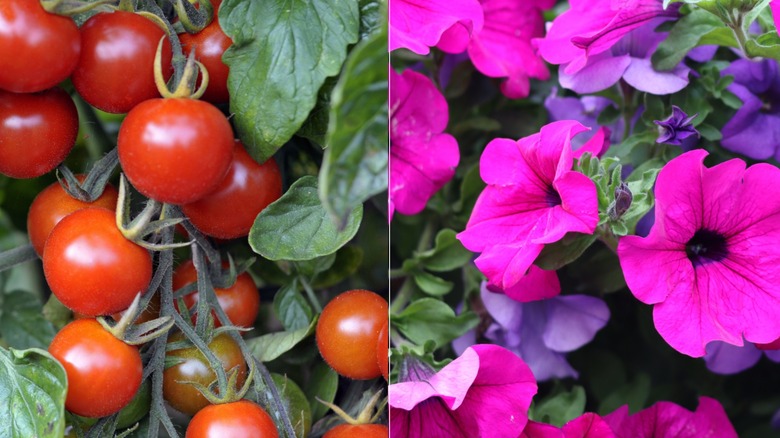
If you can't decide between flowers or edible plants, go for both! Cherry tomatoes and petunias can grow next to each other, and you get the best of both worlds when it comes to beauty and bounty. Petunias and cherry tomatoes need about six hours of daily sunlight, making them a perfect pair to grow together. Make sure your porch isn't entirely shaded in order for this duo to properly thrive.
Try planting your petunias in the center-rear of your basket while placing the cherry tomatoes near the front edge. This arrangement will give the tomatoes room to spill over naturally. Beyond aesthetics, there are several major benefits of adding petunias to your cherry tomato basket. Most notably, they act as natural repellents for harmful bugs and pests like tomato worms, leafhoppers, aphids, and more.
A fragrant basket with sweet alyssum and oxalis
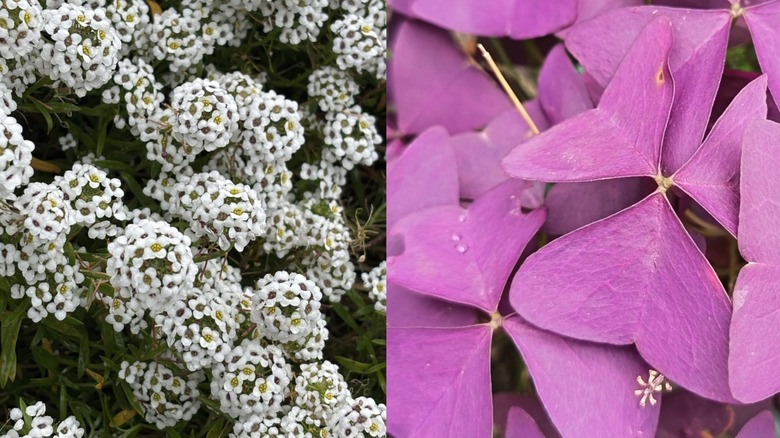
A hanging basket isn't only for visual effect. Try appealing to multiple senses when people approach your home. If you like the idea of curating a beautifully-scented basket, create your base with sweet alyssum. These clusters of small, fragrant flowers will stand out against leafy oxalis. The sweet alyssum will attract butterflies, adding another enchanting feature to the atmosphere of your front porch. Both plants can be grown in full sun or partial shade.
Be aware that too much sunlight can cause the oxalis to fade, so you may want to plant them behind your sweet alyssum, so the fragrant flowers get more direct sun. This positioning helps protect the oxalis while still allowing it to thrive in filtered light. When it comes to seasonal care, note that your oxalis might need to be taken inside before the first frost.
Calibrachoa, verbena, and petunias are a perfect trio
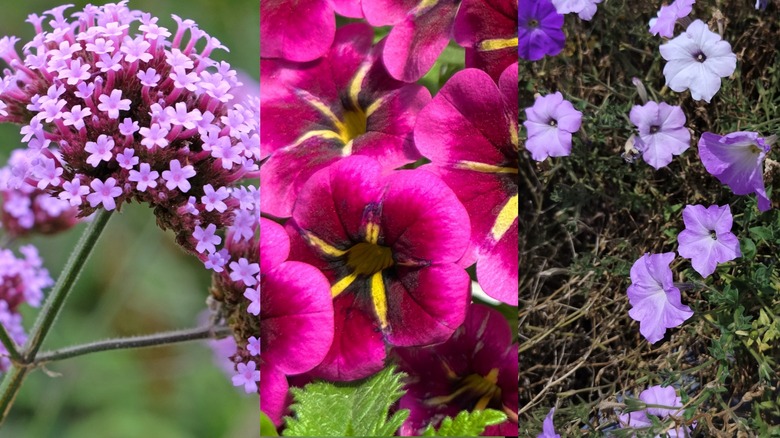
For a unique mix of three different flowering plants, create a multi-colored display with calibrachoa, verbena, and petunias. All three of these vibrant flowers can be planted in the same basket for a playful, kaleidoscopic appearance. Calibrachoa is very adaptable and low-maintenance, making them able to flourish in a range of environments. Verbena grows best in sunlight, so make sure it is getting direct exposure to the sun. Petunias love a similarly sunny and warm environment.
For color combinations, there are a few directions you can take. You might opt for a soft, romantic palette by pairing pink and purple verbena with light pink petunias and coral calibrachoa. Alternately, consider going bold with contrasting hues like deep blue petunias, bright yellow calibrachoa, and vibrant pink verbena. For something more balanced, try mixing bi-color petunias with complementary shades of calibrachoa and verbena for a creative, eye-catching hanging basket.