

Don't Start Pea Seeds Indoors: There's A Better Way For A Flourishing Garden
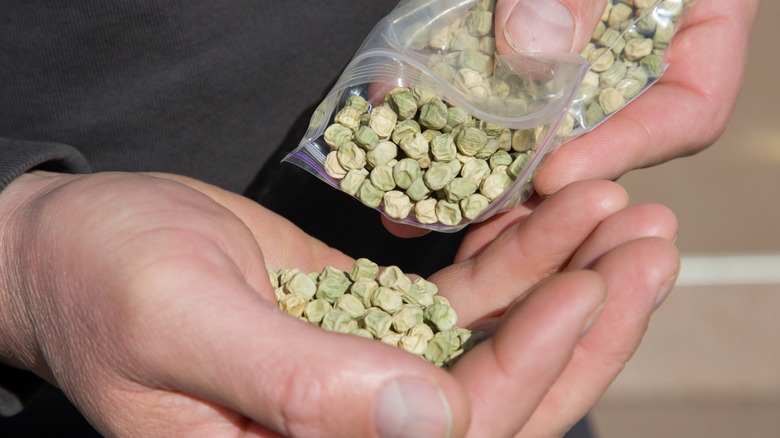
For many, their first introduction to gardening happened in grade school. All it took was growing a plant in a paper cup, and many of us were hooked, fascinated by how one small seed could transform into a beautiful green plant. It was even better if it were something we could eat. More often than not, that first experience involved a pea (Pisum sativum) plant — one of the easiest crops to grow and a staple of vegetable gardens. But that approach may have set us on the wrong path by starting peas indoors instead of direct sowing them in the garden. You see, peas aren't too fond of being transplanted.
While there are many seeds that do well if they are started indoors, peas are better off being direct sown. The biggest reasons many people start some of their garden plants indoors are that they want to extend their growing time, their area doesn't warm up fast enough for the soil to be the right temperature for germination, and they can control the conditions that seedlings need to thrive. Honestly, starting peas indoors is extremely unnecessary, and you're really just creating more work for yourself. Peas are cold-hardy annuals with delicate root systems, which makes them difficult to transplant, and they can become leggy when started indoors. Direct sowing pea plants early in spring is one of the most effective ways to grow healthy plants and get a good harvest.
Why you should direct-sow pea seeds into your garden
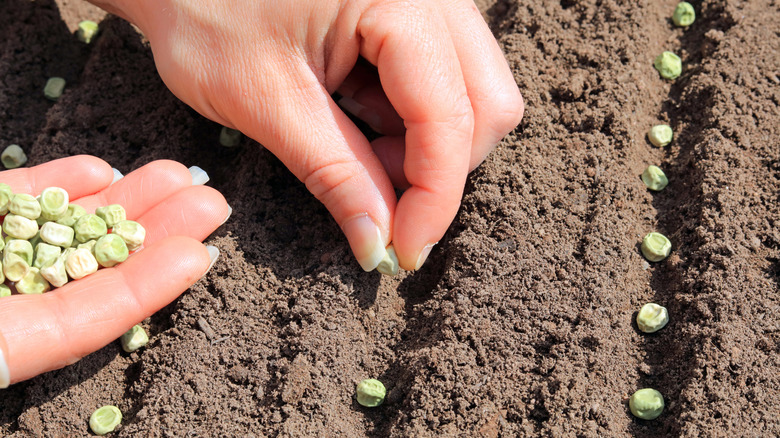
Growing peas is generally pretty straightforward and rewarding. All it takes is a little know-how. While they don't do well when started indoors, they can be pre-germinated before planting. It's an easy way to give your pea seeds a head start. Place seeds in a moist paper towel inside a resealable bag with a few holes, then keep them in a warm spot until roots begin to form. When you are ready to plant, take them out to the garden and carefully (without breaking the root start) sow your seeds.
With many garden veggie plants, it can be confusing to know when to direct sow your seeds in the garden, but with peas, it's pretty easy. Sow seeds once soil temperatures consistently reach above 40 degrees Fahrenheit. Plant in rows that are 18 inches apart with at least an inch between each plant. Cover with about an inch of soil and pat it lightly; watering may not be necessary if your area gets consistent spring rain. If rainfall is limited, water once a week, soaking the soil so roots receive adequate moisture.
Pea plants are generally ready to harvest after about two months, depending on the variety. It can be confusing trying to figure out if your pea plants are ready to harvest. The easiest way to find out is by sampling. When your peas start looking plump, harvest one and take a look or taste. If the peas in your pod are slightly larger than the seeds you planted, they're ready to harvest.