

What To Do If There's Moss On Your Driveway
We may receive a commission on purchases made from links.
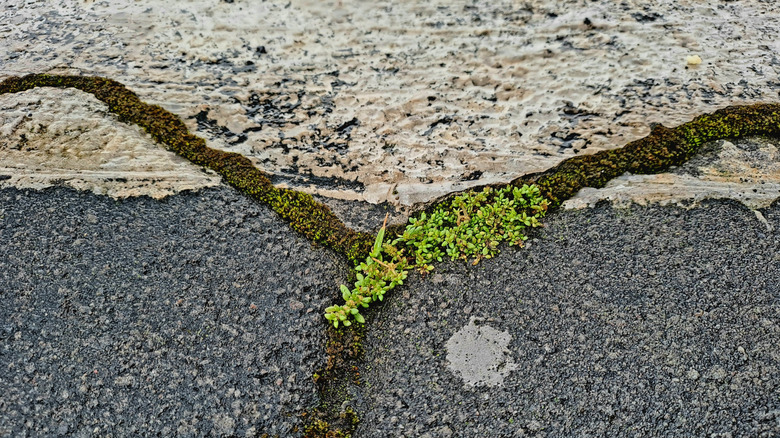
If you've recently spotted moss growing on your driveway, you may wonder whether it is a real concern or simply a harmless natural growth that appears in outdoor settings. Unfortunately, moss on any flat surface is likely a problem you want to pay attention to. This is because moss holds moisture, which can cause the surfaces underneath it to break down over time. In addition, slippery moss can pose a safety hazard to those walking on it. To protect yourself and your driveway, there are three important things you need to do: identify the cause of the moss, remove it, and prevent it from returning.
First, have a look at the moss pieces on your driveway. If they are loose and not attached to the pavement, they may be bits that have fallen off your roof or another surface. In that case, you should look into some ways to eliminate moss on your roof instead. However, if the moss is growing directly on the pavement, then it is likely an issue with the driveway itself. Moss likes to be wet and therefore tends to grow in conditions that are moist, shady, and have low air circulation, as this prevents the sun and wind from drying it out. If your driveway has dips or cracks that don't drain sufficiently after getting wet, then moss is much more likely to grow in these places. Additionally, if debris such as leaves and twigs often pile up on your driveway, these can trap moisture and lead to the growth of moss. Luckily, there are some helpful methods for removing moss from the driveway and preventing more from growing.
Methods for removing moss on a driveway
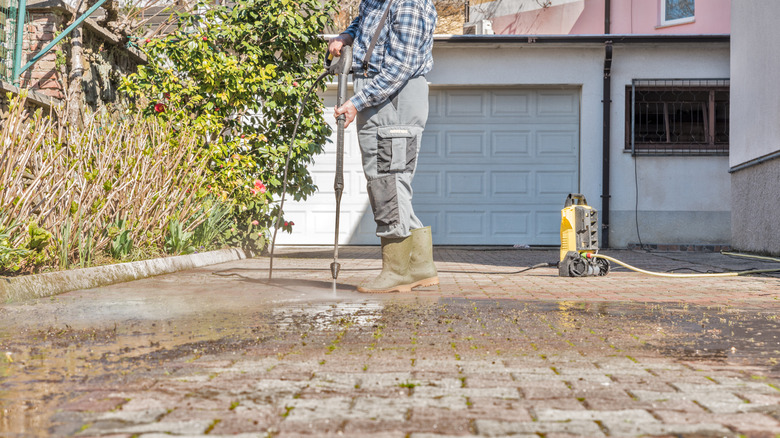
One of the simplest ways to remove existing moss from a driveway is manually. Start by taking a firm broom and sweeping the pavement to get rid of any debris piles or loose moss. Then, you can use your garden hose or your pressure washer to clean the surface and, finally, use a handheld brush or scraper to peel off the shallow moss that remains.
Moss can also be removed using various liquids. For example, vinegar is a versatile cleaning tool that's useful for this purpose. Simply spraying a mixture of equal parts white vinegar and water onto the moss and letting it sit for around 20 minutes will cause the moss to die off and make it easier to remove. A mixture of 1 cup of bleach with 1 gallon of water and an added cup of dish or laundry detergent can also be used to kill off moss and may be effective in stopping it from cropping up in the near future. When using bleach, it is a good idea to wear protection such as gloves and goggles, and remember never to mix a bleach solution with any other cleaners or ammonia, as this can result in dangerous fumes.
Lastly, baking soda is another solution for removing moss and making it less likely to grow back because it raises pH levels. Simply sprinkle baking soda over the moss, leave it overnight, and then pull up or rinse away the dead moss in the morning. Once it has been initially removed, there are other steps you can take to stop moss from growing back on your driveway.
How to prevent moss from regrowing on your driveway
To prevent moss from re-sprouting on your driveway in the future, you need to cut off the things it needs to survive. For example, moss prefers shade, as that allows it to stay moist, so you could try cutting back nearby trees or bushes that prevent sunlight from hitting your driveway. In addition, regularly cleaning or sweeping off loose debris, which can allow water to collect on your driveway, is a good way to make it less hospitable for growing moss.
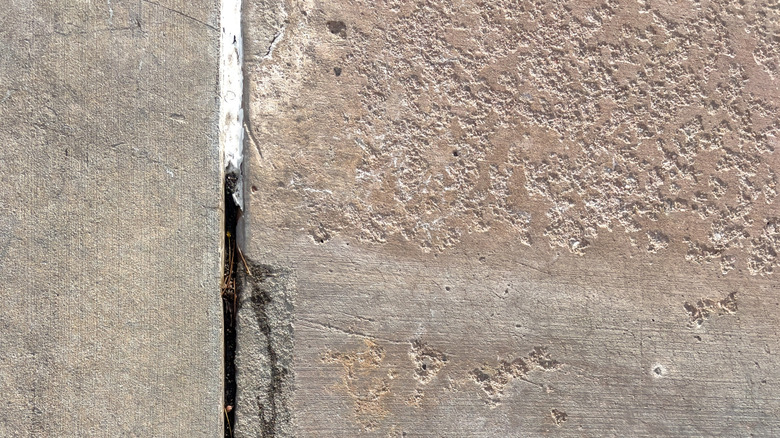
If it is obvious that there are certain holes, dips, or cracks in your driveway that harbor moss, you can fill the cracks in your concrete driveway using products such as Ironable concrete crack filler. Asphalt driveways should also be regularly sealed to prevent cracks from appearing. Additionally, you may want to check the sources from which water ends up on your driveway. For example, sprinklers, drain spouts, and even handheld watering cans may splash the driveway, leaving puddles that can increase the chance of moss if they do not dry quickly. Make sure your lawn sprinklers don't go over your driveway, try re-orienting your drain spouts, and try to keep water contained to garden beds when hand watering near the driveway.