

Prevent Diseased Bee Balm With An Essential Spring Gardening Task
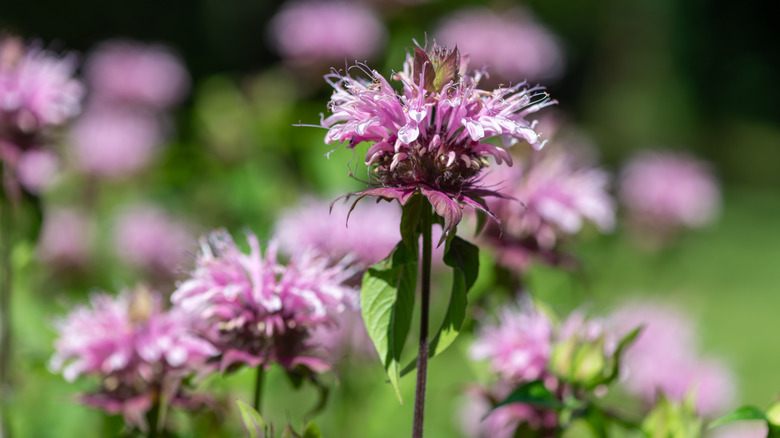
With its gorgeous red, purple, or pink blooms, bee balm (Monarda spp.) puts on an incredible show in the garden, attracting a wide variety of pollinators that include hummingbirds, butterflies, and, of course, bees. However, that incredible floral display can lose its luster when powdery mildew appears on the plant's foliage. Thank goodness there's a surprising spring gardening task you can complete to avoid the disappointment of this disease. Bee balm, also known as bergamot, is one of those perennial plants you can divide in spring, and doing so can help prevent powdery mildew.
Powdery mildew is a fungal disease that can cause a grayish white powder to appear on the foliage of your Monarda plants. The disease is spread by the wind and can also infect other garden flowers like zinnias and phlox. Powdery mildew thrives when certain conditions are right — a combination of high humidity, warm days, and cool nights. Bee balm is one of the many species prone to getting this fungal disease, and it can even cause these plants to lose their leaves.
Divide bee balm in spring to discourage powdery mildew
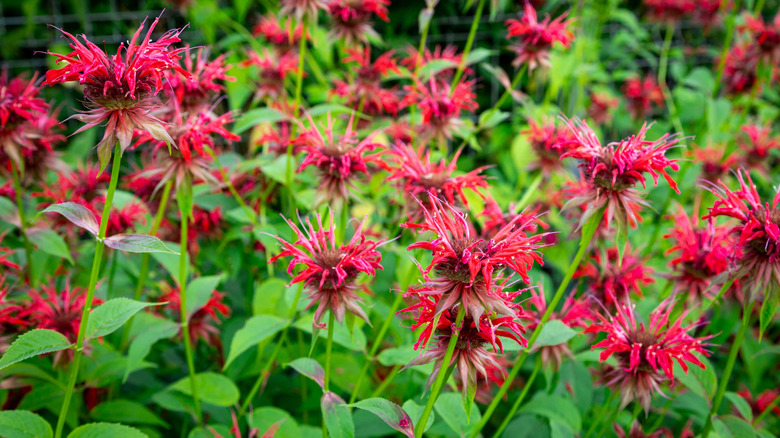
Crowded conditions also play into the spread of this disease, and that's where division comes in. When you grow bee balm, you need to follow the recommended spacing, allowing 12 to 36 inches per plant. The thing is that, as the years go by, a single plant can spread by both rhizomes and seeds, so a previously well-spaced specimen can turn into a densely overgrown patch. Dividing in early spring helps to discourage powdery mildew on bergamot by increasing air circulation, but you will only need to divide clumps every two or three years.
To divide the clump, dig it up and separate it into sections that each have at least two shoots, then replant it. On the other hand, if you missed the window for dividing your bee balm and are watching that telltale white powder spread across its foliage, it's not too late to treat the problem. The powdery mildew in your garden is no match for vinegar, and you can apply it diluted, with a spray bottle. Also, there are a few other tasks you can put on your list as measures of prevention — put infected plant materials in the trash, and avoid shady conditions. You can also consider growing resistant bergamot varieties such as the lavender-flowered 'Purple Mildew Resistant,' red-bloomed 'Jacob Cline,' or 'Marshall's Delight,' which has pink flowers.