

What To Do If You Find Mold On Your Driveway
We may receive a commission on purchases made from links.
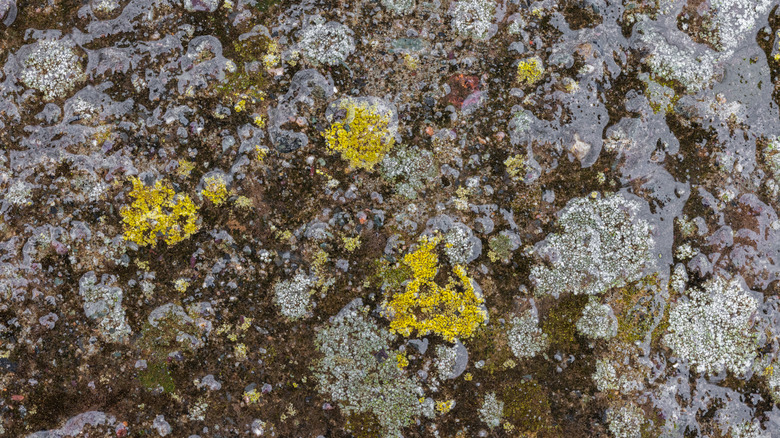
One might assume that an open spot with constant airflow like a driveway wouldn't attract mold, but it is an unexpected place mold may be lurking in your home, especially if you live somewhere with moist conditions. Water tends to collect anywhere there is space for it, so if your driveway is made of a porous material like concrete, moisture can build up in the nook and crannies and potentially start to develop mold. This is most common with shaded driveways or those that face a lot of moisture, such as a section that soaks up runoff from the gutters. Luckily, once you've spotted mold growing on your driveway, you can typically handle it yourself with a good scrubbing.
Unlike normal dirt and grime that can be easily swept away, proper mold removal often requires chemicals to ensure all of the bacteria is taken care of. This can be achieved with a cleaning product, such as the RMR Brands Instant Mold and Mildew Stain Remover Spray, or by making your own cleaning solution using 1/4 cup of chlorine bleach per gallon of hot water (remember to wear rubber gloves and eye protection). Apply your chosen cleaner to the end of a hard-bristled broom or brush. Vigorously scrub away the mold and let the cleaner soak into the concrete before rinsing everything down with clean water. It's best to tackle this project when the forecast is sunny, so the concrete has a chance to fully dry.
Mold requires thorough cleaning to remove
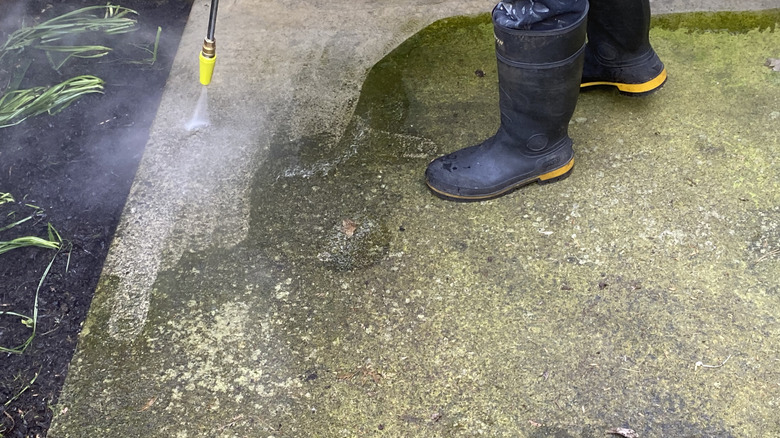
If you have access to the right equipment, pressure washing away the mold can be a much less labor intensive way to get rid of it. You can fill the pressure washer's detergent tank with a specifically-formulated pressure washer cleaner, such as the Simple Green Oxy Solve Concrete and Driveway Pressure Washer Cleaner, soak the driveway with the solution, then pressure wash away the residue. For the best results, spray with a wide-angle nozzle to cover more surface area. Alternatively, if you want to avoid using harsh chemicals around your yard, try a natural cleaning solution made with equal parts water and vinegar. Clean a test patch of your driveway first, since the vinegar can damage the concrete (same applies to bleach). Once you've determined whether it's safe to use, apply it like you would any other cleaning solution. And as long as you're sprucing up your yard, go ahead and try adding the simple detail that gives driveways an aesthetic upgrade.
After taking time to clean your driveway, keep it mold-free by removing any sources of constant moisture. This could come from leaky gutters that drip water onto the concrete, uneven paving that makes room for stagnant pools, or piles of leaves and dirt that can create a breeding ground for mold. Be sure to inspect your driveway (and the rest of your home) for signs of mold regularly so you can get a head start on any problem areas. The good news is that the most common type of mold you'll find on your driveway, green mold, is not the most dangerous kind of mold out there. However, it can still cause health problems, especially in folks with allergies, so it's best to remove any trace of it as soon as possible.