

Not Honeybees: The Powerhouse Pollinators You Can Thank For A Delicious Blueberry Harvest
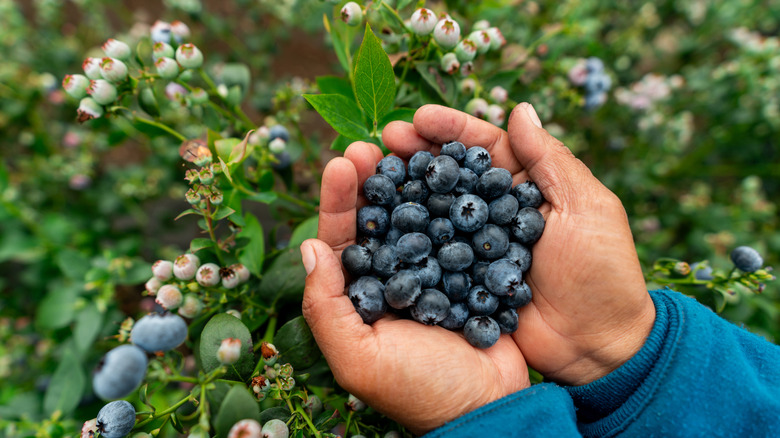
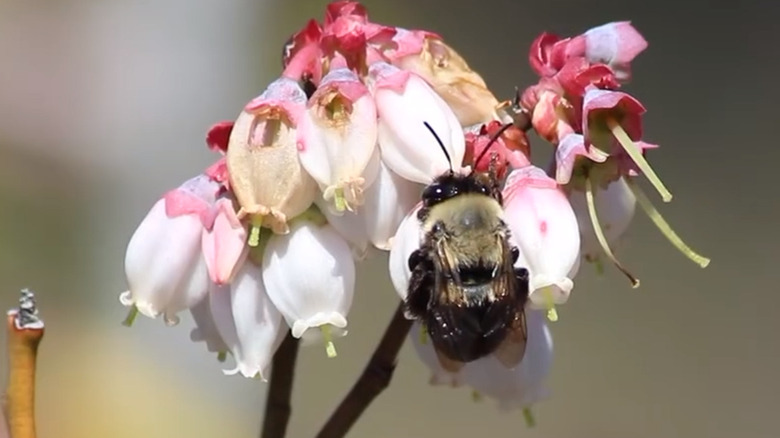
Most people know that bees of all kinds are extremely important pollinators. Honeybees and bumblebees, in particular, are the ones most people think about first when it comes to pollinating a garden. However, for blueberries, there is a different species that does the job best. Blueberry bushes have a unique flower shape, which makes it difficult for the majority of bees and other pollinators to get to the pollen. A species known as the Southeastern blueberry bee (Habropoda laboriosa) is skilled at getting into these blooms. It's not just one species of blueberries that they benefit, either, but many grown in the eastern part of the United States. These species might not be as well-known as others, but they are a type of beneficial bee you'll want in your garden.
These bees earned their name because they have evolved to pollinate and feed from blueberry plants. Their evolution is to the point that without them and similar specialist bees, blueberries grown anywhere between Illinois and Florida might not produce fruits to their full ability. These bees crawl into the flowers and vibrate, which causes the pollen to loosen from the plant and attach to the bee. In areas with high humidity, this type of pollination is even more important, as blueberries struggle to release their sticky pollen. While other generalist bees can help with pollination to some degree, if you want to have thriving blueberry bushes in the eastern U.S., this species is one you need to learn to attract.
Southeastern blueberry bees improve blueberry yields
Southeastern blueberry bees are incredibly efficient. Just one bee, over its lifetime, can visit more than 50,000 blueberry flowers and help to produce roughly 6,000 blueberries. This makes them the single most efficient pollinator of the fruit, beating out both bumblebees and honeybees. Some research has shown that the presence of these bees can increase yields by as much as 70 percent.
The blueberry bee also prefers the flowers from this shrub over any other. If they have a choice, they gravitate towards blueberries. As far as their appearance, they look somewhat similar to bumblebees. However, they are a little smaller. The bottom of their abdomen is completely black and has few hairs, while their top half is pale yellow and fuzzy. If you see one head-on, its face resembles a heart.
Honeybees can help pollinate blueberries, too, but sometimes the tradeoff isn't worth it. A disease known as foulbrood is a large threat to honeybee populations. Beekeepers and blueberry farmers have noticed that the process of honeybees pollinating blueberries can lead to a spread of the disease, and harm the hive, as well as eliminate pollinators for the fruit. However, the Southeastern blueberry bee can pollinate plants without the risk of this disease, and it is native to the eastern part of the U.S., which means all you have to do is attract them to your yard to get them to help out your blueberries.
Creating a habitat to attract blueberry bees
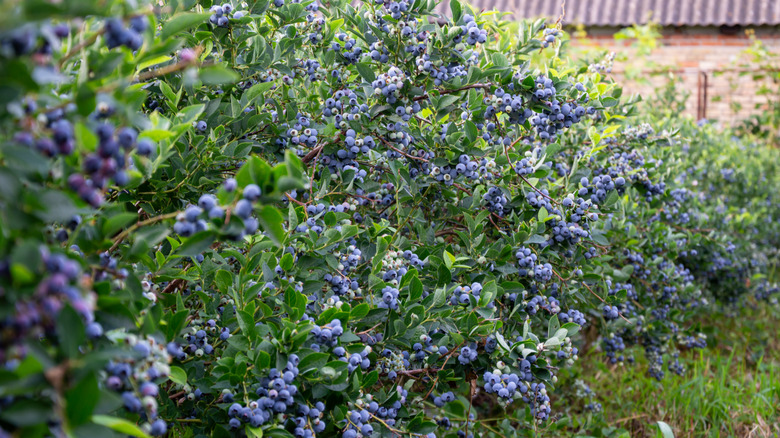
Southeastern blueberry bees live in solitary burrows in the ground. They tend to make their nests in soil that drains well and is a little sandy. They also prefer to be close to blueberry fields, if not directly in them. To protect these bees, you want to make sure the soil near your blueberries is undisturbed so they have a place to nest. Their nests are sometimes hidden under leaf litter, mulch, or rotting wood. Though the females have solitary burrows, they do often nest together in large groups. These bees are only alive as adults for a few weeks, coinciding with blueberry season. Before they die, the females lay a series of eggs in their burrows in undisturbed land.
Pesticides can be a big problem for Southeastern blueberry bees. While you may want to protect your blueberries from pests, these chemicals do not differentiate between good and bad insects and will harm bee populations. Despite common misconceptions about organic pest control, these methods can also be dangerous and should be used with caution if you want to protect blueberry bees and other pollinators.
You can further help attract them by following some of the tricks to bring more bees into your yard and garden, such as growing a spread of native flowers. Though they prefer blueberries, they will also feed from other plants on occasion, including trumpet flowers (Gelsemium spp.). Following these practices will benefit more than just Southeastern blueberry bees, considering many other native bee species rely on local plants, pesticide-free zones, and undisturbed areas to thrive.