

Why Stink Bugs Are Far More Active In Spring (& How To Get Rid Of Them)
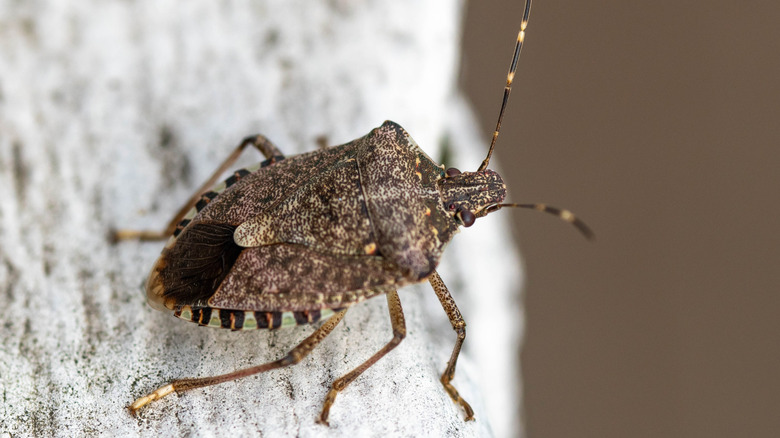
If you've ever heard that old phrase "coming out of the woodwork," then you already know that's exactly what's happening in the spring time around your home. As temperatures rise, insects of all types start moving around, and stinkbugs are one of the worst. You may have already noticed them in your yard, garage, sheds, and even inside your home. These are the stinkbugs that have been overwintering in your home, looking for ways to get outside so they can find food and mates. There are a few things to know about how they got there, how to get rid of them now, and how to prevent stink bugs from invading your home in the fall.
Stinkbugs, of which there are over 50 species in California alone, are thankfully mostly just annoying and unpleasant, not dangerous. One of the more common types people in the United States have to deal with is the brown marmorated stink bug (Halyomorpha halys), an invasive species from Asia. According to entomologist Emma Grace Crumbley from Mosquito Squad Plus (via Better Homes & Gardens), the stinkbugs you're seeing around your home in the spring are actually the same ones that arrived on the scene last fall. As she explains, "In late fall and throughout winter, stink bugs look for structures to overwinter in." During the adult phase of their life cycle, which lasts about 6 to 8 months, stinkbugs spend several months in diapause, which is similar to hibernation.
Stinkbugs in spring have been waiting since fall
Crumbley says stinkbugs find a home for the winter before settling in. "These could include areas in nature, like old trees or leaf litter, but often, the overwintering structures are our own homes," she explained (via Better Homes & Gardens), "Stink bugs that spent the winter tucked into the eaves, cracks, and voids of our homes warm up with the spring heat and start searching for ways to get back outside to find food and mates."
Although stinkbugs are a significant agricultural pest, most people find them particularly annoying because of their smell. The stink is a defense mechanism, and it's especially pungent when they're squished, which is why we don't need an expert to tell us to handle them carefully when scooting them out the door. However, not everyone is aware that stinkbugs also release another kind of odor, called an aggregation pheromone. This chemical agent is released to tell other stinkbugs that everything is safe and invite them to come join the party. Even when you crush them, these pheromones are released, so you could be attracting more stinkbugs by squishing them.
Most people grab stinkbugs with a tissue, scoop them into a jar, or vacuum them up just to avoid the stink. Using a jar of soapy water is one of the best ways to eradicate stinkbugs without releasing their scent because after you get them all contained, you can simply pour it down the toilet and flush to get rid of the pheromones and crash the stinkbug party.
Take more steps to eradicate stinkbugs this year
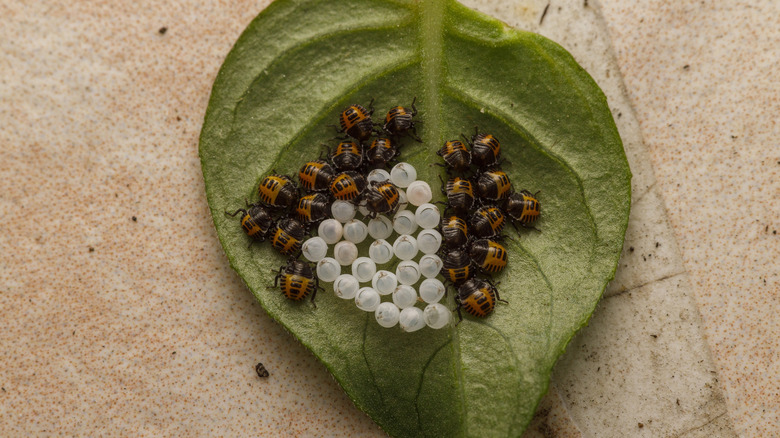
The bad news about the stink bugs you're seeing around your home in the spring is that there isn't a lot you can do to prevent them — they're already here. But the good news is that there are some steps you can take as part of an integrated pest management approach to help eradicate stinkbugs. To start, keep getting rid of any adults that you find using soapy water or a vacuum, and carefully remove any eggs or nymphs you find on the underside of plant leaves in May and June.
Before fall, caulk and seal around windows, doors, siding, vents, and even your foundation to keep stinkbugs out. Fix or replace damaged window screens. Since stinkbugs overwinter in leaf litter and organic matter, clean up piles of firewood and scrap wood. Vegetation attracts them, so keeping plants away from the exterior of your house can also help. And when you see them aggregating in the fall on the outside of your buildings, grab a shop vac.
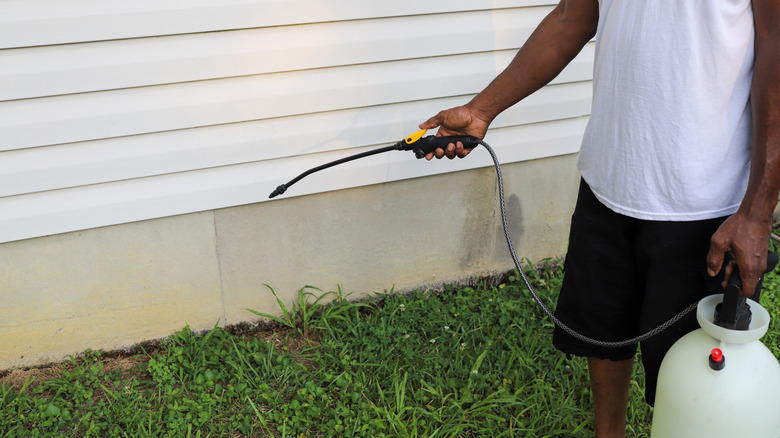
Stinkbugs may be coming out of the woodwork, but these steps, along with proactive measures like planting lemongrass, spearmint, cloves, bay leaves, and other spices you can grow in your outdoor garden, will improve the situation. You can also reduce your outdoor lighting, which draws them in. If you need to spray the perimeter of your home in the fall for a severe infestation, be sure to use caution to avoid harming beneficial pollinators.