

Say Goodbye To Cracks In Your Wood Cutting Board With This Food-Safe Method
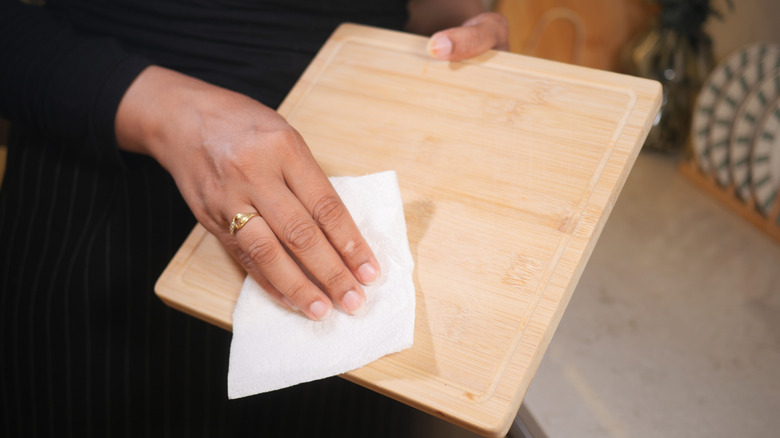
Every kitchen needs at least two cutting boards, and wood is one of the most popular options when it comes to cutting board materials. Wood is a soft, anti-microbial, and forgiving material that can also reduce knife marks. Wooden cutting boards can, however, be high maintenance when it comes to cleaning and storing them. Due to humidity and moisture, these items can warp, which may lead to cracks over time. These cracks can then become pools for bacteria, something you never want for a food-touching tool. Therefore, it's important to maintain your wooden cutting boards by examining them for cracks or damage and repairing them as soon as possible. One easy way to do so is to use a food-safe adhesive, sandpaper, and a wood conditioner like beeswax.
As long as the crack is small, this is a repair you should be able to take on yourself. Not only will it reduce the likelihood of contaminating your meal with any dangerous bacteria the next time you're preparing food, but it will also help your wooden cutting board last longer. If you are dealing with a large crack, however, it may be best to rely on a professional for this repair or purchase a new cutting board.
How to fix a crack in a wooden cutting board
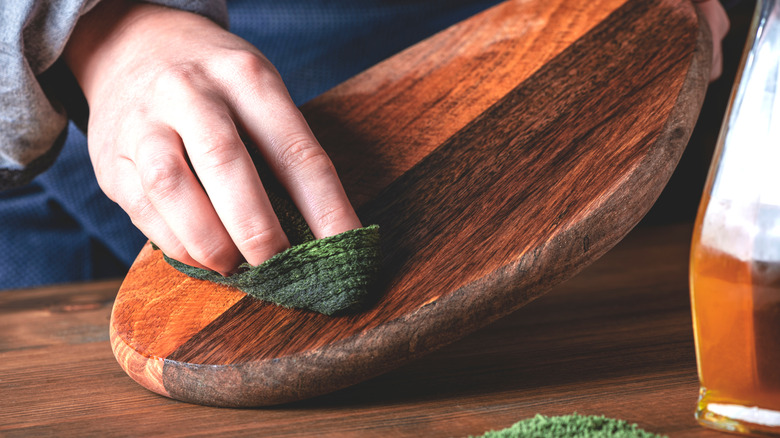
Before you fix the cracks in your boards, it's important to know exactly how to best clean a wooden cutting board. This is the first step of the repair process, and it's a vital one. Start by making sure there aren't any lingering pieces of food inside the cracks. You can remove these with a small wire brush or a toothpick to avoid accidentally sealing bacteria or food into your cutting board, plus the adhesive works better on a clean wood surface. Then, thoroughly wash the board in the sink by hand with a sponge, mild dish soap, and warm water. It's important to avoid placing a wooden cutting board in the dishwasher, as this can cause the board to warp and make existing cracks worse. Never use a harsh abrasive like steel wool to clean your wooden boards. Rinse off all of the excess soap and dry the board with a towel.
After the cutting board is cleaned, it's time to apply the adhesive. Read the label to make sure the adhesive is kitchen safe, as standard wood glues and fillers from home-improvement stores can contain harsh chemicals. With the help of a small tool like a toothpick, carefully fill the crack in with the food-safe glue and allow it to dry completely. (For an easier application, you can also use a plastic syringe to apply the glue.)
Once it's dried, which can sometimes take up to 24 hours, use sandpaper to remove any leftover glue and to smooth out the surface of the board. Finally, apply your wood conditioner. If you want to keep your cutting board in tip-top shape for the future, try laying down a sheet of wax paper on top to protect the surface the next time you use it.