

What To Do If You Find A Baby Chipmunk In Your Yard
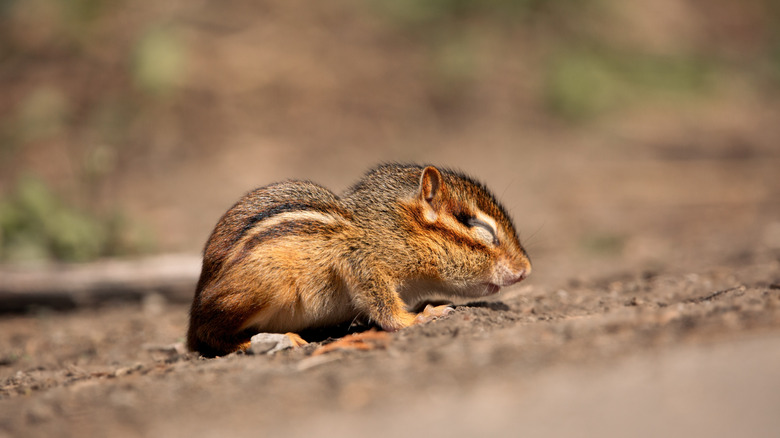
Finding a tiny chipmunk alone in your yard may be concerning. Before you scoop it up, take a moment. In many cases, the baby chipmunk hasn't been abandoned. With any wildlife encounter, such as finding a baby racoon in your yard, knowing when to step in — and when not to — is crucial. By assuming it's not alone, checking for any injuries, contacting wildlife rehabilitation, and not feeding it, you can ensure you assist the baby safely.
The baby may have been left alone only temporarily. The mother may be foraging nearby for food and shelter. It's possible that the sight of you in the yard scared the mother away. You also don't know whether it's a rabid animal in your yard, so it's best to be cautious and take time to assess the situation. Check the animal out from a distance before intervening.
Watch the baby chipmunk's behavior to determine whether it's healthy. If it appears active, alert, and uninjured, it's likely fine. Keep pets and people away from the animal. That will give the mother some time to return. You might be able to locate the mother's den nearby. It's a hole about two inches around. Once the mother returns to collect her little one, you can take steps to ensure they don't come back and protect your lawn if necessary. Consider keeping chipmunks out of your yard with a clever owl deterrent or adding L-shaped footers around your foundation, porch, or fence to prevent burrowing.
When to step in and call a wildlife professional
If the baby chipmunk is visibly injured, you may need to intervene. You could notice signs of bleeding, injury, or weakness. If it isn't moving, seems lethargic, or was brought to you by another animal, these are clear indicators that the animal needs care as soon as possible. However, if you try to raise a baby chipmunk yourself, you'll likely do more harm than good. Improper feeding or handling of the animal could lead to its demise and may also be illegal.
If you can see that it is injured or truly abandoned, your best step is to get in touch with a licensed wildlife rehabilitation facility or a local animal service. The professionals are trained to handle these animals safely and legally. They will have the proper supplies and knowledge to ensure the baby stays alive and receives the help it needs.
If you must step in, contact wildlife services first and follow any directions given. It's possible that you may be instructed to keep the baby animal warm until they arrive. When handling the chipmunk, be sure to use gloves or a towel to pick it up, as it may bite. Place it in a safe container, such as a box with holes and a soft cloth or some paper towels inside. A gentle heat source, like a wrapped warm water bottle, can be helpful since baby mammals can't regulate their body temperature.